Every cricket ruling starts with the MCC Laws. The competition's playing conditions can control how those Laws apply in a given match, so identify the match and date before you compare the Law with the conditions.
Which rules apply to this cricket match?
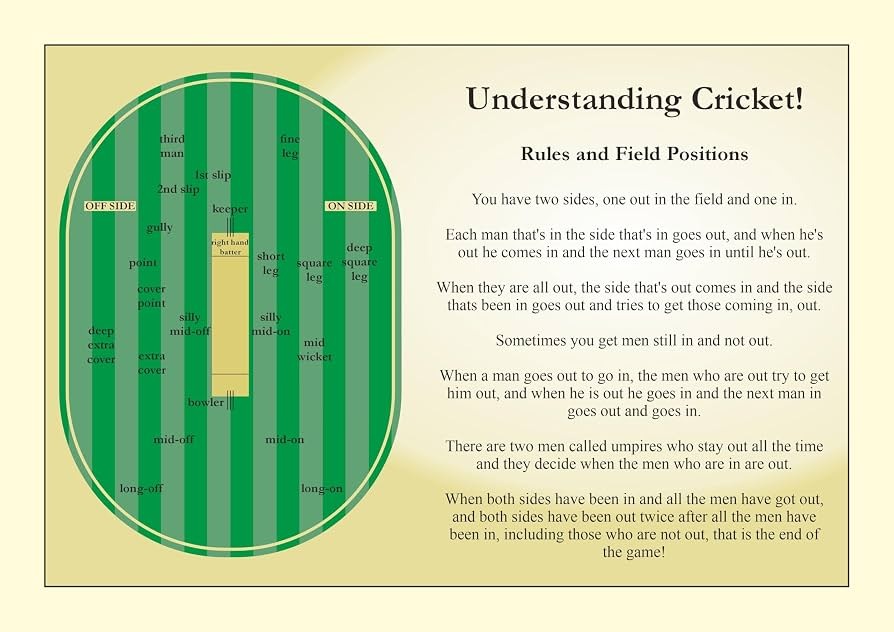
Cricket has an underlying rulebook and a second layer of match-specific requirements. The Marylebone Cricket Club (MCC) maintains the Laws of Cricket. The International Cricket Council (ICC) publishes playing conditions for international cricket, while domestic competitions and local leagues publish their own.
A spectator wondering whether six balls make an over can start with MCC Law 17. Someone checking a free hit in a T20 International needs that event's playing conditions. A player challenging a wide in a US club game needs the league's own wide rule.
- Underlying Laws: The MCC Laws of Cricket establish the general framework and definitions.
- International matches: The ICC playing conditions are organized by format and competition.
- Domestic and recreational cricket: The competition's published conditions can supplement or alter the Laws. Informal games use agreed adaptations.
Take an ICC T20 International and an American club game, both twenty overs a side. Their free-hit and leg-side wide rules can differ, so the competition and the date decide which document applies.
How does cricket work: teams, innings, runs and winning?
Two sides of eleven players each take turns batting and fielding. The batting side tries to score runs. The bowling and fielding side tries to restrict those runs and dismiss batters. A toss decides which captain chooses to bat or field first.
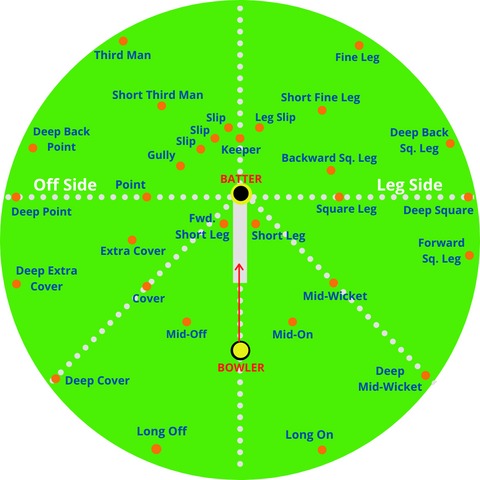
Two batters stand at opposite ends of the pitch. The striker faces the bowler; the non-striker waits at the other end. The wicketkeeper stands behind the striker's wicket, with other fielders positioned around the ground.
A team's period of batting is an innings. Runs come from running between the wickets, hitting boundaries or receiving extras under the Laws. For when umpires award those runs, see the cricket scoring guide for fours, sixes and extras. A wicket can mean the physical stumps and bails, or a dismissal shown on the scoreboard.
162/4 (17.3) is an illustrative score: 162 team runs and four wickets lost after 17.3 overs.
Limited-over matches restrict the balls available to each batting side. In a standard match with one innings per side, the team batting second wins by exceeding the first side's completed score, and the chase ends when it gets there.
Test cricket uses a longer innings structure and can end in a win, tie, draw or no result.
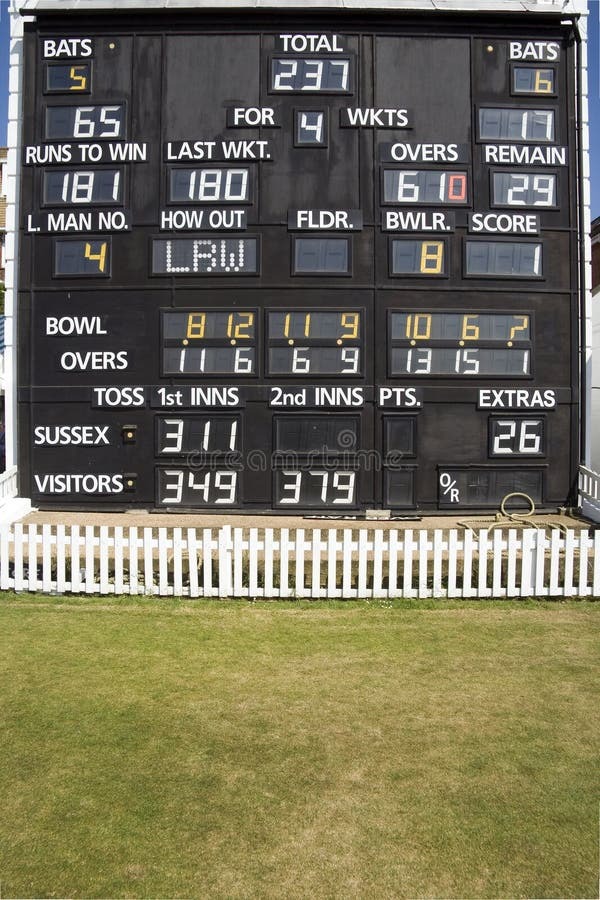
On a television scoreboard, find the batting team's name and its innings label first. The total gives the runs scored. The wickets figure tells you how many batters are out. The wicket and dismissal guide explains how caught, bowled and run-out dismissals differ.
What is an over, and how do cricket teams score runs?
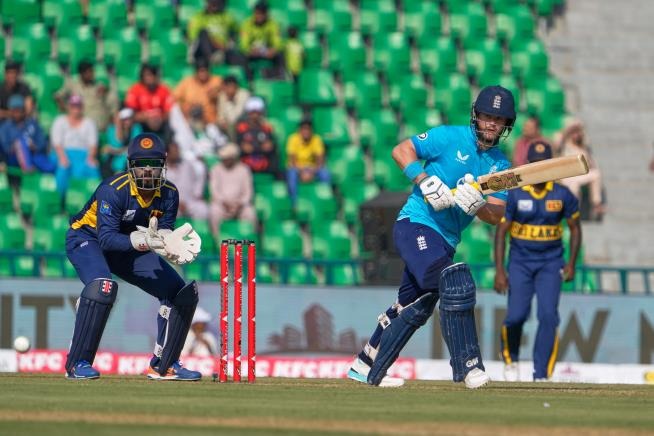
An ordinary over contains six legal deliveries. A wide or no-ball requires an additional legal delivery to complete the over, so the bowler can make more than six physical attempts.
The number after the period in an overs display counts legal balls within the next over. The notation 17.3 means seventeen complete overs and three legal deliveries that count toward the innings and the current over: 17 × 6 + 3 = 105 legal balls.
An over that takes eight deliveries
In this example, the wide and the no-ball earn only their basic penalty extras, with no additional runs.
| Physical delivery | Umpire's classification | Legal balls completed |
|---|---|---|
| 1 | Legal | 1 |
| 2 | Legal | 2 |
| 3 | Wide | 2 |
| 4 | Legal | 3 |
| 5 | No-ball | 3 |
| 6 | Legal | 4 |
| 7 | Legal | 5 |
| 8 | Legal | 6 |
Eight deliveries were attempted; six counted toward completing the over.
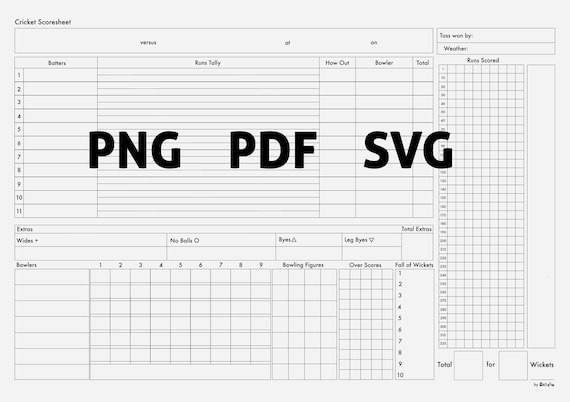
The batting team's total also includes runs that are not credited to an individual batter. Wides, no-balls, byes and leg byes are recorded as extras under their own scoring rules.
A Boundary 4 awards four runs when the ball reaches the boundary after grounding inside the field. A Boundary 6 awards six when a ball struck by the bat first lands beyond the boundary without grounding inside the field. Teams can agree different boundary allowances before the toss.
How can a batter be out, and what does an umpire decide?
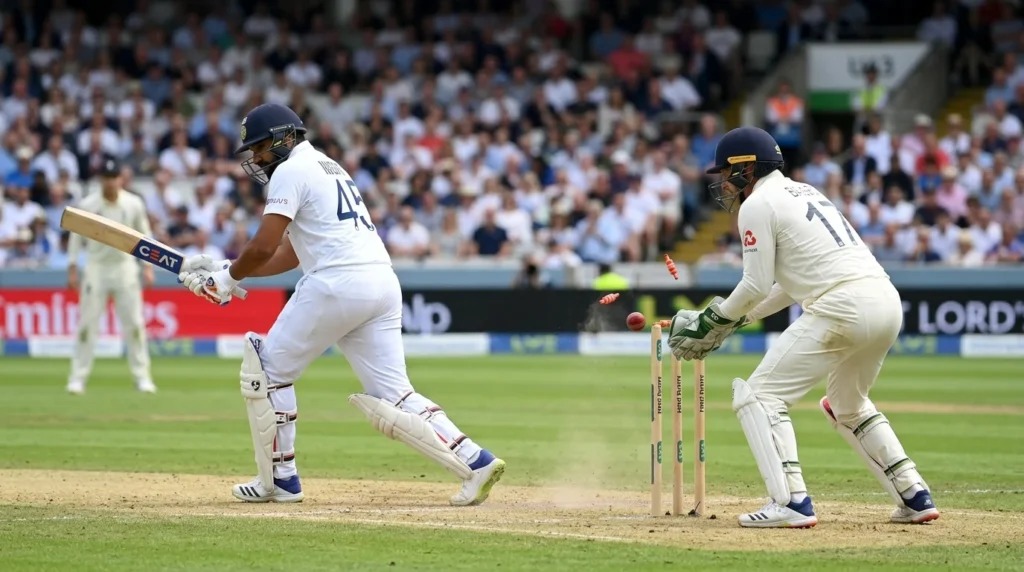
Each dismissal has its own Law and its own test. A catch, a broken wicket and an LBW appeal are judged differently, and the type of delivery can rule out some dismissals.
| Dismissal | What happens | What decides it |
|---|---|---|
| Bowled | The delivery breaks the striker's wicket | Delivery classification and Law 32 |
| Caught | A fielder completes a qualifying catch | Contact with the bat, catch conditions and delivery |
| LBW | The ball strikes the batter and an LBW appeal follows | Impact, ball path and Law 36 |
| Run out | The wicket is fairly put down while a batter is out of the ground | Live ball, ground and wicket-breaking method |
| Stumped | The wicketkeeper puts down the wicket in qualifying circumstances | Striker's position and Law 39 |
| Hit wicket | The batter breaks their own wicket in a situation covered by the Law | When and how the wicket is broken |
| Hit the ball twice | A batter makes a second contact covered by Law 34 | Purpose of the second contact and legal exceptions |
| Timed out | The incoming batter misses the readiness limit | Law 40 and any competition condition |
| Obstructing the field | A batter acts in circumstances covered by Law 37 | Nature of the action and consent where relevant |
A catch that looks simple can have a different outcome if the delivery was called a no-ball.
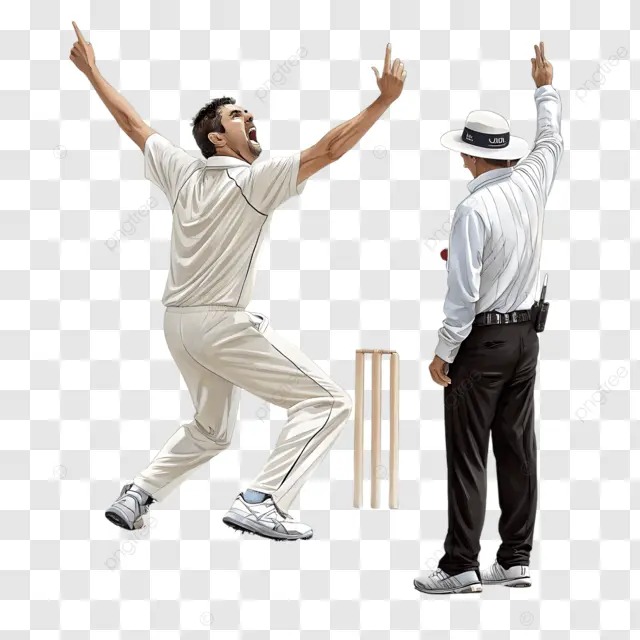
Law 31 covers appeals. An umpire gives a batter out in response to a valid appeal from the fielding side, though a batter can also leave without waiting for one. An appeal asks the umpire to decide whether the dismissal conditions have been met.
LBW requires separate checks of where the ball pitches, where it strikes the batter and its projected path under Law 36.
How do a wide, a no-ball and a free hit change play?
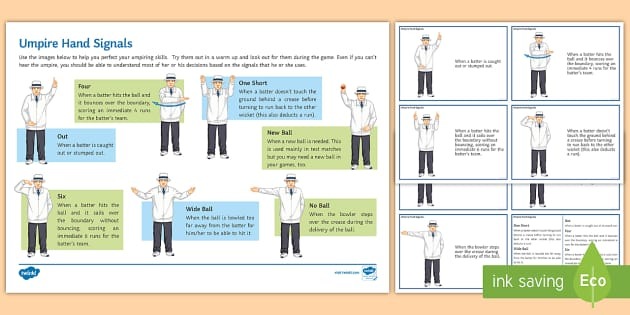
Under Law 22, a wide is the umpire's judgment of a delivery against the reach standard. Under the 2026 MCC Law 22.1.3, a delivery that pitches and then passes above the head of the striker standing upright at the popping crease is also a wide, unless a no-ball condition applies.
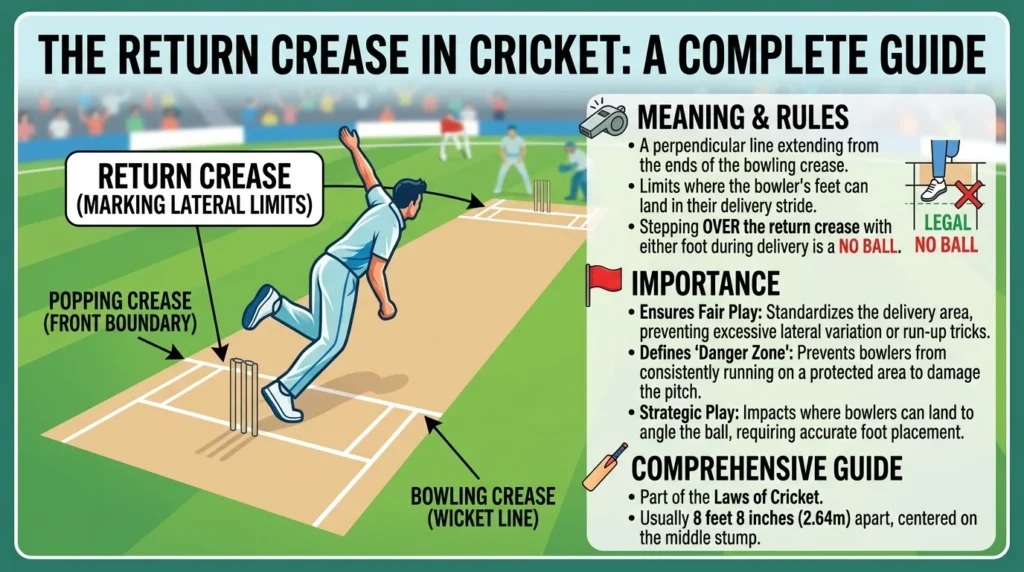
A no-ball is an illegal delivery under Law 21, and a front-foot infringement is one possible cause. Both award an extra and leave a legal ball to be bowled, but they allow different dismissals.
| Delivery or condition | Counts toward the six legal balls? | Basic penalty extra | Dismissal consequence |
|---|---|---|---|
| Ordinary legal ball | Yes | None for delivery legality alone | Usual dismissal conditions apply |
| Wide | No | One wide, with additional runs possible | Stumped, run out, hit wicket and obstructing the field remain possible under their Laws |
| No-ball | No | One no-ball, with additional runs possible | Hit the ball twice, run out or obstructing the field remain possible |
| Free-hit delivery | Yes if legal | Depends on that delivery | Under free-hit conditions, the no-ball dismissal restrictions apply |
The last row applies only where the competition provides free hits. Many limited-over playing conditions give the batting side a free hit after a no-ball. If the free-hit delivery is itself a wide or no-ball, the free hit continues until a legal delivery is bowled.
MCC explains that some limited-over competitions apply stricter leg-side interpretations than the general Laws. The delivery's path, the striker's position and the competition's wide rule decide the call.
On a wide, a striker outside the ground can still be stumped if the Law's conditions are met.
When is the ball dead, and can a batter still be run out?
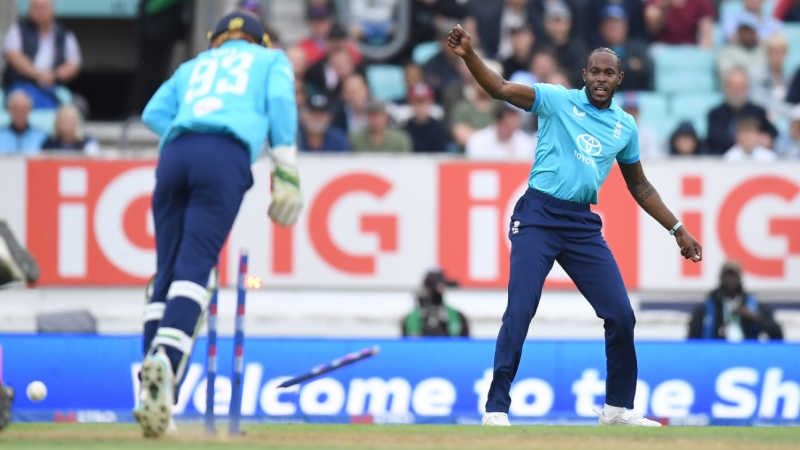
A no-ball signal leaves the ball in play unless a dead-ball provision applies. A batter can therefore face a run-out attempt after a no-ball if the live-ball and dismissal conditions are met.
Law 20 describes several ways the ball becomes dead. One is when the ball is finally settled, held by a fielder or stationary on the ground. The bowler's-end umpire decides whether it has ceased to be in play.
Suppose the umpire signals a no-ball in a club game. A batter walks away from the crease, assuming the delivery has ended, and a fielder breaks the wicket. The decision depends on the sequence: when the ball became dead, whether the batter was out of the ground and whether the wicket was fairly broken.
Direct strike or ball held in the hand?
The 2026 wording distinguishes two ways of putting down the wicket. When a thrown ball directly strikes the stumps and removes the bails, it does not need to have been held in complete control. When a fielder breaks the wicket using a hand or arm while holding the ball, the held-ball complete-control requirement applies.
On October 8, 2026, MCC issued a Run out clarification after the revised wording had been misread.
Law 29, Law 38 and Appendix A set the terms for this assessment.
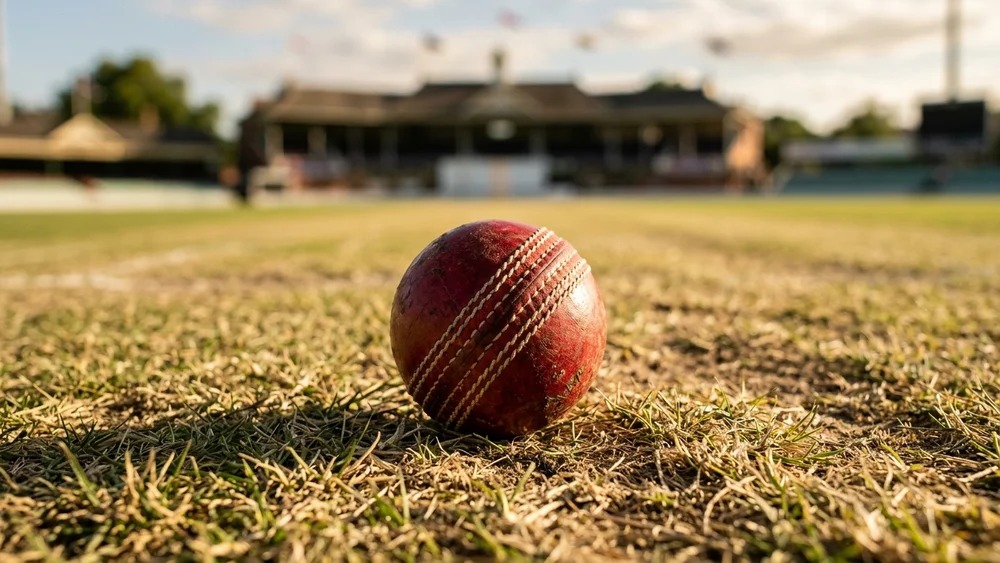
A different problem arises when a batter returns a live ball to a fielder. MCC's February 23, 2026 clarification says that doing so with the bat or person, without the fielding side's consent, can be obstructing the field under Law 37.4, subject to an appeal and the circumstances.
The Spirit of Cricket concerns sporting conduct, but the dismissal test is Law 37.4.
What changed in the cricket Laws in October 2026?
The MCC's 2017 Code, Fourth Edition (2026), came into effect on October 1, 2026. For international series already underway at the changeover, the preceding ICC playing conditions continued to apply. MCC reported 73 material changes covering equipment requirements, scoring-related situations and play procedures. The Code retains its 2017 name; Fourth Edition identifies the 2026 revision.
MCC announced the revision on February 3, 2026 and published a preparation update on September 28. Four of the changes affect decisions on the field.
| 2026 amendment | Practical effect |
|---|---|
| Type D laminated bats | Permitted in open-age cricket under the revised framework |
| Cricket-ball specifications | Revised specifications with distinct categories |
| Final over of a multiday playing day | The scheduled final over is completed after a wicket |
| Overthrows and misfields | The distinction between these events is clarified |
MCC's edition update describes these changes.
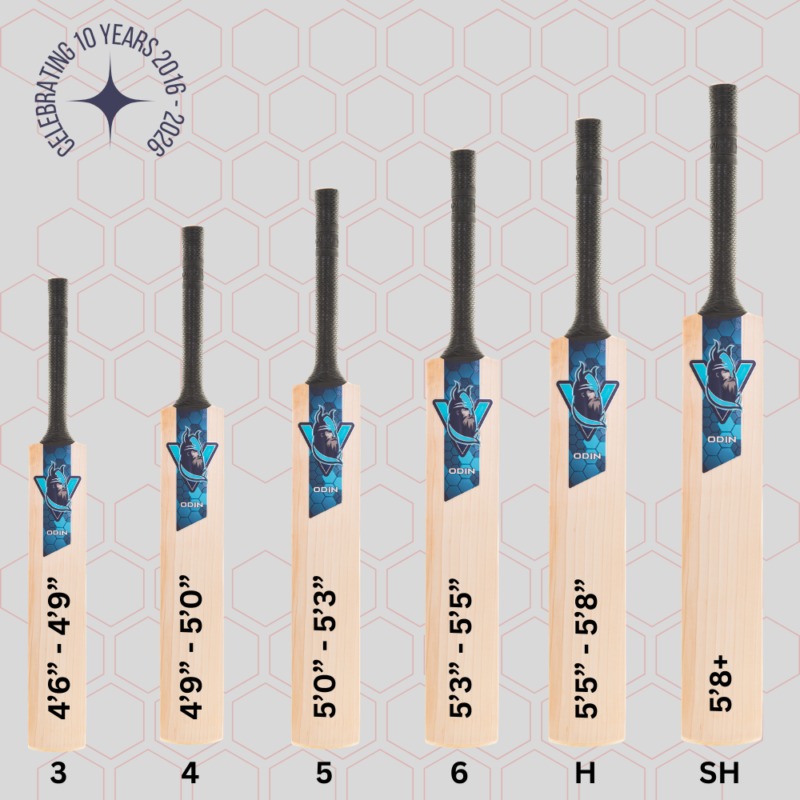
In a multiday match, a wicket falls during the scheduled last over. Under the revised rule, the remaining legal balls are bowled if conditions remain fit for play. A player considering a Type D bat should check the competition's equipment requirements, which decide whether it is allowed.
Which cricket rules change between T20, ODI, Test and club cricket?
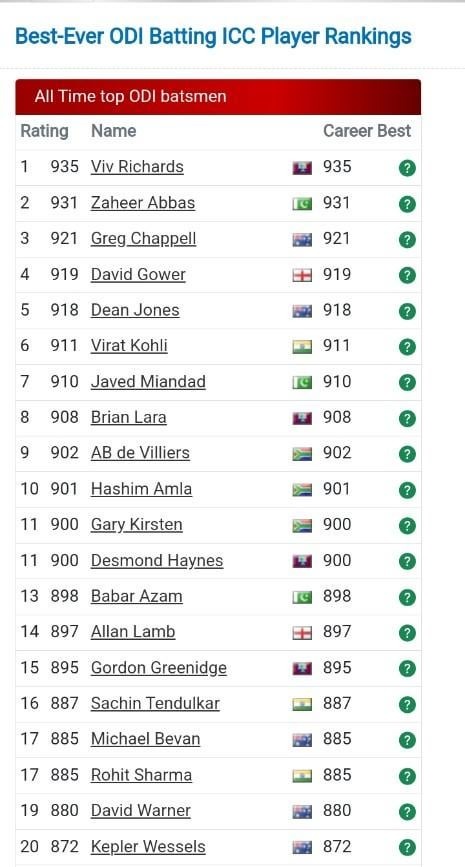
International T20 cricket allocates 20 overs per side, ODIs allocate 50, and Tests use a multiday innings structure.
Playing conditions also set powerplays, bowler quotas, leg-side wides, free hits, DRS and rain-adjusted results. For how powerplay limits apply, see the powerplay rules guide.
How can you check a disputed cricket ruling yourself?
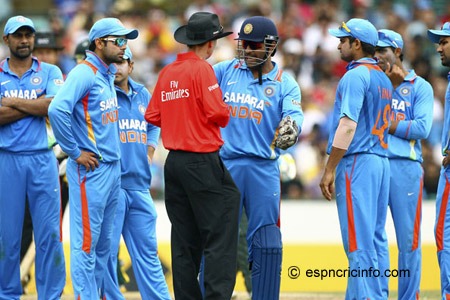
To check a ruling, connect the incident to the right Law and any competition change. Start with what you can observe, move to the Law's text, then note any point that still depends on the umpire's judgment.
- Reconstruct the incident. Record the sequence of deliveries, signals, player actions, appeals and possible dead-ball moment.
- Note the match context. Find the organizer, format and date, then the matching edition of the playing conditions.
- Match the Law to the event. For example, a no-ball followed by a run-out attempt can involve Laws 20, 21, 29, 31 and 38, plus the competition's playing conditions.
- Separate established facts from disputed observations. The Law can settle the test while video or recollections leave a key on-field fact uncertain.
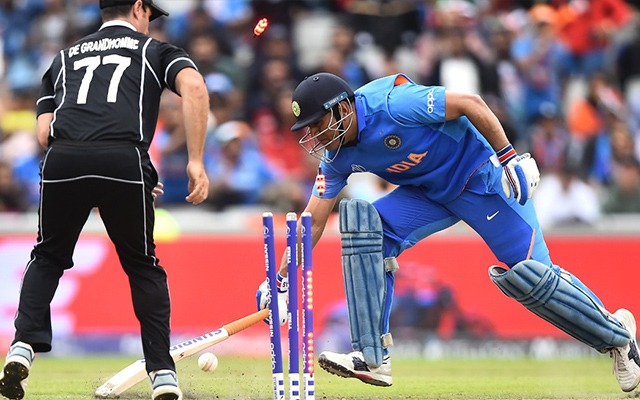
To go back over the basics, see counting overs, dismissal conditions or illegal deliveries.