A T20I gives each side 20 overs and an ODI gives 50. A Test can run for several days, with up to two innings per team. Weather and competition rules can change those limits.
What are the three main international cricket formats?
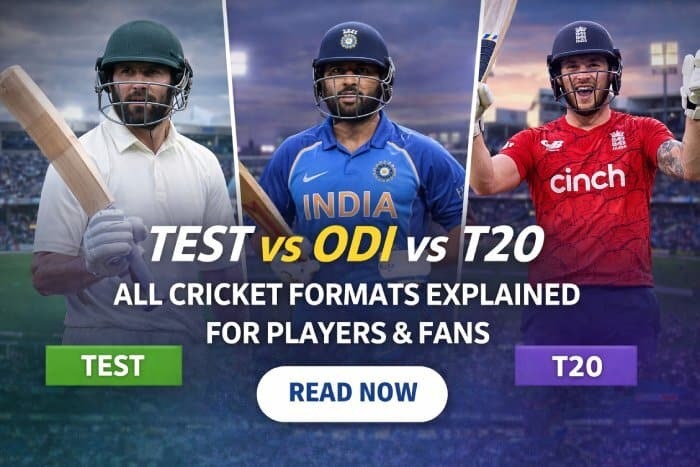
The International Cricket Council (ICC) recognizes three principal international formats: Tests, One-Day Internationals (ODIs) and Twenty20 Internationals (T20Is).
| Format | Scheduled match length | Innings per team | Overs per innings |
|---|---|---|---|
| Test | Five days | Up to two | No fixed quota |
| ODI | One day | One | 50 |
| T20I | One session | One | 20 |
An innings is one team's turn to bat.
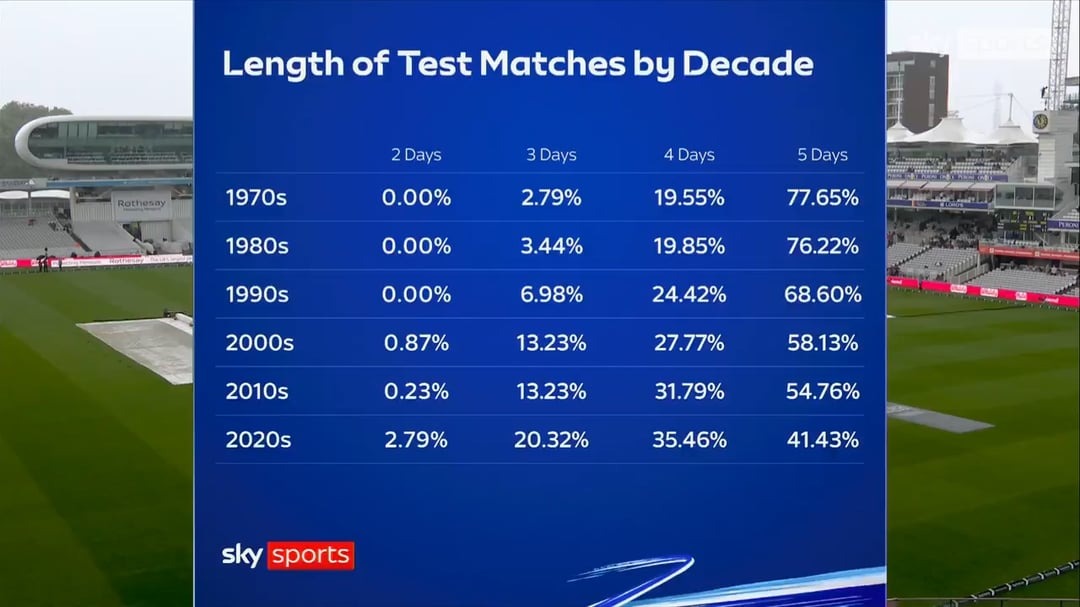
Some Tests run shorter, and women's variations exist. An innings can end before its full quota.
For a side-by-side comparison, see T20 vs ODI vs Test cricket.
How can you tell which cricket format a match is?
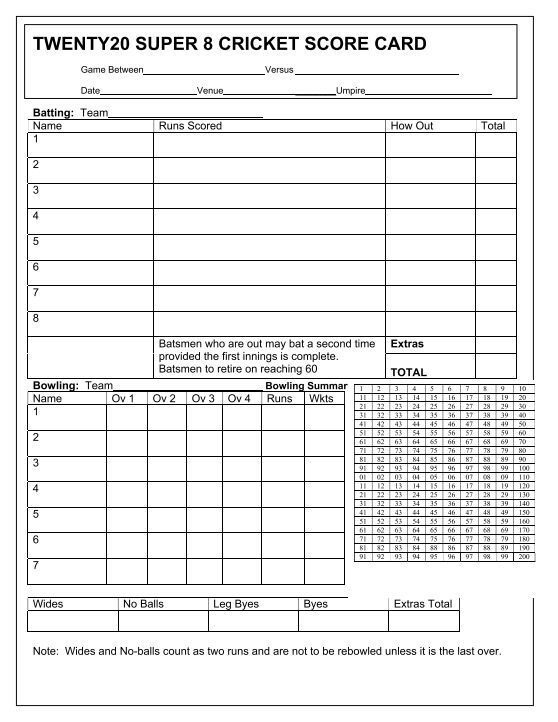
Start with the label on the official match card or scorecard. A league name in the listing doesn't tell you the format, so check the innings and overs too.
- Find the label. Look for Test, ODI, T20I, T20 or a named alternative such as The Hundred.
- Read the schedule. Check the innings and the listed overs or balls per side.
- Handle unusual conditions. For weather reductions or special competitions, use the organizer's playing conditions.
Fictional live score: Team A 162/4 (17.3 overs). Format unspecified.
162/4 after 17.3 overs could be a T20, an ODI or a Test. Only the label on the match card tells you which.
For a real example, the ICC's tournament roundup from the 2026 Men's T20 World Cup identifies the fixture as a T20I and records the USA's total as 196/6.
One viewer turned on a World Cup broadcast by chance and ended up looking up the scores and rules:
I was house/pet sitting at my parents place in November 2023 and just so happened to be up early one morning looking for something to kill some time before my partner woke up and there was a world cup game on, Netherlands and India if I remember correctly. I thought world cup sounded high stakes and so turned it on and spent the next hour or so googling what the heck was happening and how to read the scoreboard but overall found it really interesting and engaging.
What changes with overs, innings and match length?
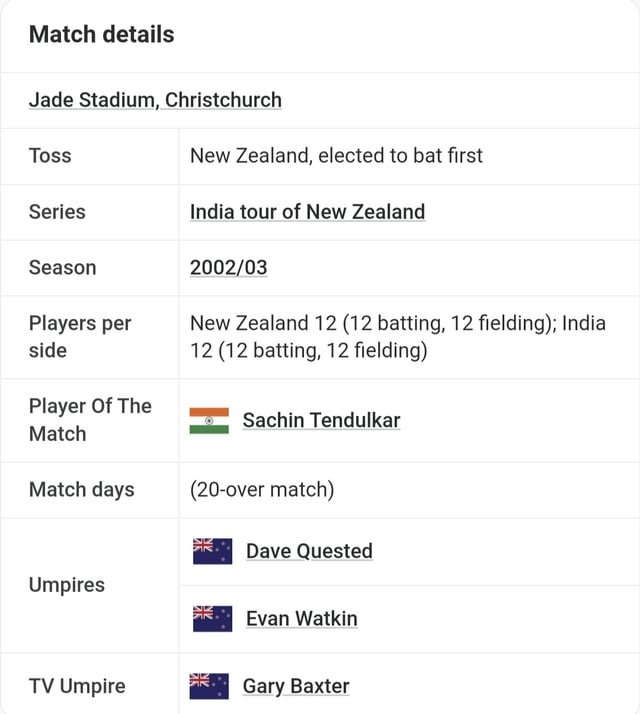
In limited-overs cricket, each side has a set maximum number of legal deliveries. An over is six legal balls. Wides and no-balls require extra deliveries because they don't count toward those six.
A cricket score uses a dot to separate completed overs from legal balls in the next over. The notation 17.3 means 17 complete six-ball overs and three more legal balls: 17 × 6 + 3 = 105 legal balls.
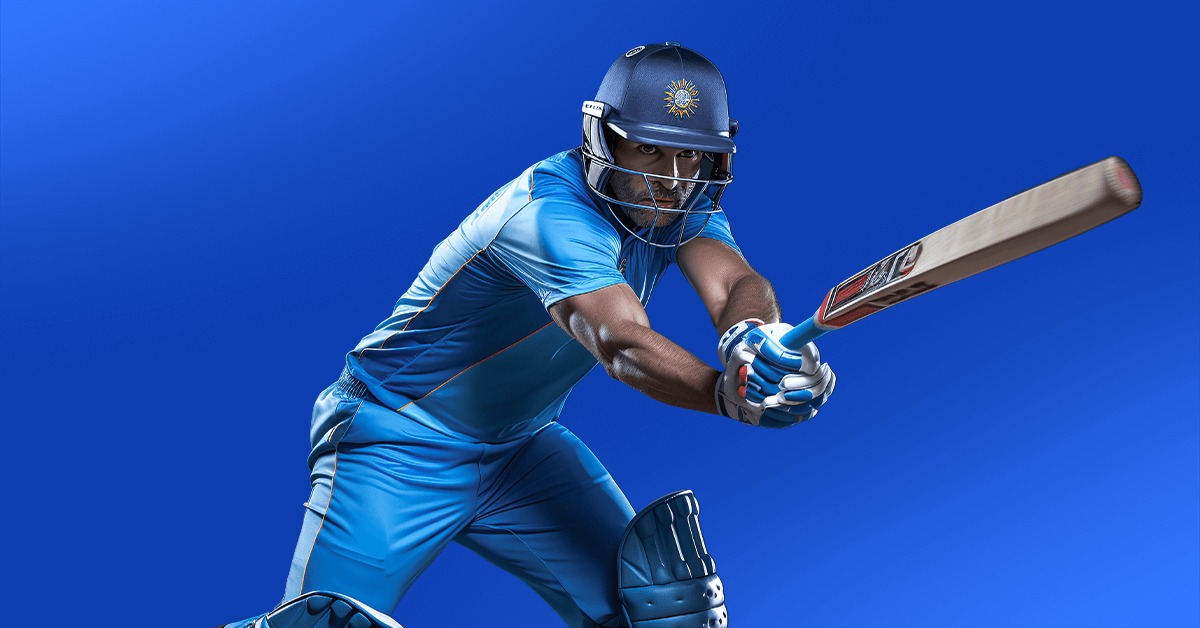
Consider a fictional Test innings at 450/8 after 102.4 overs. The batting team has 450 runs, has lost eight wickets and has faced more than 102 overs. A Test has no overs quota per innings, so the innings can run that long.
In a Test, each team may bat twice, and the result depends on the time available and how the innings end. For more on the dotted notation, see what an over means in cricket.
What is it like to watch T20, ODI and Test cricket?
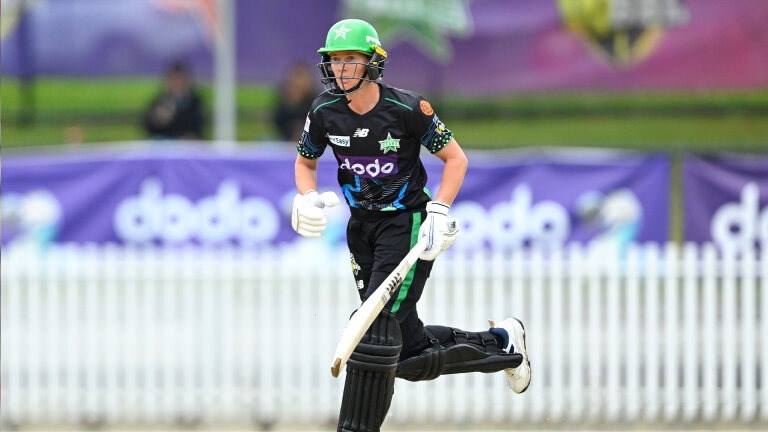
T20 is the shortest of the three. Each team has 20 overs, so scoring pace and wickets in hand matter a great deal near the end of an innings. The ICC says an international T20 match usually lasts about three hours.
An ODI takes up more of the day. Fifty overs leave room for a cautious period, a faster-scoring phase, or a change of approach after losing wickets.
A Test spreads over several sessions. You can follow a batting partnership, a bowling spell or a shift in the match situation as it unfolds, and the teams may bat again in a second innings.
One baseball fan who likes T20 asked this about Tests:
For context, I’m mostly an American Baseball fan who has enjoyed some T20 matches. I haven’t gotten much into ODI cricket mostly out of laziness. I can at least understand the mindset and appeal of it. But Test Cricket has been a sort of barrier I haven’t yet cracked. Looking over an older post on this sub though, I noticed someone said they really enjoyed watching Test Cricket matches while doing something else and having a match going on in the background. Is that how most of you watch Test Cricket or do you all try to keep all your focus on the match? Personally, my general mindset on any sports viewing is to focus on the match. I don’t like having my attention split because I don’t want to miss anything and I don’t like needing to rely on replay or backing up on a recording. But is this mindset of mine going to be a hindrance to enjoying Test Cricket?
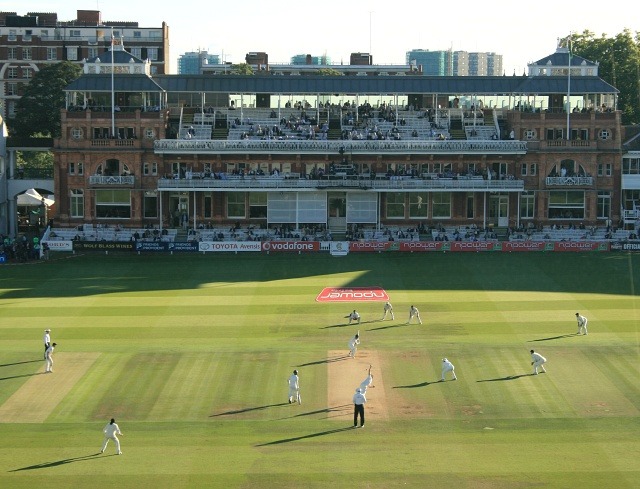
One way to follow a Test is to give your full attention to a single session, or to return when an innings reaches an interesting point. Another is to keep commentary in the background.
Is a league the same thing as a cricket format?
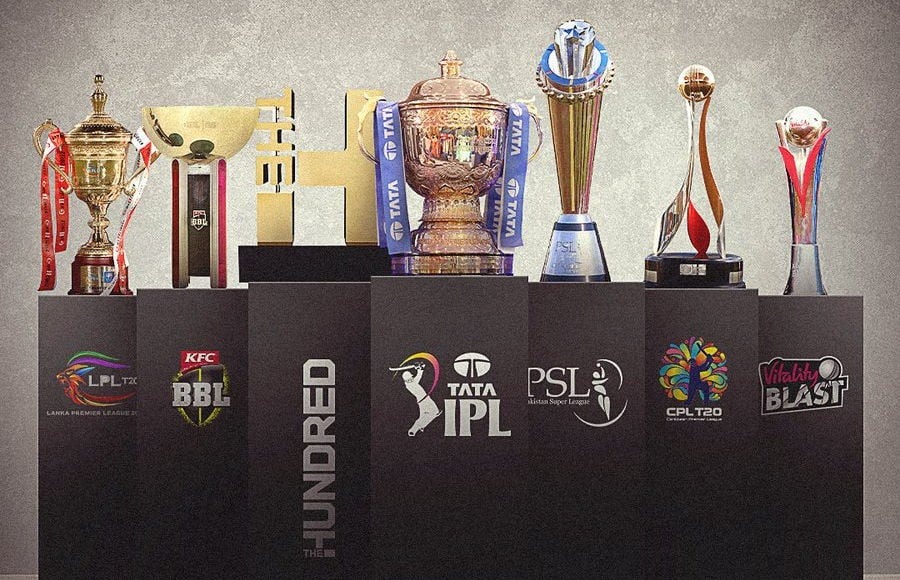
A format describes how the game is structured, a match classification gives its official status, and a competition organizes fixtures under its rules. Score listings often show all three together.
| Label | What it identifies | Related category |
|---|---|---|
| Test | Designated long-form international match | Part of the broader first-class tradition |
| ODI | Designated one-day international | List A is the broader limited-overs classification |
| T20I | Designated Twenty20 international | Domestic and franchise T20 matches have a separate status |
| IPL or MLC | A competition name | Both stage T20 cricket |
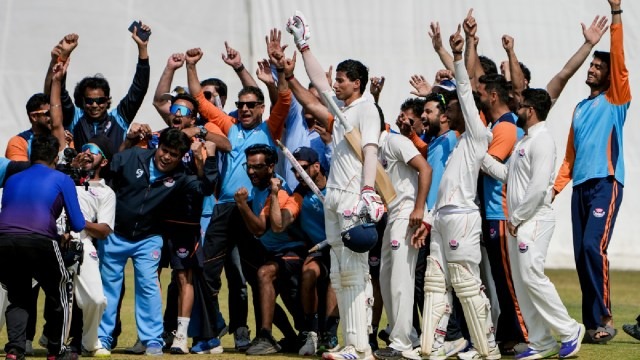
What about The Hundred, T10 and other short versions?

The Hundred and T10 are two other short forms. The Hundred has 100 balls per innings and its own bowling arrangements, and T10 gives each team ten overs.
Under The Hundred's official rules, teams change ends after ten balls. A bowler can deliver five or ten consecutive balls.
Can a cricket match finish in a draw, a tie or no result?
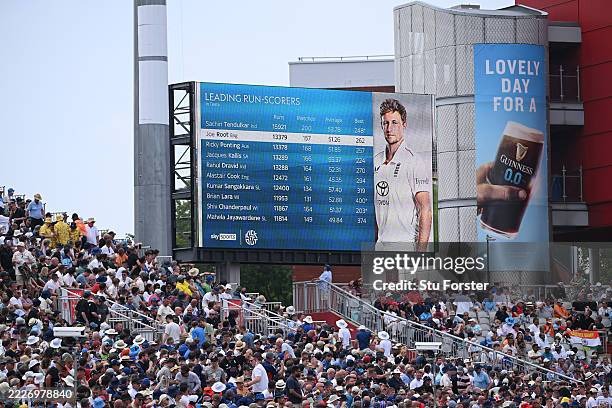
A Test ends in a draw when the scheduled time expires before a winning result is reached. A tie means equal scores under the completed-innings result conditions. No result is a separate official outcome, often after interruptions and too little play. Some tied limited-overs matches are settled by a Super Over under their competition's rules. For the differences, see ties, draws and Super Overs.
Which cricket format should a newcomer follow first?
| Your preference | Format to try | What you will follow |
|---|---|---|
| A concentrated contest in one viewing session | T20 | A short overs quota and a complete limited-overs game |
| A longer game with changing scoring phases | ODI | An extended one-innings contest for each team |
| Partnerships and tactics developing over several sessions | Test | Long-form play that may extend across days |

A national-team fixture or a Major League Cricket game gives you a reason to pay attention before you know which format suits you.
Use the T20 guide for the quickest format, the ODI guide for the longer limited-overs game, or the Test cricket guide when time and multiple innings become part of the contest.