To read a Test scoreboard, find the current innings, then check the lead or target, the wickets and the time left. A standard Test runs for up to five days and each team gets two batting innings, so those four details tell you whether a win, draw or tie is still possible.
What makes Test cricket different from T20 and ODI?
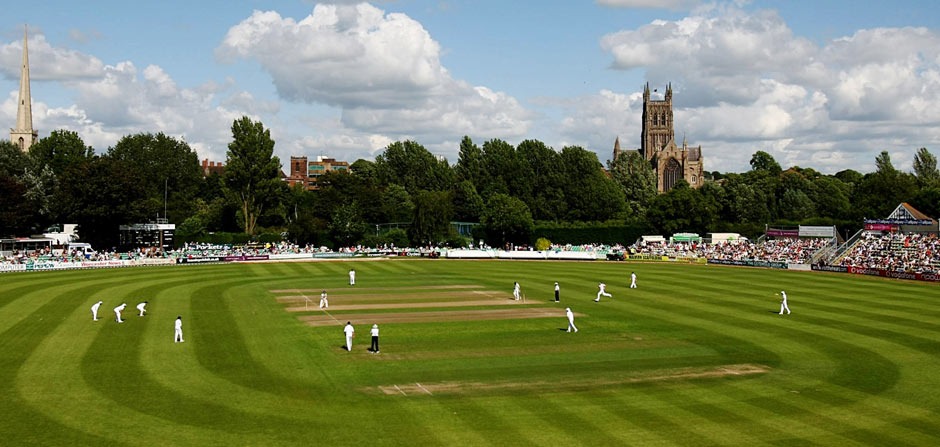
A Test gives both teams several days to build, lose and win back an advantage. Each team bats twice, and an innings has no over limit. The match can end before all four innings are played.
A batter can spend hours just protecting their wicket. A bowler can bowl at the same batter for an hour with nothing to show for it. The captain has to balance the runs on the board against the time left to dismiss the opposition.
| Format | Batting innings | Scheduled overs | What shapes the contest |
|---|---|---|---|
| T20 International | One per team | 20 per side | Scoring and defending within a short innings |
| One Day International | One per team | 50 per side | Balancing runs and wickets over a longer limited-overs innings |
| Test cricket | Up to two per team | No fixed cap per batting innings | Using runs, wickets and playing time to force a result |
The ICC's overview of cricket formats gives the official definitions. T20 vs ODI vs Test cricket lays the three side by side.
Plenty of T20 fans struggle more with the five-day length than with the rules. One American baseball fan put it this way:
But Test Cricket has been a sort of barrier I haven’t yet cracked. Looking over an older post on this sub though, I noticed someone said they really enjoyed watching Test Cricket matches while doing something else and having a match going on in the background. Is that how most of you watch Test Cricket or do you all try to keep all your focus on the match?
Why an innings can continue into the next day
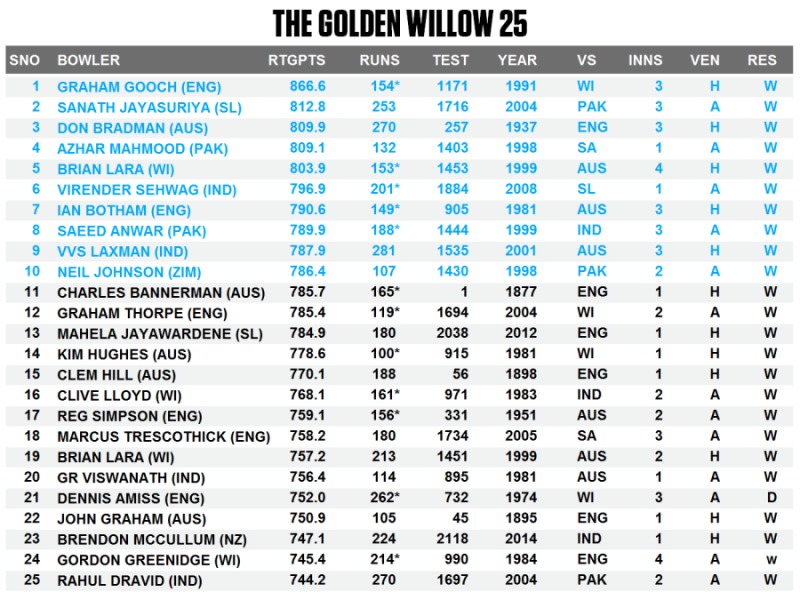
Days of play and batting innings are separate parts of a Test. A day ends at stumps, but a batting innings can continue at the same score when play resumes.
Suppose Team A reaches 220/3 at stumps on Day 1. That means 220 runs scored and three wickets lost. The next morning, Team A resumes its innings on 220/3.
An innings ends when a side is all out (ten batters dismissed) or its captain declares. A match can also end with an innings unfinished.
- First innings: Team A bats, followed by Team B.
- Second innings: Team A can bat again, followed by Team B. An optional follow-on can change that order.
- Daily play: Sessions and breaks fall around the batting innings, and stumps closes the day.
An over is six legal deliveries. Commentators often mention about 90 overs a day. That's the day's schedule and says nothing about how long an innings lasts. Weather, light, interruptions and the match's playing conditions all affect how much play there is.
The MCC's 2026 Laws edition took effect on October 1, 2026. The ICC's updated playing conditions apply to international series beginning on or after that date. Series already underway continued under their earlier conditions.
Under the updated conditions, play can continue after a wicket in the final incomplete over of the day. For the difference between an over and an innings, read what an over means in cricket, which covers legal deliveries, wickets and innings notation.
One Test match, four innings: a scorecard you can follow
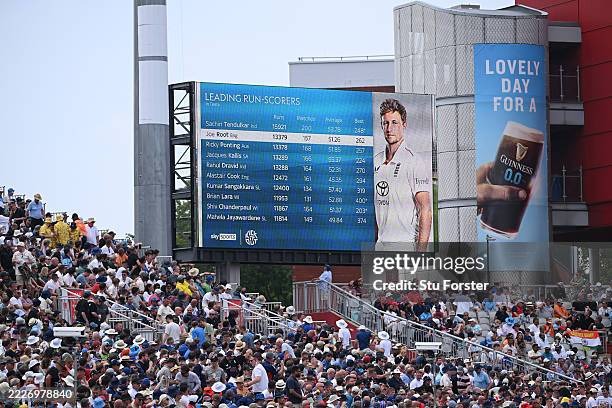
| Batting turn | Score | Effect on the match |
|---|---|---|
| Team A, first innings | 350 all out | Team B takes its first batting turn |
| Team B, first innings | 250 all out | Team A has a first-innings lead of 100 |
| Team A, second innings | 180/5 declared | Team A's combined score reaches 530 |
| Team B, second innings | Target: 281 | Team B needs to pass the aggregate of 530 |
Team A's two innings total 350 + 180 = 530. Team B already has 250, so it needs 531 in total to win. Subtract its first-innings score and add one run to get ahead:
530 − 250 + 1 = 281 runs.
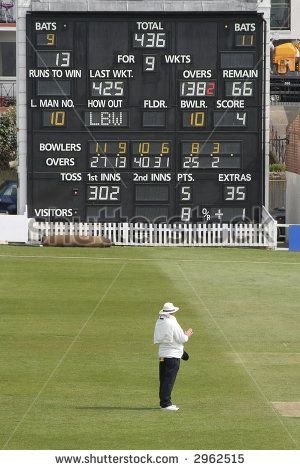
The slash in 180/5 means five wickets lost while scoring 180 runs. Team A ended that innings by declaring, which starts Team B's fourth-innings chase.
How to tell who's ahead in a Test
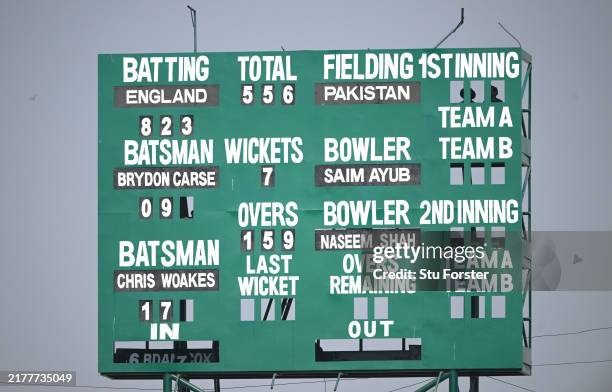
A Test score only makes sense when you read the runs alongside the innings, the wickets left and the time remaining. In our example, Team A's first-innings lead of 100 gives it an advantage in runs, with more batting still to come.
Read the match in this order:
- Innings: Which team is batting, and is this its first or second turn?
- Lead or target: How many runs separate the teams, or how many must the chasing side score?
- Wickets: How many dismissals can the fielding side still secure?
- Time: Is there enough scheduled play left for the required runs or dismissals?
Say Team B reaches 240/7 late on Day 5 while chasing 281. It needs 41 more runs and has three wickets left. Team A is 40 runs ahead on the combined scores, but it must take those three wickets before time runs out to win.
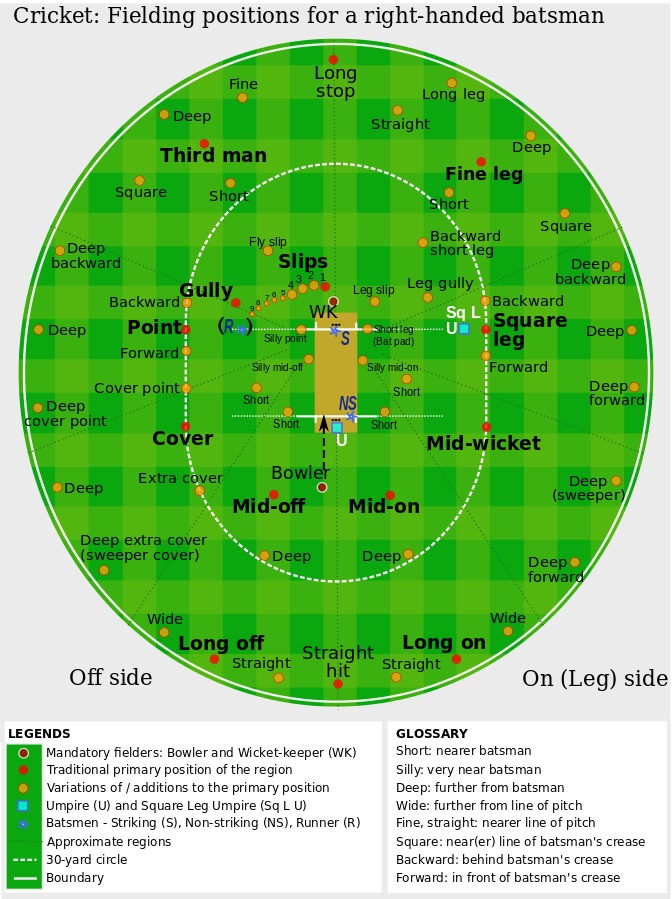
Early on, a chasing side can pursue the target steadily. On the final afternoon, it can decide that protecting its remaining wickets is the better result.
For the abbreviations and score fields, see how to read a cricket scoreboard, which covers batting runs, wickets and overs.
Why captains declare or enforce the follow-on
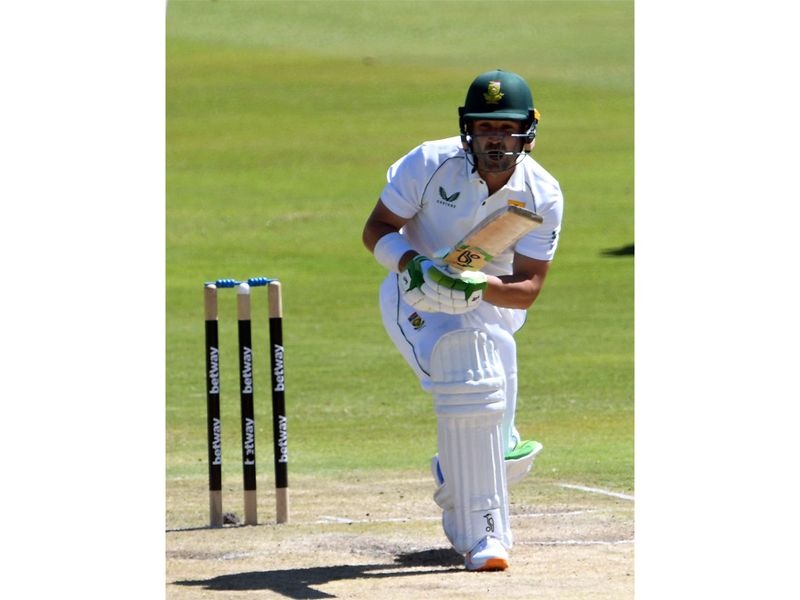
A captain can declare an innings closed while batters are still available. In our fictional Test, Team A declares at 180/5, which sets the target of 281 and gives its bowlers time to dismiss Team B. Batting longer would raise the target but leave fewer overs and less time to take wickets.
The follow-on is a separate choice. If the side that batted first has a qualifying lead after both first innings, its captain can make the opposition bat again immediately.
Under MCC's 2026 Laws, Law 14, the threshold for a two-innings match scheduled for five days or more is a first-innings lead of 200 runs. Shorter scheduled matches and certain interruptions, including the loss of the entire first day's play, have different thresholds.
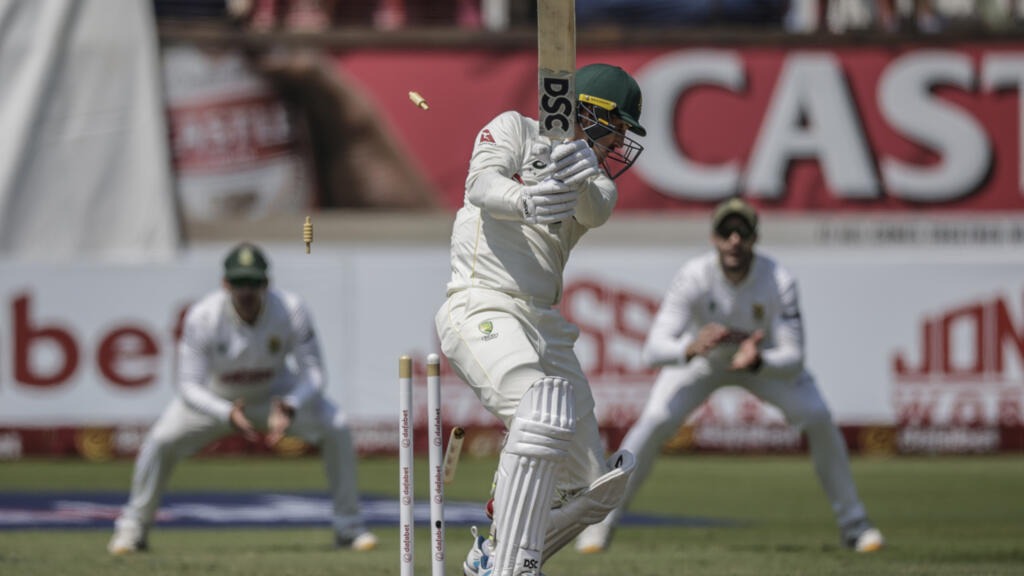
Take a separate example: Team A makes 350 and Team B is all out for 150. Team A leads by 200 and, under the five-day rules, can enforce the follow-on. Team B then bats again immediately, and Team A may never need a second innings.
How a Test ends: runs, wickets, an innings, a draw or a tie
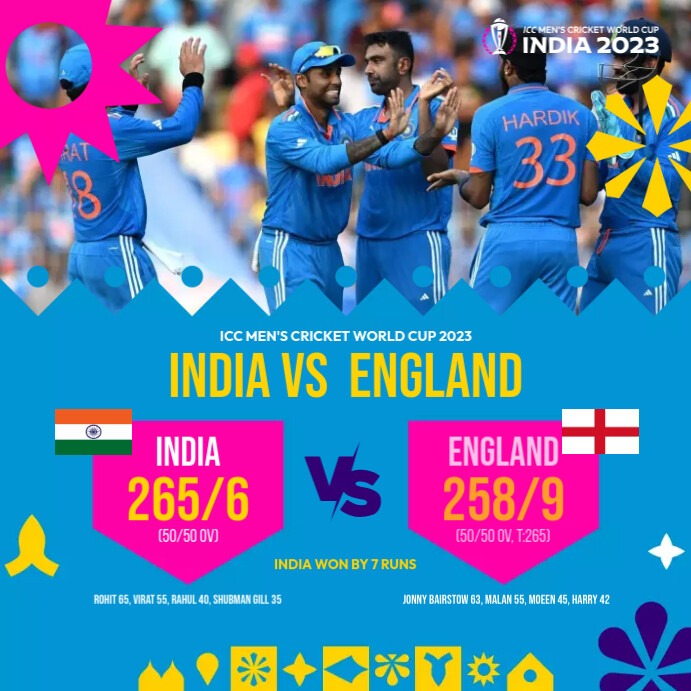
A Test can end with a successful chase, the dismissal of the chasing side, or an innings victory. It ends in a draw when time runs out without a decisive result, and in a tie when the completed scores are equal.
Here are four ways Team B's chase of 281 could end:
| Team B's fourth innings | Result | Why |
|---|---|---|
| 281/4 | Team B wins by six wickets | It reaches the target with six wickets still unused |
| 200 all out | Team A wins by 80 runs | Team B finishes on 450 combined against Team A's 530 |
| 240/7 when time expires | Draw | Team B has wickets left and neither team has achieved a winning result |
| 280 all out | Tie | Both completed aggregate scores equal 530 |
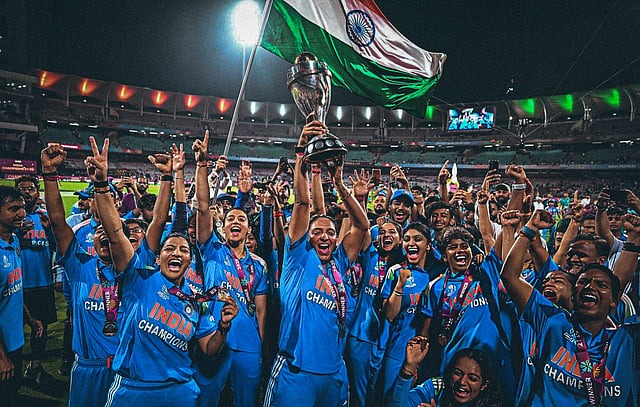
An innings victory works differently. Say Team A scores 350 and Team B scores 120, follows on and is dismissed for 200. Team B's combined total is 320, so Team A wins by an innings and 30 runs.
Rain or bad light can cut the playing time, which affects whether either side can finish a chase or take the wickets it needs. Our guide to the difference between a cricket draw and a tie goes further.
Why a drawn Test can still be dramatic

At 240/7 on the final afternoon, Team B is trying to survive with its last three wickets while Team A looks for the dismissals it needs to win. Rain can take away the time Team A needs, and a weather-dominated draw can disappoint. When a Test ends drawn, work out which side was trying to force a result and which was trying to survive.
How to follow Test cricket without watching every ball
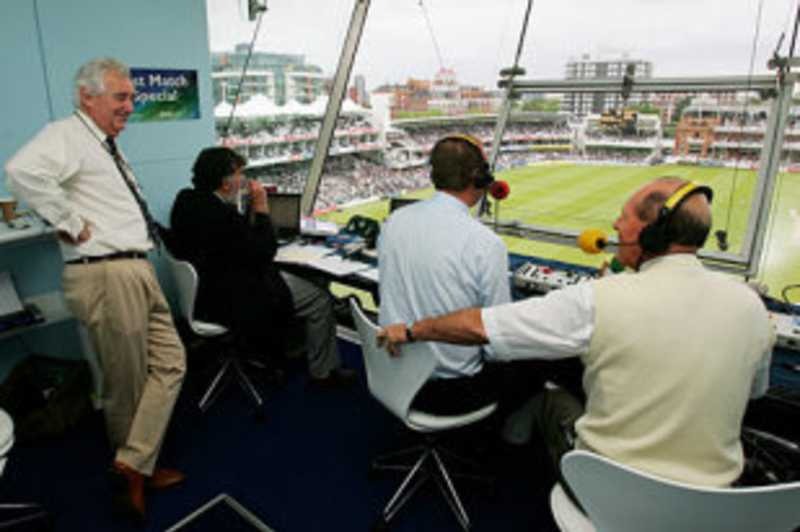
You can follow a five-day match through full sessions, live commentary, occasional score checks, or a mix of the three. One viewer described fitting sessions around other activities:
I do this. If the match starts late in the evening because it’s being played on the other side of the world I’ll have the first session up while I play some chill video games. If it’s getting interesting (lots of wickets falling) I might stick around for the next session otherwise I’ll check the score in the morning. If it’s during the day, I sometimes just listen to the commentary while I’m doing work at my desk.
Moments worth tuning in for:
- A new innings: The other team starts batting.
- Several quick wickets: The balance of the innings can swing fast.
- A declaration: The captain has decided there's time to take the wickets needed to win.
- A final-day chase or defense: The remaining runs, wickets and playing time decide what each team must do.
Where you can watch depends on the competition and the country. For the U.S., see how to watch cricket in the USA.