A score of 162/4 (17.3) means 162 runs and four wickets lost after 17 completed overs and three further valid balls. In a chase, set it against the target to see how many runs and balls are left.
You switch on a cricket match and the score sits in a corner of the screen. The batting makes sense: someone hits the ball, fielders chase it, and runs accumulate. The numbers around the score are harder to follow than the action.
Take this fictional T20 chase. Everything you need to read the display fits into one small strip.
What Does a Cricket Score Like 162/4 Mean?
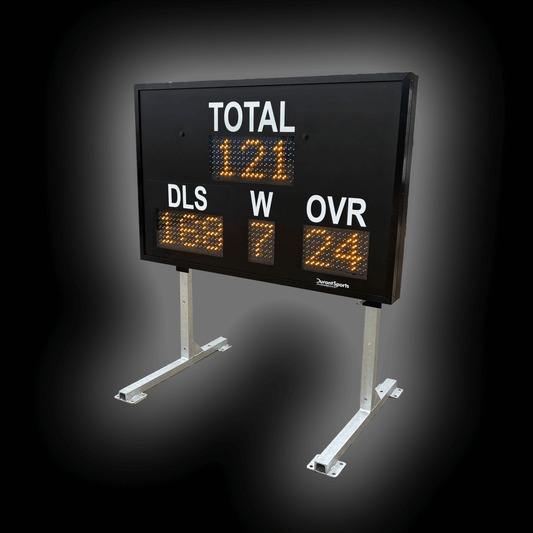
162/4 means the batting side has scored 162 runs and lost four wickets. The team total includes runs credited to batters and extras.
Fictional T20 match · Second innings · Blue batting
Team score: 162 runs / 4 wickets down (162/4)
Overs: 17 completed + 3 valid balls (17.3 of 20)
Target: 181 · Need: 19 runs from 15 valid balls
Current run rate (CRR): 9.26 · Required run rate (RRR): 7.60
Start with the batting-team label, here Blue. The number before the slash is the team's runs. The number after it is wickets down, meaning dismissals recorded during the innings. Commentators say “162 for four” or call Blue “four down.”
With eleven players, a batting side is all out after ten wickets. Blue has lost four, so six wickets are in hand.
Why 17.3 Overs Means 17 Overs and Three Balls
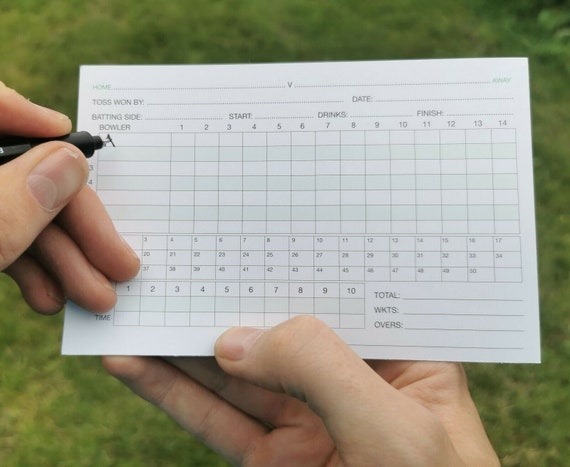
The 17.3 beside Blue's score means 17 completed overs and three valid balls of the next over. The digit after the point counts balls in the current over.
A normal over contains six valid deliveries. For the fictional score:
- Completed overs: 17 × 6 = 102 valid balls.
- Current over: Three more valid balls have been bowled.
- Total used: 102 + 3 = 105 valid balls.
A full T20 innings is 20 overs, or 120 valid balls. Blue has used 105, so 15 valid balls remain.
To convert any overs figure, multiply the number before the point by six and add the digit after it. That digit runs from zero to five. 17.5 means 17 overs and five valid balls; after the next valid delivery, the display advances to 18.0.
The MCC Laws of Cricket, Fourth Edition of the 2017 Code, took effect on October 1, 2026. The Laws also cover an umpire's occasional over miscount, an exception to the six-valid-ball pattern. That is a separate matter from wides and no-balls, which the Wide and No-ball comparison scores.
Wides and no-balls do not use up one of the six valid balls.
The guide to how cricket overs work covers valid deliveries, umpires and how an over ends in more detail, including Law 17.
First Innings or Chase? Find the Target
The same score can describe very different match situations. A side batting first builds a total for its opponent to chase. A side batting second in a limited-overs match tries to reach a specified target.
Suppose the first team finishes on 180. The chasing side needs 181 runs to win outright. If Blue is batting second at 162/4, it needs 19 more runs to reach that target.
| Match situation | What the display might show | What it means for the batting side |
|---|---|---|
| First innings | Blue 162/4 after 17.3 overs | Blue is adding to its own total |
| Second-innings chase | Blue 162/4, target 181 | Blue needs 19 more runs to win |
| Revised chase | Blue 162/4, revised target shown | The revised target shown sets the chase |
Look for an innings label, the previous team's score or a field marked Target. During a chase, the graphic often shows runs needed and balls remaining too.
Rain can shorten a match and change the target. The ICC playing conditions set the framework for the revised figure, which then fixes the runs needed for the chase.
What CRR and RRR Tell You About a Chase
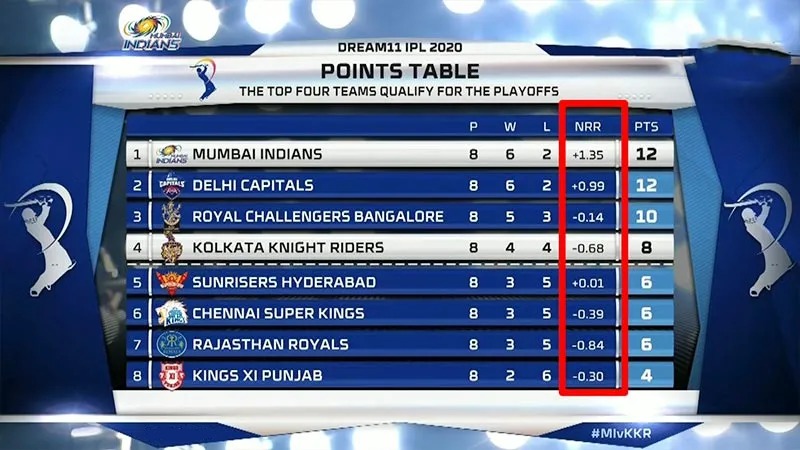
CRR and RRR measure two different paces. CRR, the current run rate, is the team's average runs per over so far. RRR, the required run rate, is the average runs per over needed from the remaining balls to reach the target.
For Blue, 105 valid balls equal 17.5 overs in decimal terms. The scoreboard writes it as 17.3.
The current rate is:
162 ÷ (105 ÷ 6) = 9.26 runs per over, rounded to two decimal places.
Blue needs 19 runs from 15 valid balls, or 2.5 overs. That gives a required rate of:
19 ÷ (15 ÷ 6) = 7.60 runs per over.
Blue needs 7.60 an over and has averaged 9.26, with six wickets in hand and the bowling still to face. A rate measures pace. It does not give the chance of winning.
A first-time American spectator described how hard it is to judge a match even after learning the rules:
I can turn to a baseball game and look at the score and the inning and come to an immediate judgement of the competitiveness of the match. With cricket, I watched matches where I was certain that one team was "winning" and they lost. On one hand, I like that you can't really know for sure how competitive the match was until it's over, on the other hand, that might be a huge barrier for me to ever dive into ODI cricket or test matches.
Full rate calculations and other scenarios are in the current and required run rate guide, which compares batting runs, overs remaining and chase targets.
The Extra Numbers: Batters, Bowlers, and Rates
The score strip can show three kinds of numbers at once: the team total, the current batters' records and the bowler's figures.
A new American viewer put the problem this way:
Hi guys, new American viewer here. I've been watching some of the ICC games available on ESPN+ and I'm having a ton of fun, but my enjoyment does have a slight barrier; I can follow the general action well enough and can understand the overall score/runs/outs/deliveries in an over, but there are a lot of extra numbers and statistics on the screen. Is there a "cheat sheet" or diagram to explain how to read a broadcast score display/scorecard?
| Field | Example or abbreviation | Meaning |
|---|---|---|
| Batter | 34 (22) |
The batter has scored 34 runs from 22 deliveries faced |
| Bowler | 1/28 |
The bowler has taken one wicket and conceded 28 runs |
| Strike rate | SR |
A batter's runs per 100 balls faced |
| Economy | Econ |
A bowler's runs conceded per over |
| Overs | O |
Overs bowled |
| Wickets | W |
Wickets taken |
| Runs | R |
Batting: runs scored by the batter. Bowling: runs conceded by the bowler. |
| Maidens | M |
Overs with no runs scored off the bowler |
| Team rates | RR, CRR, RRR |
Current or required team scoring pace, depending on the label |
Compare Blue's team score 162/4 with a bowler's 1/28. The first gives batting-team runs and wickets fallen. The second gives one bowler's wickets and runs conceded. The slash is the same; the label tells you what the numbers mean. A batter's 34 (22) covers that individual's innings alone.
Some television graphics show both active batters, the current bowler and the team rates. Others use a smaller strip or reveal more information between deliveries.
Why the Score Can Change Without the Over Number Moving

A wide or no-ball adds to the batting side's total without using a valid ball.
Imagine Blue is on 162/4 (17.3). The bowler sends down a wide that adds one extra run, with no additional runs scored. Blue moves to 163/4, while the overs figure stays at 17.3. If the next delivery is valid and produces no run, the over counter advances to 17.4.
That is why an over can contain more than six physical deliveries.
A recent-over strip often records each delivery in shorthand like this:
| Symbol | Meaning |
|---|---|
0 |
No run recorded on that delivery; the ball may still have been played or missed |
1, 4, 6 |
Runs recorded for the delivery |
W |
A wicket occurred |
wd |
Wide; does not use a valid ball |
nb |
No-ball; does not use a valid ball |
b |
Runs recorded as byes |
lb |
Runs recorded as leg byes |
Why Cricket Scoreboards Can Look Different
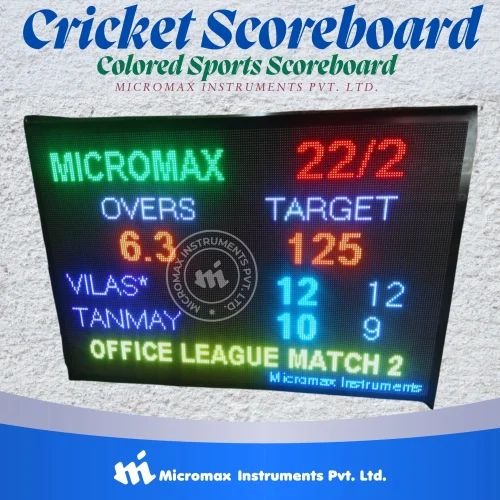
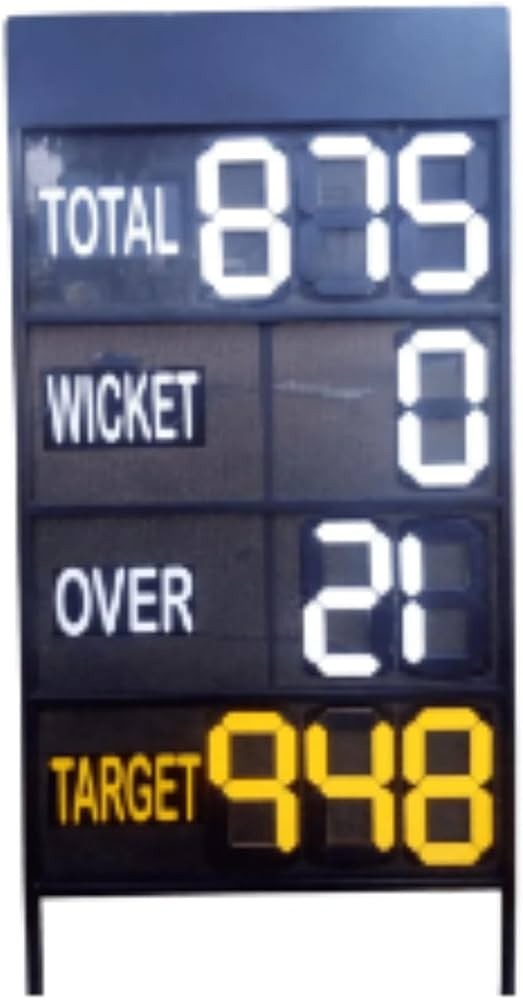
Some Australian presentations put wickets before runs, so a labeled 4/162 and a labeled 162/4 can describe the same innings. The field headings tell you which reading applies. A club ground scoreboard may split Total, Wkts, Over and 1st Inns into columns, while a television or app graphic uses a compact strip with fewer fields. If the score looks behind the action, look for a last-update time before treating the graphic as the newest play.
Put It Together: Read a T20 Scoreboard Yourself
Try reading the whole fictional display without looking back at the earlier calculations.
Fictional T20 · Second innings · Full 20 overs
BLUE 162/4 (17.3)
Target 181 · CRR 9.26 · RRR 7.60
Can you identify the team's runs, wickets fallen, valid balls already bowled, runs required, balls remaining and wickets in hand?
The answer is 162 runs, four wickets down, 105 valid balls used, 19 runs needed, 15 valid balls remaining and six wickets in hand. Blue's current run rate is 9.26, while the required rate is 7.60 runs per over.
Once you can read 162/4 (17.3) against a target of 181, the rest of the display follows. The full cricket scorecard lists the batters, extras and bowling figures behind that total.