An editorial policy needs a person and a process behind it. Readers should be able to identify the publisher, trace a cricket claim to its original source and report an error that changes a claim.
Who Is Responsible for Our Cricket Coverage?

Readers who rely on our cricket coverage should be able to see who the publisher really is and who makes the editorial decisions. A byline names the author. The publisher sets the standards for sourcing, disclosures and significant changes.
How We Choose and Check Cricket Sources

A cricket fact needs a source that fits the claim. The Laws behind an umpire's decision, the score recorded after a match and the date of an upcoming fixture each call for a different original document.
| Claim in an article | Relevant primary evidence | Verification detail |
|---|---|---|
| General rule of cricket | Marylebone Cricket Club (MCC) Laws | Law, edition, effective date |
| Rule in an international match | ICC or event playing conditions, read alongside the relevant Laws | Competition, format, series and date |
| Result or player statistic | Official organizer scorecard or primary match record | Teams, match, date, any amended record |
| Fixture, squad or eligibility news | Dated announcement from the responsible organizer or governing body | Whether the decision was provisional or confirmed |
| Statistical interpretation | Identifiable source records and a transparent comparison method | Denominator, period, match format, selection criteria |
The MCC's 2026 Laws announcement identifies the updated edition. The MCC Laws set the game's general framework. ICC playing conditions cover particular international formats and competitions, and a competition's document can change how a Law works in a given match.
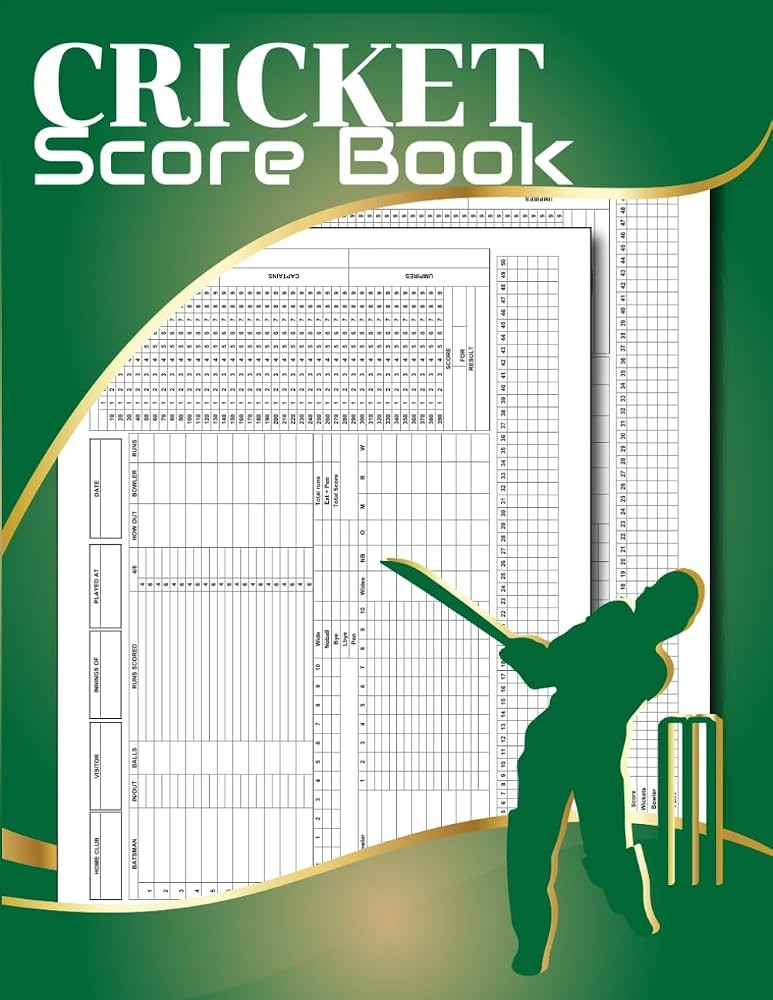
Take a disputed no-ball call in an international game. The relevant Law and that match's playing conditions give us the rule, and the scorecard gives us what was recorded. If a secondary database shows a different result, the original match record and any correction to it decide which figure we report.
News reporting, interviews and third-party databases add context. An interview quoted through several later articles is weaker evidence of the speaker's exact words than the original interview or recording. If primary records disagree, we say so and don't pick a number.
How We Handle Changing Rules, Results, and Records
A change in cricket regulations or match information applies only to the dates and competitions it covers. The source governing a match may differ from a document published later. The cricket source-verification method checks MCC Laws, ICC playing conditions and score statistics.
The MCC announced that the fourth edition of its 2017 Laws Code would come into force on October 1, 2026. That effective date matters when explaining which Laws apply to an earlier match.
The ICC's revised October 2026 international playing conditions applied to series starting on or after October 1. Series already underway continued under the previous conditions. This provision covers only the ICC change; domestic competitions need their own playing conditions.
Fixtures and squads change for a different reason: organizers revise arrangements they announced earlier. A dated update records new information, while a correction fixes a statement that was wrong when published. Keeping the original publication context visible lets readers tell the two apart.
Who Writes, Reviews, and Approves Our Content?
We separate the credited writer, the person who checks factual support and the role that authorizes publication. Where one person fills several roles, the policy says so.
- Source review: We compare match facts, rules and quotations with the original material.
- Meaning review: We check that headlines, statistical comparisons and quoted passages keep the conditions that make them accurate.
- Version approval: The version readers see is the version approved through our actual process.
Version control matters because an early draft can keep an old explanation after someone has prepared a corrected version.
The Society of Professional Journalists' Code of Ethics offers guidance on verification, accountability and correcting mistakes. It is voluntary and gives this publisher no accreditation.
Corrections, Clarifications, Updates, and Retractions
When published information changes in a way that matters, the notice explains why.
| Change | When it applies | What a reader should see |
|---|---|---|
| Correction | A fact was wrong in the original article | The earlier statement and the corrected fact |
| Clarification | Wording obscured an important condition or meaning | The missing context and revised wording |
| Update | New information became available after publication | What changed, with a relevant date |
| Retraction | The central reporting is unreliable and cannot be repaired with limited edits | A clear explanation of the withdrawal |
| Minor copyedit | Spelling or formatting changes leave the substance intact | Corrected copy; no notice needed |
For a significant correction, a visible note keeps the amended claim and date. When someone disputes the framing of accurate statistics, we examine the underlying assumptions first, then clarify or revise the explanation.
How to Request a Correction or Raise an Editorial Concern
Tell us which published claim you dispute and what evidence challenges it:
- Article URL: Give the page and the exact location of the claim.
- Disputed wording: Quote the sentence, statistic or attribution as it appeared.
- Reason: Explain the suspected error or missing qualification in plain terms.
- Supporting evidence: Provide the original scorecard, governing document, interview or organizer announcement for the claim.
For a wicket total, include the match and competition identifier. To challenge an opinion or ranking, name the disputed comparison method and explain why the interpretation misleads.
Editorial review ends in a correction, clarification, update or a reasoned decision to keep the passage.
Facts, Analysis, Opinion, and Quoted Voices
Readers should be able to tell recorded events from the interpretation placed on them. Take an illustrative score of 162/4: it means 162 runs for four wickets lost. Calling that innings unusually aggressive is analysis, and it needs the match format, conditions and a meaningful comparison.
In cross-era player comparisons, wickets per match, wickets per innings and bowling average answer different questions. The period, denominator and match type determine what a statistic supports. For a disputed statistic, the complete scorecard guide is useful because it shows the recorded field behind the claim, not only a summary.

A direct player statement needs a traceable interview or recording, and a Reddit or specialist-forum contribution is one person's account or opinion whose reported events need independent checking. Every published quotation keeps the original words, context and a precise link to the individual contribution.
Manufacturer specifications describe the product as the manufacturer supplies it. Performance claims based on personal testing require an actual evaluation.
Advertising, Sponsorships, and Affiliate Relationships

Readers who see commercial content should be able to identify the relationship behind it. The disclosure depends on how money, supplied products or other material connections affect the content.
| Arrangement | Reader-facing information | Where the relationship matters |
|---|---|---|
| Display advertisement | Recognizable advertising placement | Ad displayed alongside ordinary editorial content |
| Sponsored article | Disclosure of the commercial relationship | Promotional paid content or content that misleadingly appears independent |
| Affiliate-supported guide | Disclosure of the commission relationship | Recommendations carrying qualifying purchase links |
| Brand-supplied review item | Any promotional connection, plus the real basis of the evaluation | Product supplied for a connected review or endorsement |
The Federal Trade Commission's native advertising guidance covers commercial content that could be mistaken for independent reporting. When a paid equipment feature promotes the sponsor's products or otherwise misleadingly appears editorially independent, we disclose its commercial nature clearly where readers encounter it.

A disclosure describes the relationship behind the content. Receiving a product and testing it firsthand are separate facts.
AI Assistance, Automation, and Editorial Responsibility
An automated citation for a cricket rule has to match an accessible original document and the conditions for that competition. A transcript of a player interview must be compared with the original recording or a reliable primary publication before we attribute its words to the speaker.
This page still needs a real editor or reporting address. Until one is published, readers cannot submit a correction request through this policy.