A team in a T20 match gets 120 legal balls to score as many runs as it can, and its innings ends early if 10 of its 11 batters are out. Those two limits explain almost every score you will see. In the March 2026 T20 World Cup final in Ahmedabad, India used all 120 balls to make 255 for 5, the highest total ever posted in a T20 World Cup final, then bowled New Zealand out for 159.
What is cricket? The short version
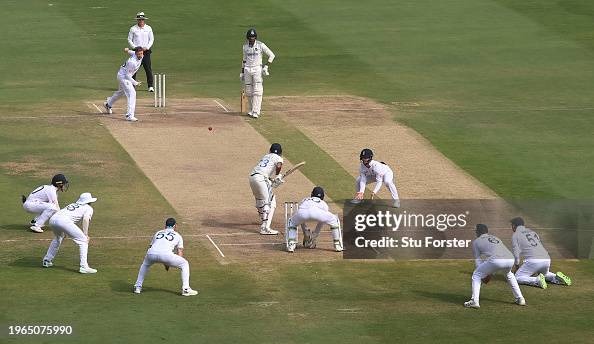
Two teams of 11 take turns. One bats and tries to score runs. The other bowls and fields, trying to keep the score down and get batters out. In a T20 or a one-day game each side bats once. In a Test, each side can bat twice.
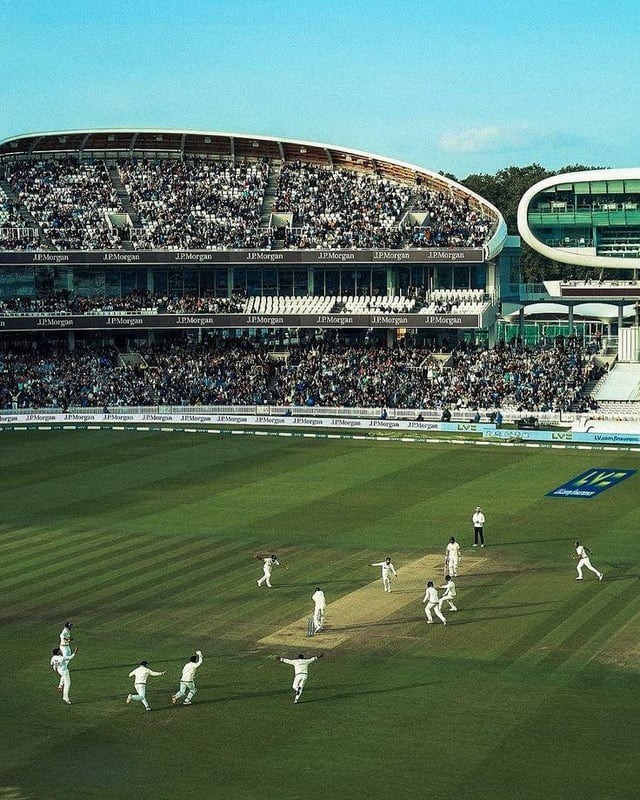
Everything happens around a strip of turf 22 yards long called the pitch. A batter stands at each end. The bowler runs in and delivers the ball at the far batter's stumps, three wooden posts topped by two bails. The other nine fielders and a wicketkeeper spread around an oval field that is usually well over 100 yards across.
The US has a longer cricket history than most Americans expect. The first international match was played in 1844, between the United States and Canada.
Innings, overs, runs and wickets in four sentences
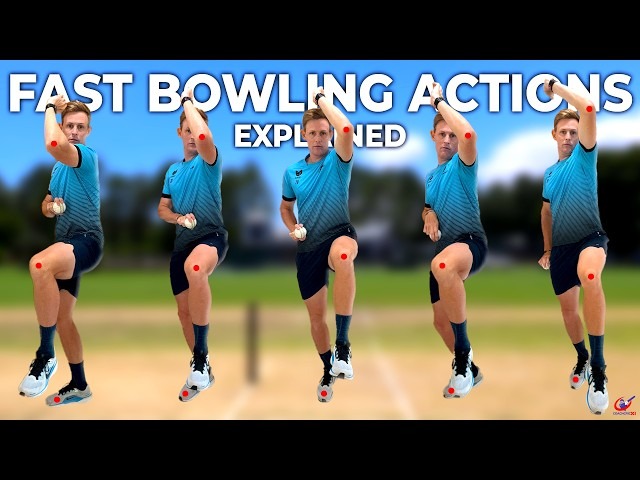
An innings is one team's turn to bat. Batters score by running to the opposite end, or by hitting the ball to the rope: four if it bounces first, six if it clears the rope in the air. A dismissal is called a wicket, and when the tenth falls the innings is over. Bowling comes in overs of six legal balls, and the same bowler cannot bowl two overs in a row.
Not every ball counts toward the six. A wide or a no-ball gives the batting side a run and has to be bowled again.
Five legal balls, then a wide: the over is not finished. The bowler still owes one legal delivery, so that over will contain seven balls in total.
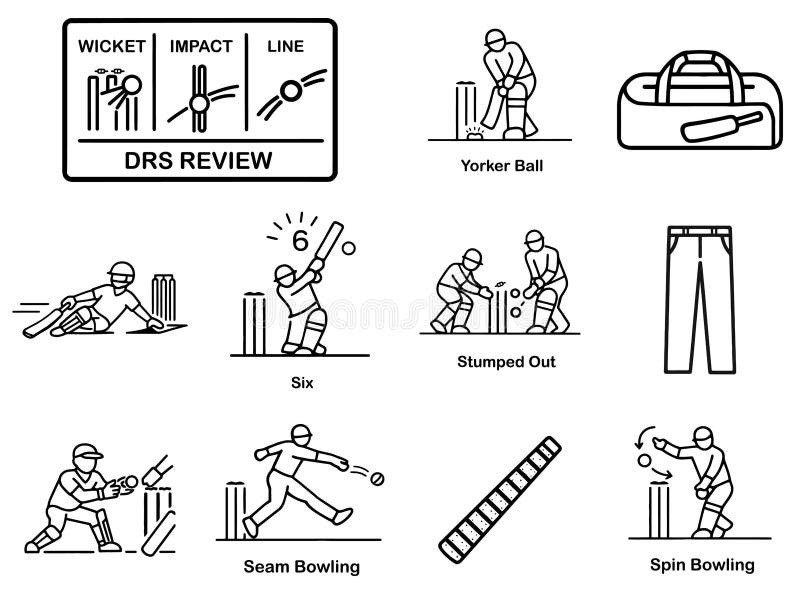
Ends switch after every over, so the next bowler runs in from the other side. The batter who faces first in the new over depends on how many runs were taken off the last ball, which is why commentators keep talking about "keeping the strike."
You will hear wicket used for two things: the set of stumps and the act of getting a batter out. "Four wickets down" always means four dismissals.
Reading a real score: the 2026 T20 World Cup final
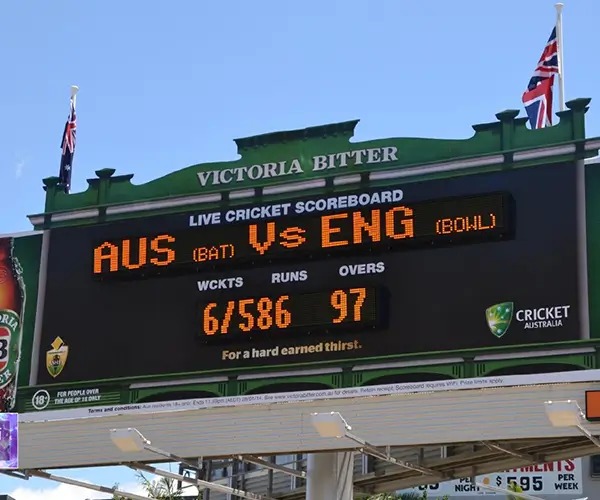
Here is India's innings from that final as it appeared on the scorecard:
255/5 (20)
| Part of the score | Meaning |
|---|---|
| 255 | Total runs, including extras |
| /5 | Five batters out, so six were still available |
| (20) | All 20 overs, all 120 legal balls, were used |
Partial overs are written with a dot that counts balls, not tenths: 14.3 means 14 overs and three balls. The cricket scoreboard walkthrough goes through every field on a broadcast graphic.
New Zealand needed 256, one more than India's total. They were all out for 159, so the overs left over did not matter: once ten wickets fall, the innings is finished. When I look at any chase, I read it in this order:
- Runs needed: target minus current score.
- Balls left: 120 minus the balls already bowled.
- Wickets in hand: 10 minus wickets lost. Two wickets left with 20 needed is a very different game from six left.
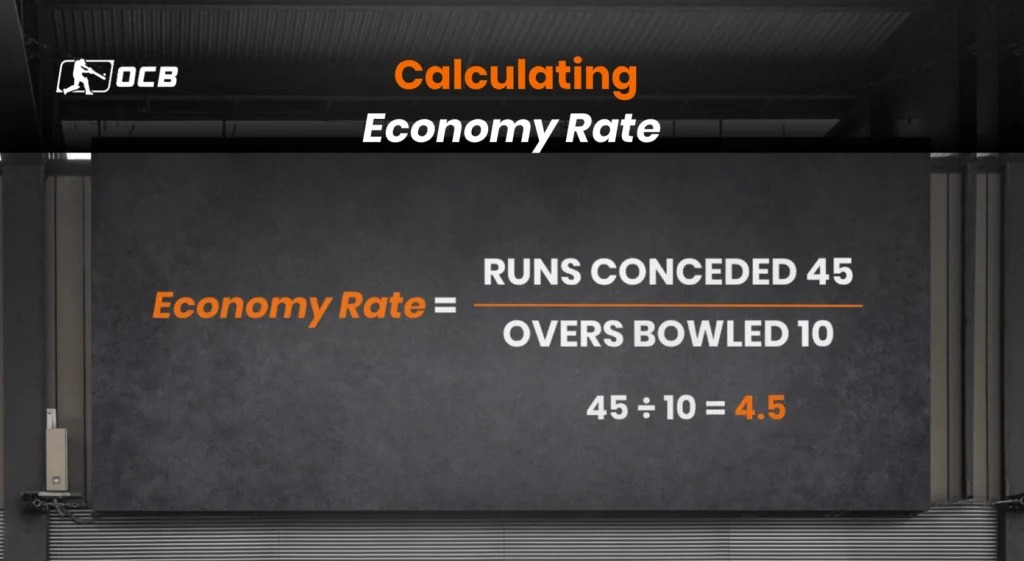
Divide runs needed by overs left and you have the required run rate, the number every T20 broadcast keeps on screen.
T20, ODI, or Test: which format should you watch?
All three formats share the same rules for scoring and dismissals. What changes is the clock. The T20, ODI and Test comparison goes deeper on tactics.
| Format | Overs per side | Typical length | Record team total (men's internationals) |
|---|---|---|---|
| T20I | 20 (120 balls), one innings | About 3 to 4 hours | 344/4, Zimbabwe vs The Gambia, 2024 |
| ODI | 50 (300 balls), one innings | About 7 to 8 hours | 498/4, England vs Netherlands, 2022 |
| Test | No limit, up to two innings each | Up to 5 days, at least 90 overs a day | Can end in a draw if time runs out |
For a first match I'd pick a T20. It fits into an evening, and totals mostly fall between about 100 and 250, so you quickly learn what a "good" score looks like.
The ICC's three-format overview lists the official international structures.
Time zones are the real obstacle for US fans of Test cricket, as this viewer found:
For a test match, what are the typical times of a match? What local time to they start, and which local time do they call it a day? I might be interested in checking out some Test cricket, but it sounds like to watch India-Australia, I'd have to hope for some serious insomnia to stay up all night to watch.
The insomnia worry is fair. Tests in India usually start at 9:30 a.m. local time, which is 11 p.m. Eastern the night before, and a day runs about seven hours with lunch and tea breaks. West Coast fans get the easier deal: the same start is 8 p.m. Pacific.
Closer to home you can follow the US national team, buy a ticket to a Major League Cricket game in Texas or California, or join a weekend league. The US cricket guide sorts those options.
Cricket vs. baseball: where the analogy helps and fails
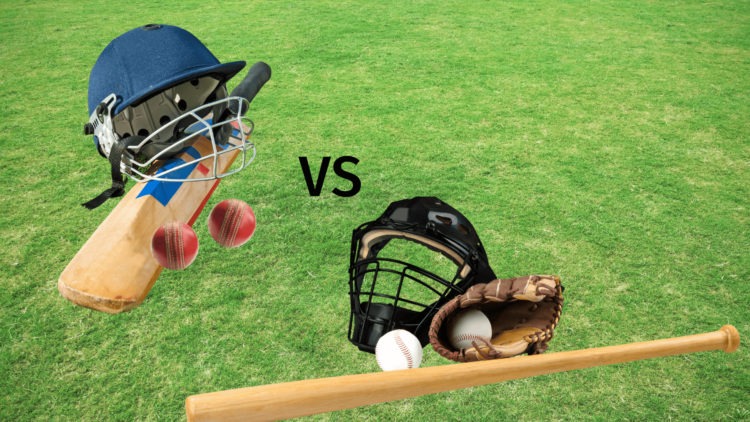
The scoring scale is the first shock. A baseball team needs 27 outs to finish a game, three per inning. A cricket team needs 10 outs for a whole innings, and it may get a hundred or more runs before that happens. A cricket "innings" is also always singular and covers a team's entire turn at bat, not one frame of a game.
Who writes the rules: MCC Laws and ICC playing conditions
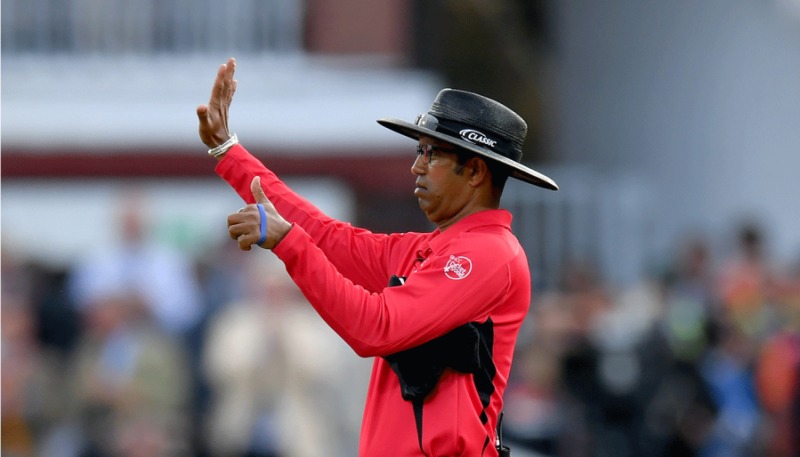
The MCC Laws of Cricket are the base rulebook, kept by Marylebone Cricket Club in London since the late 1700s. International matches add ICC Playing Conditions on top, covering things the Laws leave open, such as fielding restrictions and the review system.
A new edition of the Laws took effect on October 1, 2026, with 73 material changes. Two you might notice: laminated bats, once limited to junior cricket, are now legal for adults, and in multi-day games the last over of the day is bowled in full even if a wicket falls during it. Some of these changes were already in ICC playing conditions before the new edition arrived.
How to watch cricket in the United States
Most live cricket in the US runs through one name: Willow. The streaming service Willow by Cricbuzz costs $9.99 a month or $79.99 a year and carries more than 60 live matches a month, including the IPL, The Ashes, the Big Bash League, India home series and ICC T20 World Cups. Willow also holds US and Canadian rights to Major League Cricket.
The 2026 MLC season ran from June 18 to July 18 with six teams:
- Los Angeles Knight Riders (2026 champions)
- MI New York
- San Francisco Unicorns
- Seattle Orcas
- Texas Super Kings
- Washington Freedom
Games were split across Grand Prairie Stadium in Texas (15 matches), the Oakland Coliseum (12, including the playoffs and final) and the Knight Riders Cricket Ground at Fairplex in Pomona, California (7). If you live near Dallas or the Bay Area, a ticket is the fastest way to learn the game.
How to start playing cricket in the United States
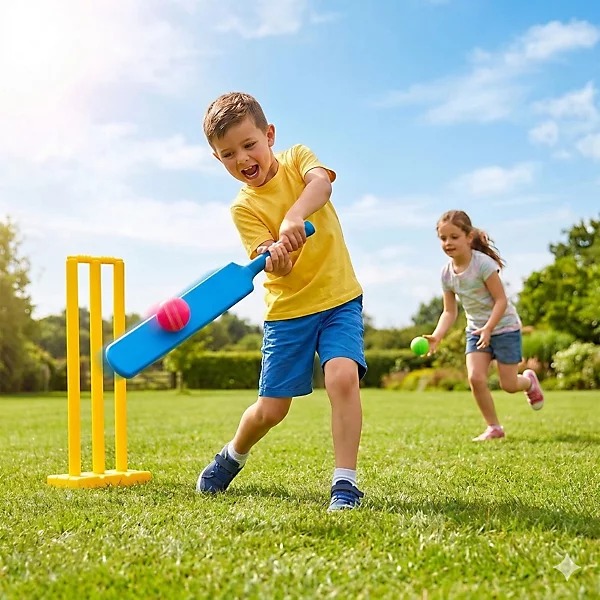
Most US adults start in tennis-ball or tape-ball cricket. The ball is soft, you can play in sneakers, and you need little more than a bat. Hard-ball (leather) cricket is the version you see on TV, and it needs a helmet, pads, gloves and an abdominal guard. My advice: play a few tennis-ball games first, then buy hard-ball gear once you know you'll stick with it.
Prices from a New Jersey cricket shop's beginner guide give a realistic picture:
| Item | Price | Key spec |
|---|---|---|
| SS 281 Junior bat | $40 | Kashmir willow, junior size |
| SS Cannon bat | $105 | Kashmir willow, adult |
| MRF Carnage GILL 77 bat | $225 | English willow, adult |
| Forma Carbon X Lite helmet | $80 | Mild steel grill |
| SG RP Ecolite pads | $55 | Adult batting pads |
| Gray Nicolls MCP catching gloves | $30 | Fielding practice |
| Bratla Cricket Set Size 4 & 6 | $69 | Bat, wind ball, stumps, non-striker stump with base |
The same shop puts a full student-budget hard-ball kit at about $130 and a serious beginner's kit at about $270. Kashmir willow bats run roughly $40 to $125; English willow starts near $200.
To find a team, search your county's parks department listings. Fairfax County, Virginia, for example, points adults to the DC Metro Area Cricket League. One administrative wrinkle: the ICC suspended USA Cricket's membership in September 2025, and during the suspension the ICC itself sanctions domestic events in the US. Local leagues keep playing; the national team keeps its place in ICC events.
Washington Cricket Academy runs a children's Beginners (Tennis Ball) program and a separate adult program, a typical setup for US academies. If runs, wickets and overs still feel fuzzy, read the beginner cricket guide before your first session.
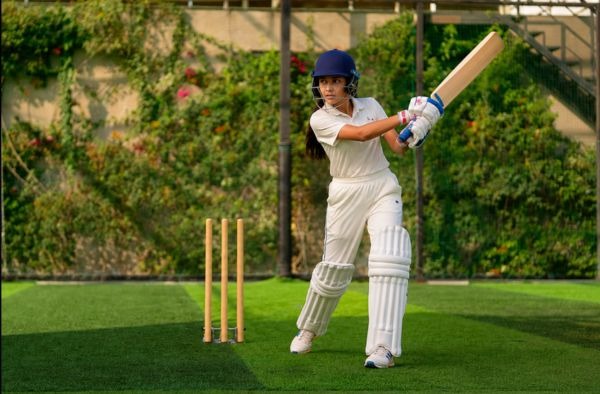
There is a long-range reason to start now. Cricket returns to the Olympics at LA28 for the first time since 1900, with six men's and six women's teams playing T20 at a temporary stadium on the Fairgrounds in Pomona, July 14 to 30, 2028.
Where to go next
Each section above has a deeper guide behind it:
- Cricket basics: Cricket for Beginners and What Is Cricket?
- Reading scores: How to Read a Cricket Scoreboard
- Formats: Cricket Formats Explained
- Rules: Cricket Rules and Laws Explained
- Watching in the US: How to Watch Cricket in the USA
- Playing: How to Start Playing Cricket
A practical first step: open the scorecard of the 2026 T20 World Cup final and find Ishan Kishan's 54 off 25 balls. His strike rate, runs per 100 balls, works out to 216. If you can do that sum for any batter on the card, you can follow a T20 game on Willow.