In a full-length T20I the opening powerplay lasts six overs, in an ODI ten. In both, the fielding side can have two fielders outside the marked restriction area, known as the circle. Later phases allow more. Shortened innings, the Big Bash Power Surge and slow over-rate penalties change these numbers, so check the competition's playing conditions before calling a field illegal.
What Is a Powerplay in Cricket?
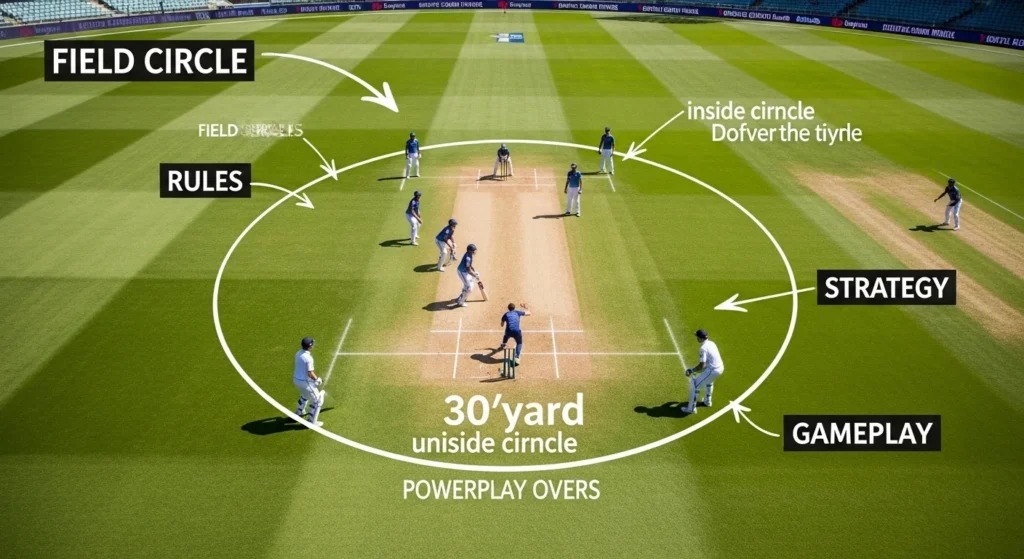
A powerplay is a period of a limited-overs innings in which the fielding team faces tighter limits on where its players can stand. With fewer fielders allowed deep, a batter finds more open space to attack.
In the first six overs of a T20, most of the fielding side must stay inside the circle and only two can stand outside it. Once the opening powerplay ends, the captain can send more fielders deep, up to the later-phase limit.
Where is the restriction area?
Two semicircles centered on the middle stumps at either end of the pitch, joined by parallel straight lines, form the marked area. The earlier men's international conditions use a radius of 30 yards (27.43 meters). The ICC Women's T20 World Cup 2026 regulations set 25 yards (22.86 meters) for that tournament.
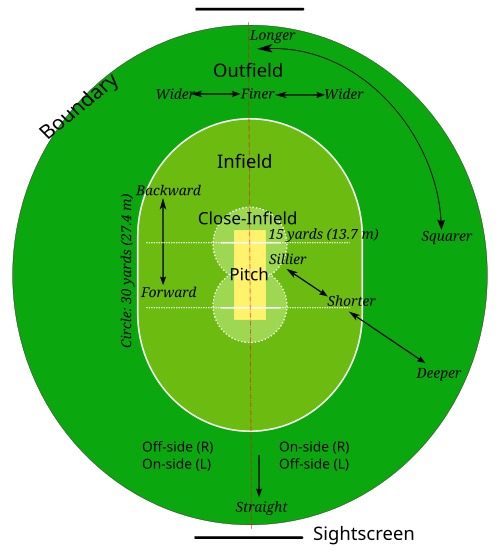
When the rule says a maximum of two outside, the captain can place zero, one or two fielders beyond the marked line. A fielder well short of the boundary rope still counts as outside. Positions count at the moment the bowler releases the ball.
In the women's 2026 tournament, a third fielder beyond the restriction area at that moment breaks the opening limit. The official ICC Women's T20 World Cup 2026 playing conditions set out the event's fielding restrictions in clause 28.7.
Does Test cricket use this scheduled powerplay?No. Fixed powerplay periods are a T20 and ODI feature. Test cricket has no scheduled equivalent.
How Many Fielders Are Allowed Outside in T20 and ODI Powerplays?
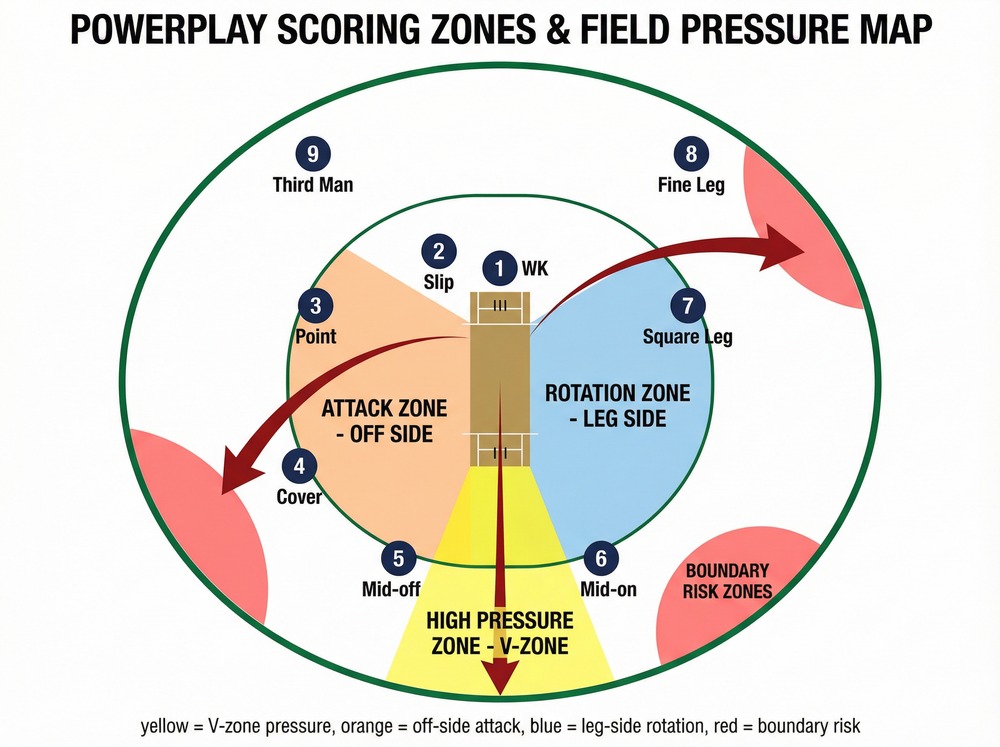
The opening powerplay allows at most two fielders outside the circle in the full-length international examples below. Later limits depend on the format and on whether men's or women's conditions apply.
The men's T20I, men's ODI and women's ODI rows come from earlier ICC standard conditions. The women's T20I row comes from the ICC Women's T20 World Cup 2026 event regulations. Other competitions and series use their own figures, so the edition governing a fixture sets the numbers.
| Format and rule scope | Opening phase | Later phase or phases |
|---|---|---|
| Men's T20I, earlier ICC conditions | Overs 1 to 6: maximum 2 outside | Overs 7 to 20: maximum 5 |
| Men's ODI, earlier ICC conditions | Overs 1 to 10: maximum 2 | Overs 11 to 40: maximum 4; overs 41 to 50: maximum 5 |
| Women's T20I, 2026 World Cup event | Overs 1 to 6: maximum 2 | Overs 7 to 20: maximum 4 |
| Women's ODI, earlier ICC conditions | Overs 1 to 10: maximum 2 | Overs 11 to 50: maximum 4 |
These are the ordinary phase limits. Under the July 2025 ICC men's T20I conditions, a qualifying slow-over-rate breach cuts the maximum outside to four, down from the normal five in the later phase. The ICC Women's T20 World Cup 2026 event conditions cut the later maximum from four to three in the same way.
In both provisions, the extra restriction starts with the over after the cessation time is reached. It does not start in an innings reduced below ten overs unless already in force, and it does not apply when an innings finishes before that time.
In men's ODIs, a field at 35.0 overs falls in the four-outside middle phase and a field at 45.0 overs falls in the five-outside final phase. In women's ODIs the 45.0-over maximum stays at four, so the limit at 45.0 overs differs between the two.
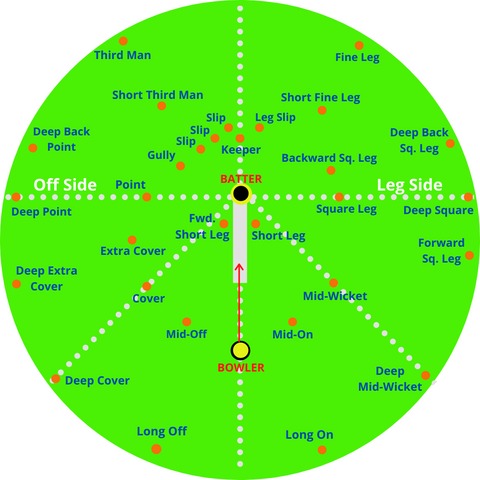
These figures are maxima. A bowling captain can keep more players close to the bat even when the rules allow more outside.
What Happens to the Powerplay When Rain Shortens a Match?
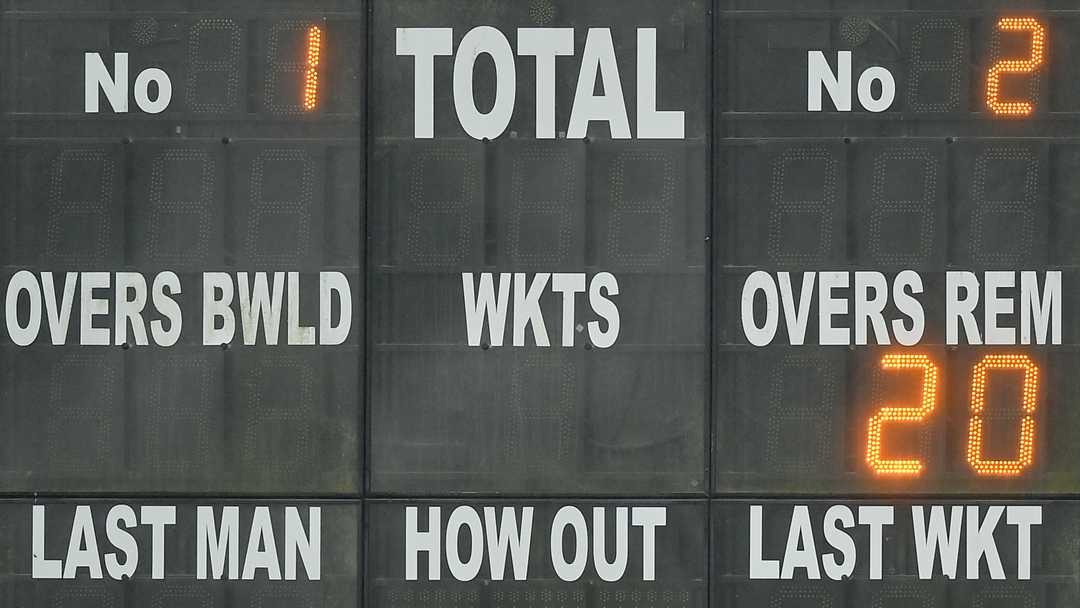
When rain shortens an innings, the playing conditions shorten the powerplay as well. The allocation can end partway through an over, because the rules specify a number of legal deliveries.
At the ICC Women's T20 World Cup 2026, an innings reduced to eight overs gets a powerplay of 2.2 overs. In cricket notation that means two complete overs plus two legal balls, 14 legal deliveries in all. An over has six legal deliveries.
| Match progress | Legal deliveries completed | Fielding rule at this event |
|---|---|---|
| After over 2 | 12 | Opening two-outside restriction remains |
| After the second legal ball of over 3 | 14 | Opening allocation is complete |
| On the next delivery | 14 completed | Later four-outside restriction applies |
The switch happens inside the third over. To convert a score such as 3.4 into legal deliveries, multiply the three complete overs by six and add four: 22 legal deliveries. The digit after the point runs from zero to five.

Wides and no-balls normally add a delivery to the over. The eight-over example assumes successive legal balls. Interruptions and illegal deliveries fall under clauses 28.7.6 and 28.7.7 of this event's conditions.
A different shortened-ODI example
An earlier ICC men's ODI regulation gives a more complicated case: a scheduled 50-over innings is interrupted after 8.3 overs and reduced to 32 overs. The revised powerplay phases are 7, 19 and 6 overs. The new first phase has already elapsed when play resumes, so the middle-phase fielding limit applies immediately. The final phase starts after 26 overs have been bowled.
Can a Team Choose When to Take Its Powerplay? The BBL Power Surge Exception
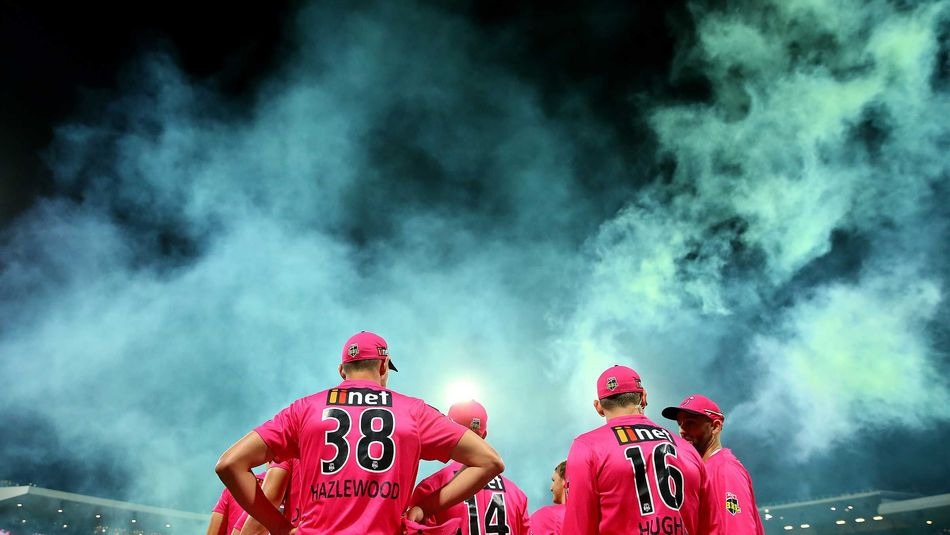
In the standard men's T20I example, the powerplay is fixed at the start of the innings. Australia's Big Bash League works differently: four opening overs under the tighter fielding restriction, plus a separate two-over Power Surge that the batting side selects within the competition's permitted window. For how the powerplay fits into a whole T20 match, see the T20 match guide.
A batting team can take its two extra restricted overs while set batters are at the crease, or against a bowling matchup it favors.
| Restricted period | How it starts | Why it appears |
|---|---|---|
| Standard men's T20I opening powerplay in cited conditions | Scheduled first six overs | Fixed opening restriction |
| BBL/WBBL opening powerplay | Scheduled first four overs | League's opening restriction |
| BBL/WBBL Power Surge | Batting side selects an eligible two-over period | League's additional restricted period |
| BBL/WBBL 2026/27 clock-expiry penalty | From the delivery after the innings clock expires | Extra restriction for a slow over rate, lasting through the innings |
Tighter fielding rules can come back in a Big Bash innings long after the opening powerplay ended. The cause is either the batting-selected Power Surge or the over-rate sanction introduced for 2026/27.
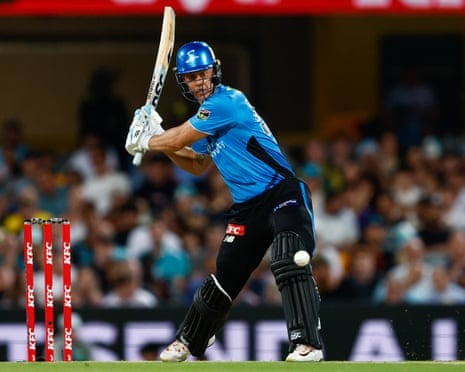
One r/Cricket user said the Power Surge adds a useful tactical choice and asked whether other T20 competitions should adopt it:
The BBL has tried several gimmicks in the past however the power surge is one that seems to have worked well. For those that don't follow the BBL, there is no traditional 6 over Powerplay at the start, instead there is a 4 over Powerplay in the beginning and the teams can then decide when to choose the additional 2 overs during their innings. This rule creates an additional tactical aspect of the game, sorta reflecting the ODI Powerplay rules of the past. I'm curious to know which one of the 2 do people prefer? Should the power surge be adopted globally and across t20is?
Cricket Australia published innings clocks of 84 minutes for BBL and 78 minutes 45 seconds for WBBL in its 2026/27 arrangements. Once the clock expires, full powerplay fielding restrictions apply from the next delivery until the innings ends.
For BBL and WBBL matches, the Cricket Australia announcement explains the over-rate change. Its trigger is elapsed innings time, while the Power Surge follows the league's own selection rules.
How Can You Tell Whether a Powerplay Field Is Legal?
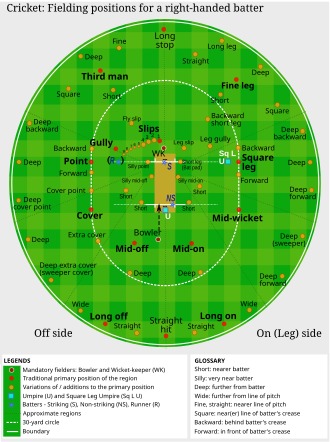
Run three checks for the delivery in question. Establish the innings phase, identify its maximum number of fielders outside the circle, and count the fielders actually outside as the bowler releases the ball. In the opening phase of the ICC Women's T20 World Cup 2026, three outside exceeds the maximum of two, and under clause 28.7.8 the square-leg umpire calls and signals No ball. Movement after release comes too late to count. Other fielding restrictions and domestic over-rate penalties have their own provisions.
Why the Powerplay Changes Batting and Bowling Tactics
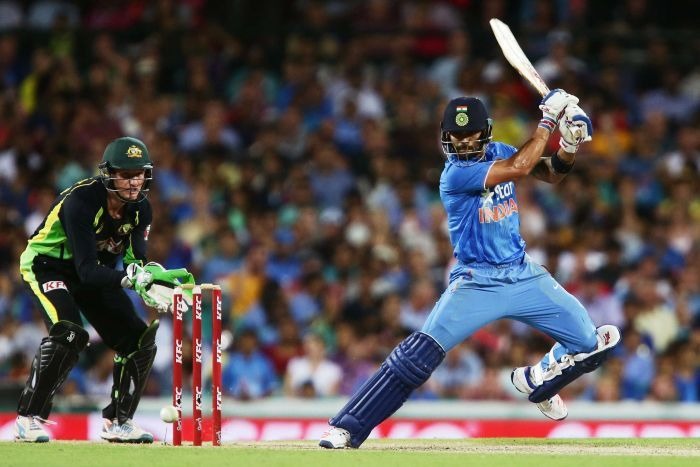
With fewer deep fielders, a batter can attack scoring areas that get stronger protection later in an innings. Lofted shots carry over nearby fielders, and well-placed ground strokes pass through the infield. For close catchers and the striker's off and leg sides, see the fielding positions guide.
The bowling side has options too. Opening bowlers can find swing or seam movement, and close catchers threaten an early dismissal. Every attacking shot also risks a wicket.
Another r/Cricket user proposed an unconventional response: promote bowlers or bowling all-rounders to open the batting and attack before more fielders can move outside.
What I am proposing is that the batting team can utilize the bowlers in the powerplay. Think about it, when do the bowlers have the best chance to score runs? When the field is spread out or when there are just 2 patrolling the boundary? Ask your 4 bowlers and bowling all-rounders to go out there and have fun. Every boundary they get is a bonus.
Which Powerplay Rules Apply to the Match You're Watching?
A broadcast can show a restricted-field period without saying whether it is scheduled, batting-selected or imposed for a slow over rate. That distinction matters most in shortened matches and domestic leagues.
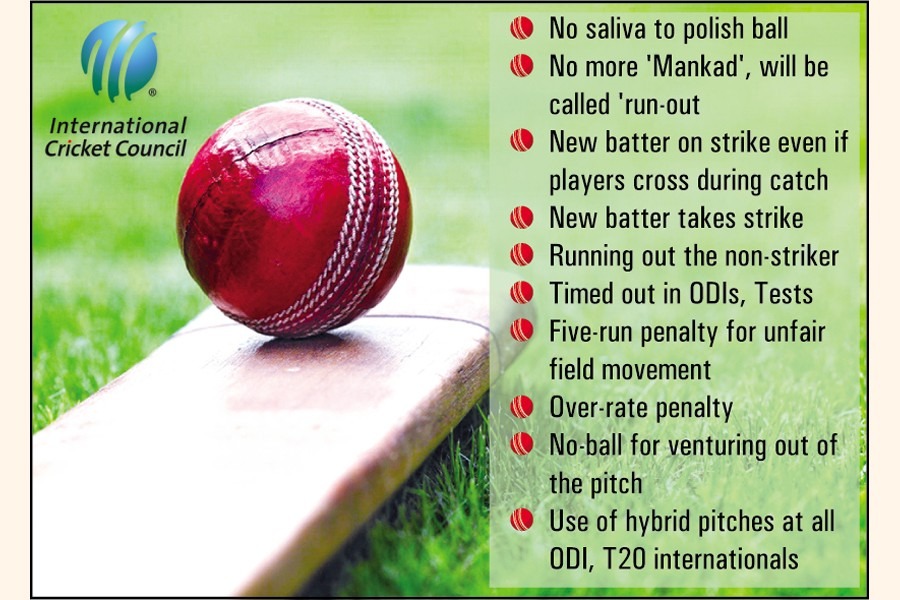
The ICC playing-conditions index is the starting point for international matches. A named ICC tournament can have its own event conditions, and a domestic league such as the BBL follows its own competition rules. MCC Laws supply the underlying framework for the sport.
Match the document to the fixture
- Identify the competition. Decide whether the fixture is an international series, a specific ICC event or a domestic league.
- Identify the applicable format and group. Establish T20 or ODI, men's or women's, and the scheduled or revised innings length.
- Find the edition governing the match. Match the start date of the series or competition to the conditions' effective date, then find the numbered fielding-restrictions clause.
- Apply the phase and interruption rules. For a reduced innings, use that document's table, and check whether an over-rate restriction is in force before counting fielders outside at delivery.
The ICC announced new international playing conditions for series starting on or after October 1, 2026. Series already underway could continue under the earlier editions, as the ICC announcement explains. That effective date matters when you compare two similar rule descriptions.
A source mentioning elective ODI batting powerplays describes an earlier playing-condition regime. Measurements depend on the document too: an older women's standard cited a 25.15-yard radius, while the 2026 Women's T20 World Cup event specifies 25 yards.
For the wider context of a longer innings and its fielding restrictions, see the ODI match guide.