DRS overturns an on-field decision only when the evidence is clear enough. A player or an umpire starts the review, and the third umpire checks the replays and tracking. On a marginal LBW, Umpire's Call leaves the original decision standing. A team whose review ends on Umpire's Call alone keeps it.
The umpire raises a finger. The batter makes a T with both hands. On television, a projected ball path appears to brush the stumps. The verdict remains Out.
A few overs later, another marginal projection appears. This time the original Not out decision survives. To a new viewer, the two outcomes look contradictory. Both can be correct under the Decision Review System, or DRS, because the original decision and the classification of the evidence both matter.
Player Review vs Umpire Review: Who Starts the Check?
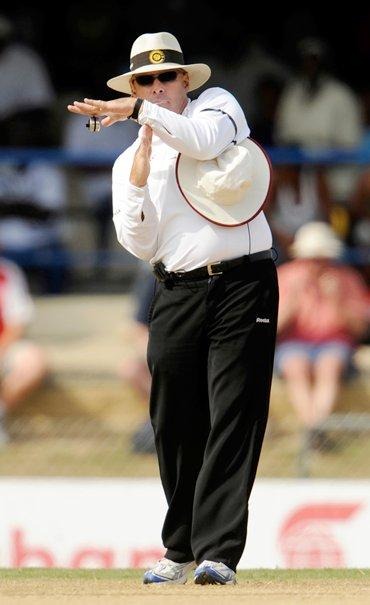
A Player Review starts when a player challenges an on-field decision. An Umpire Review starts when an on-field official refers an incident the playing conditions allow to the third umpire.
In a Player Review, the batting or fielding team asks for a decision to be examined again. If the challenge fails, it costs one of that team's limited unsuccessful reviews.
An Umpire Review covers incidents named in the playing conditions. A close run-out or stumping can go to the television umpire without either team spending a Player Review. Which referrals are allowed varies by competition.
The ICC's DRS overview formally distinguishes the two routes.
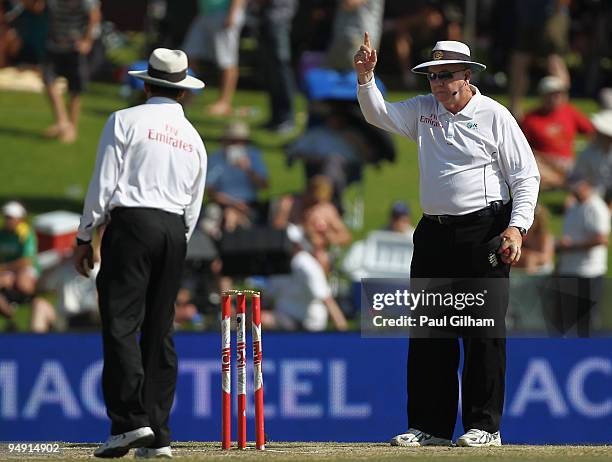
The broadcast also shows ordinary slow-motion replays while commentators discuss a decision. To spot a formal review, watch for the requesting player or umpire and the signal on the field.
A Reddit poster in a 2019 Ashes umpiring discussion raised the question:
Which brings us to more tech questions. Why can't an umpire consult with the third umpire if he isn't sure of an lbw? Give a soft signal and let them check if it's something blatant that you've missed. And bad calls decide games. It's not always the perogative of the players to call umpires out for their wrong calls. It's the umpires job to get it right !
ICC playing conditions define the incidents that an on-field umpire may refer to the third umpire.
Who Can Request a DRS Review, and How Long Do They Have?
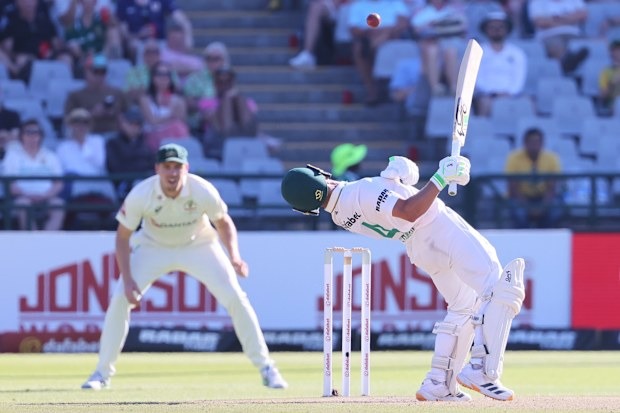
Under the ICC Men's T20 World Cup 2026 Appendix D, a batter given Out can challenge that dismissal, with Timed Out excluded. After a Not out decision, the fielding captain or acting captain can request a review of an eligible dismissal. Run-out and LBW reviews ask different questions; the wicket and dismissal guide covers each dismissal type.
The player uses a T-shaped signal. For this tournament, the request must come within 15 seconds after the ball becomes dead. The on-field umpire gives a prompt after 10 seconds.
- Dead Ball: The request period begins.
- After 10 seconds: The umpire prompts the player about the review.
- At 15 seconds: The request deadline arrives.
Suppose a batter is given Out and briefly speaks with a partner. The umpire gives the prompt, and the batter makes the T signal before the deadline. The request is on time, provided the dismissal is eligible.
Under this tournament's protocol, the striker may challenge a decision not to call No ball, while the fielding captain or acting captain may challenge a decision to call No ball. Reviews of alleged illegal bowling actions are excluded.
These provisions come from ICC Men's T20 World Cup 2026 Appendix D, sections 3.1 and 3.2. The 10 and 15 second limits are specific to this tournament. An Umpire Review follows a separate referral procedure.
What Does the Third Umpire Actually Look At?
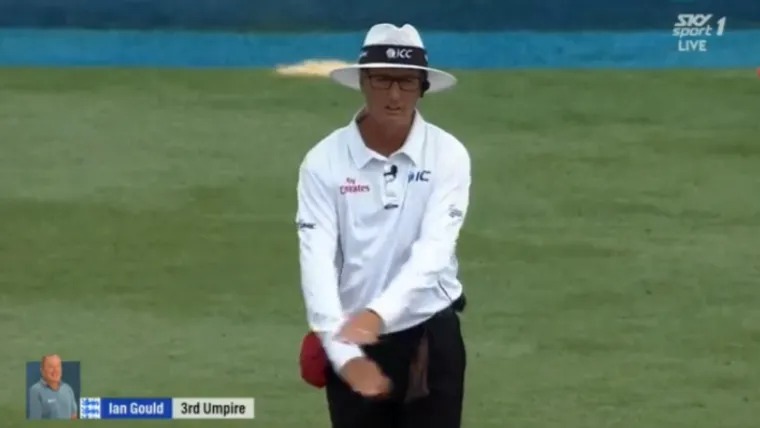
The third umpire examines the evidence needed for the incident under review. Video replays, fair-delivery checks, edge detection and ball tracking each answer a different question.
In a dismissal Player Review under the T20 World Cup protocol, the examination starts with the prescribed No-ball checks. In an LBW review, the third umpire then determines whether the ball touched the bat before striking the batter, and uses ball-tracking evidence to assess the LBW criteria.
| Question | Evidence considered | What it establishes |
|---|---|---|
| Was the delivery fair? | Delivery replays and checks | Whether a relevant No-ball condition affects the dismissal |
| Did the ball touch the bat? | Synchronized video and approved edge detection | Whether contact with the bat is supported by the evidence |
| Would the ball hit the wicket? | Ball tracking, with the necessary LBW checks | Pitching, impact and predicted wicket contact |
| Was the batter inside the crease? | Permitted replay angles | The relevant position during a run-out or stumping examination |
For a possible catch behind, the third umpire examines the ball passing the bat alongside synchronized sound. UltraEdge and the Real-Time Snickometer are familiar names for edge-detection displays. A sound spike is read together with the video frames and the governing protocol.
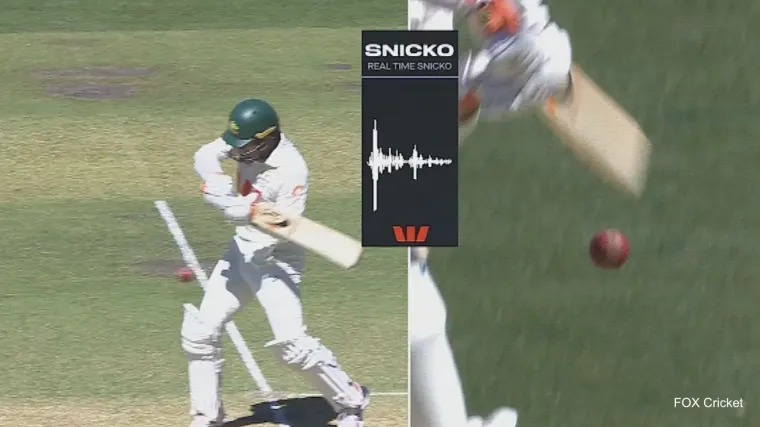
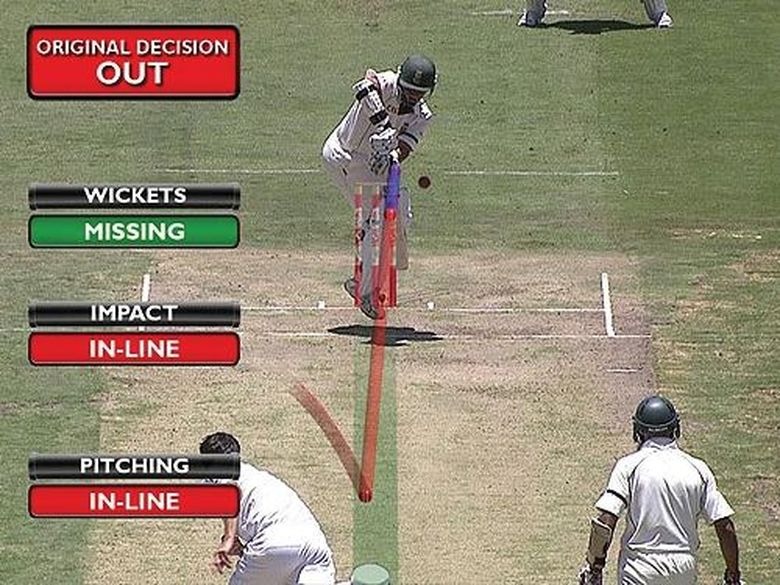
For LBW, ball tracking shows the observed path of the delivery and projects where it would have gone, based on trajectory, pitching and wicket projection. Hawk-Eye and Virtual Eye are names associated with these systems. The projection is assessed under defined criteria, including whether the predicted path falls into a marginal category.
An edge review can end once the evidence settles the contact question. An LBW review needs the pitching, impact and wicket assessments.
The third umpire passes the findings to the on-field umpire, who gives the final signal.
Why Does Umpire's Call Keep the Original LBW Decision?
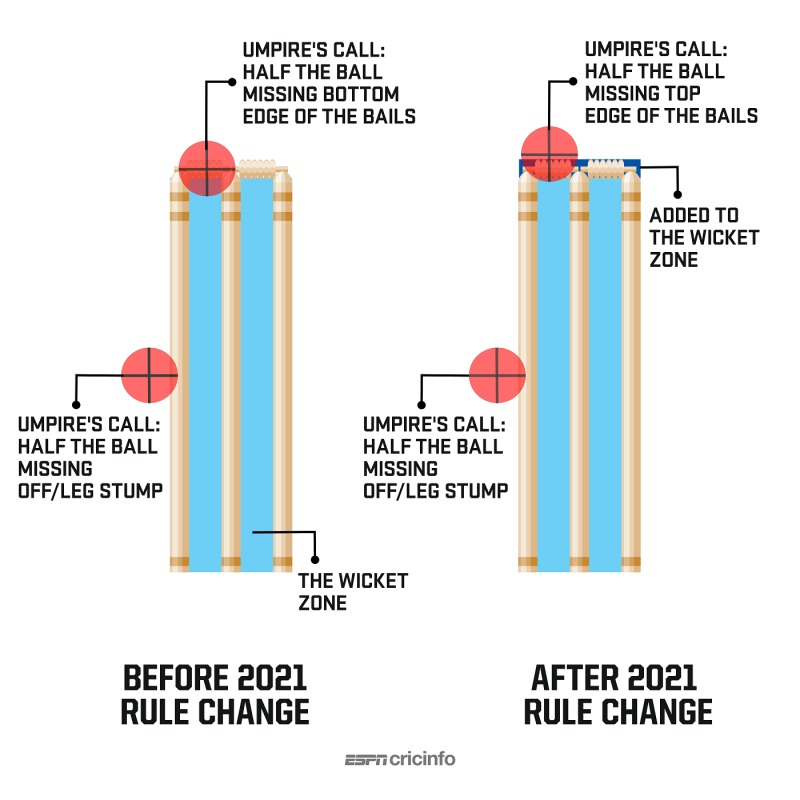
Umpire's Call leaves the original Out or Not out decision in place when the LBW evidence falls within a defined marginal category. It applies to specified impact and wicket-prediction findings under the ICC protocol.
An LBW review separates three questions:
- Pitching: Where the ball landed before striking the batter.
- Impact: Where the ball struck the batter and how that position is classified under the LBW conditions.
- Wickets: Whether the predicted path would contact the wicket.
For wicket prediction, the ICC protocol defines a Wicket Zone. Hitting and Umpire's Call differ by where the projected ball's center sits in relation to that zone.
When the ball's center is within the Wicket Zone, the prediction is Hitting. When the ball is projected to contact the wicket but its center lies outside the zone, the classification is Umpire's Call. Missing is the classification for a path that misses the wicket.
In June 2025, the ICC changed the DRS wicket-zone definition to use the physical outline of the stumps and bails. These are geometric classifications of the projected path.
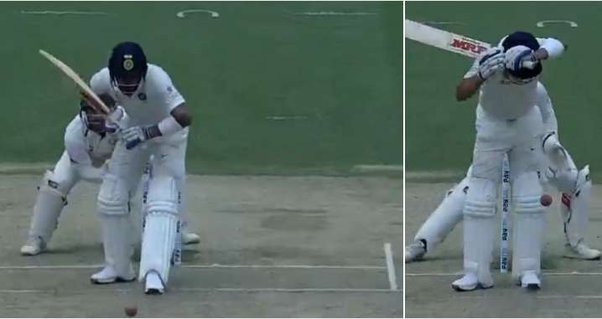
Two original decisions, one marginal projection
Consider fictional LBW decisions in which every other necessary LBW condition is satisfied. The first two share the same marginal predicted wicket contact.
| Original decision | Wicket prediction | Result after Player Review |
|---|---|---|
| Not out | Umpire's Call | Not out stays |
| Out | Umpire's Call | Out stays |
| Out | Missing | Out is overturned, assuming the review is otherwise valid |
In the third row, a clear Missing classification rules out the projected wicket contact. The Out decision then goes back to the dismissal review procedure.
A Reddit poster raised a related problem with the on-field umpire's reasoning:
But in LBW decisions, the umpire considers 3 things: Pitching, Impact and Wickets. In case of DRS, shouldn't the on-field umpire report their thought on those three things? For instance, umpires sometimes thinks that the ball is hitting the stumps but the impact is outside. So he gives a Not Out. However in the DRS, we could see that the impact was in line but stump's Umpire's call. In such case, the decision stays as Not Out, even though the Umpire's error has been corrected.
Under Appendix D, review outcomes combine the original on-field ruling with the formal classifications of pitching, impact and wickets.
When you read an LBW graphic, find the element marked marginal and compare it with the original decision. A clearly disqualifying finding on another necessary LBW element can decide the result by itself.
When Does a Team Lose or Keep Its DRS Review?
A team uses one unsuccessful Player Review when its challenge fails to overturn the original decision, unless an exception lets it keep the review.
The on-field ruling and the team's allowance are recorded separately. A review can leave the batter Out and still preserve the allowance when the decision stays solely because of Umpire's Call.
| Review outcome | On-field ruling | Effect on team allowance |
|---|---|---|
| Successful Player Review | Reversed | Retained |
| Unsuccessful Player Review on conclusive evidence | Unchanged | One unsuccessful review consumed |
| Unchanged solely on Umpire's Call | Unchanged | Retained under the cited ICC protocol |
| Umpire Review | Resolved through the official referral | No team Player Review spent |
| Not out stays because the delivery was a No ball, with no further evaluation needed | Unchanged | Player Review not counted as unsuccessful |
These consequences come from the review classifications in ICC Appendix D. Each tournament or series sets how many unsuccessful Player Reviews a team gets, and two source-edition examples appear later.
The limit on challenges has led some fans to propose harsher penalties:
What if teams got penalised for unsuccessful reviews? Like, if you refer and the decision stays, the opposition gets 5 penalty runs. But if the decision is overturned (or it’s umpire’s call), then no penalty. Feels like it could cut out the “hopeful” reviews and make teams think a bit harder before using one. Would this improve the game or just add more controversy?
That five-run penalty is a fan proposal. The ICC protocol handles unsuccessful challenges through each team's review allowance and its exceptions.
What Happens When One Ball Produces More Than One Possible Review?
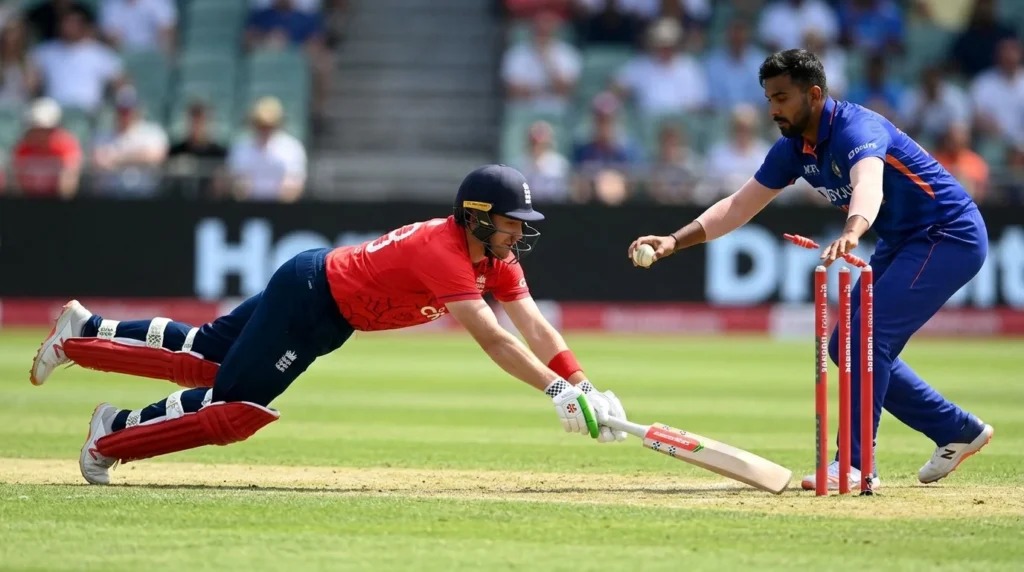
A single delivery can produce an alternative dismissal within one Player Review, or two separate review incidents.
Under the June 2025 ICC Men's Test Appendix D, a Caught Out decision can be upheld on LBW grounds if the necessary LBW conditions are met. The original Player Review is then unsuccessful.
Section 3.9.1 covers a different case: separate Umpire Review and Player Review incidents from the same ball. They are handled in chronological order. A dismissal established by the earlier incident can make the later review unnecessary.
What If the Video, Edge Detection or Ball Tracking Is Inconclusive?
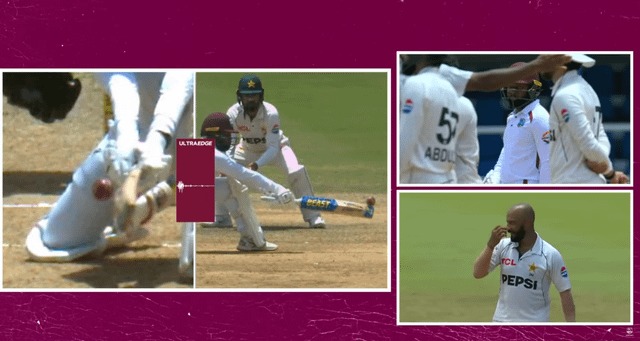
When the technology works but the evidence is inconclusive, the original on-field decision remains. If the Player Review fails, inconclusive evidence from working equipment does not qualify the team for reinstatement.
Consider a caught-behind review. The ball passes very close to the bat, and the synchronized audio contains a faint signal. Replay and audio can leave contact uncertain. The third umpire follows the evidence procedure, and the original Out or Not out decision stays if the evidence does not justify a change.
That result can frustrate viewers who think the replay points clearly one way. A genuine technology failure that prevents a review from being completed is a separate situation.
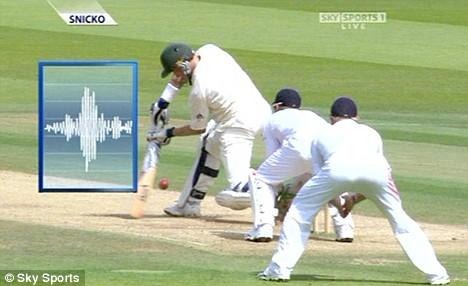
Under section 3.6.8 of the ICC playing conditions, the Match Referee has discretion to reinstate an unsuccessful Player Review in qualifying technology-failure circumstances. The provision excludes cases where other available technology was sufficient to reach the decision and cases where the equipment worked as intended but the evidence was inconclusive.
A disputed spike on a broadcast waveform therefore calls for a look at what the official technology showed and how the decision was reached. A claimed equipment failure needs evidence of the failure itself.
Which DRS Rules Apply to the Cricket Match You Are Watching?
A cricket review follows the competition's playing conditions. Two explanations can therefore give different numbers of unsuccessful reviews, and both can be accurate for different tournaments or editions.
| Official source | Unsuccessful Player Reviews | Scope of the figure |
|---|---|---|
| ICC Men's Test Appendix D, June 2025 | Three per team per innings | That Test playing-conditions edition |
| ICC Men's T20 World Cup 2026 Appendix D | Two per team per innings | That named tournament |
| International series starting October 1, 2026 or later | Refer to the applicable updated Appendix D | Series covered by the ICC's effective-date change |
The June 2025 ICC Men's Test Appendix D gives the three-review example. The T20 World Cup document gives the two-review example.
The ICC announced revised playing conditions for international series beginning on or after October 1, 2026. A series already underway when the changes took effect could continue under its earlier conditions. The ICC playing-conditions announcement sets this effective-date boundary.
So the match date alone may not tell you the edition. The start of the international series can decide.
For a domestic or club match, the competition's own rules decide whether it uses a full Player Review system, a limited third-umpire referral arrangement or no such technology.