A batter can be out LBW only when all five Law 36 conditions are met: a legal delivery, no bat contact first, a permitted pitching position if the ball bounces, qualifying impact on the batter, and a path that would have hit the wicket. If one fails, the batter cannot be out LBW. If all five pass, the decision goes to the umpire and, where one is used, the competition's DRS procedure.
What Makes a Batter Out LBW? The Five Checks
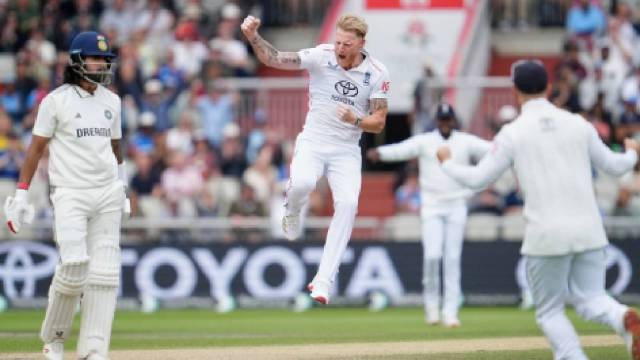
A bowler appeals, the batter has been struck on the pad, and everyone turns toward the umpire. The ball looked as though it was heading for the stumps.
LBW stands for leg before wicket. The ball can strike the batter anywhere on the body, including the arm or pad. Law 36 of the Marylebone Cricket Club (MCC) governs the ruling, in the fourth edition of the 2017 Code that took effect on October 1, 2026, as stated in its edition announcement.
| Law 36 check | LBW is ruled out if |
|---|---|
| Delivery | A No Ball was delivered |
| Bat contact | The ball hit the bat before it first hit the batter |
| First pitch | The ball bounced and its first pitch was outside leg stump |
| Impact | First impact was not in line and did not qualify under the outside-off no-shot exception |
| Wicket | The projected path would have missed the wicket |
Every check has to pass. If one fails, the batter is not out LBW and you need not settle the others. A failed LBW appeal does not rule out every possible dismissal; the wicket and dismissal guide applies separate tests to other ways a batter can be out.
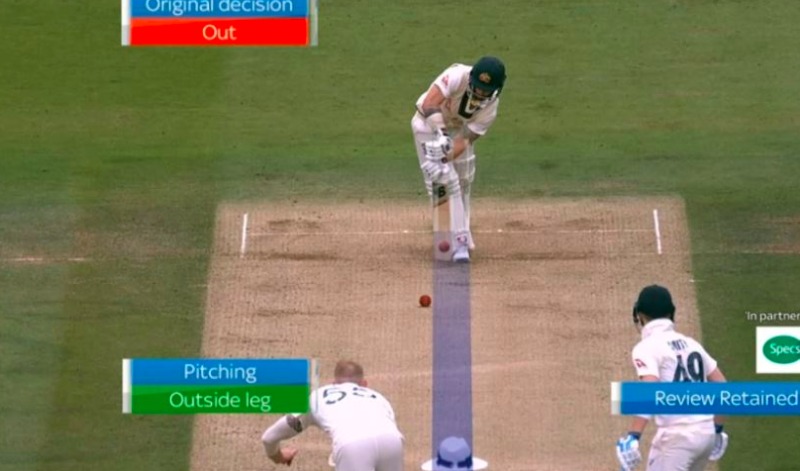
An LBW dismissal requires an appeal.
No Ball or Bat First? When the LBW Appeal Ends Immediately
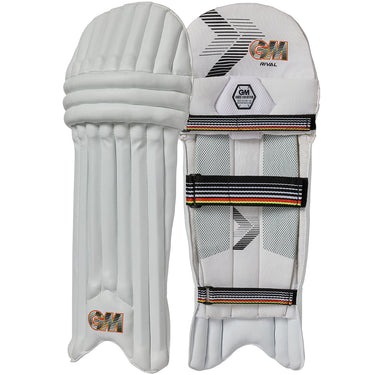
Two facts can end an LBW appeal before the umpire has to judge where the ball would have gone: the delivery was a No Ball, or the ball hit the bat before it touched the batter.
A No Ball rules out LBW under Law 36.1.1, even if the ball then hits the pad directly in front of the stumps and looks certain to hit them.
Three deliveries show why the order of contact matters:
- Bat, then body: The ball takes an edge from the bat before striking the pad. LBW is ruled out.
- Body, then bat: The ball hits the batter first. The assessment moves on to the other checks.
- Bat and body at the same time: Law 36.2.2 in the MCC 2026 Code treats simultaneous contact as bat first. LBW is ruled out.
The wording here follows the MCC explanation of the 2026 edition. Individual matches follow their competition's playing conditions.
An edge can be hard to spot on a replay, and sound alone does not show the order of contact. What counts is whether the evidence shows bat contact before the ball first met the batter. Under Law 5.6.2, a glove worn on the hand holding the bat counts as the bat.
Where Did the Ball Pitch? Outside Leg Is the Decisive Boundary
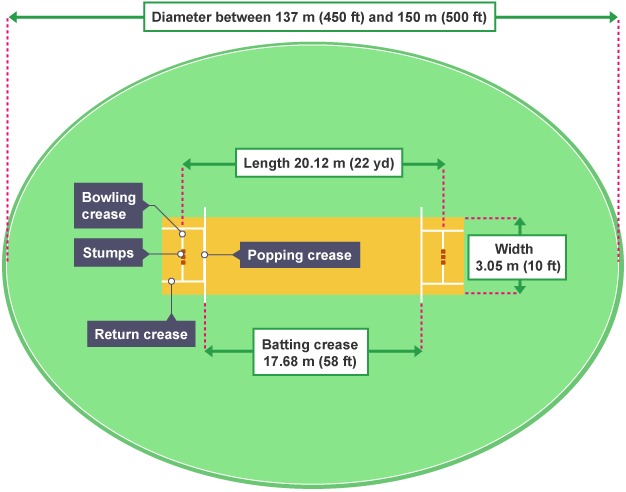
If the ball bounces, its first landing position must be in line with the stumps or on the striker's off side. A first pitch outside leg stump rules out LBW under Law 36.1.2.
The word pitching refers to where the ball first strikes the playing surface. It says nothing by itself about where the ball later meets the pad, which is why the televised Pitching and Impact markers can sit in different places.
A delivery bounces well outside off stump, moves inward and hits the batter in line with the wicket. That first bounce passes the pitching check, and the impact and projected path still have to qualify.
Take a similar ball whose first bounce is outside leg stump. Its path could move toward middle stump and still fail the pitching check.
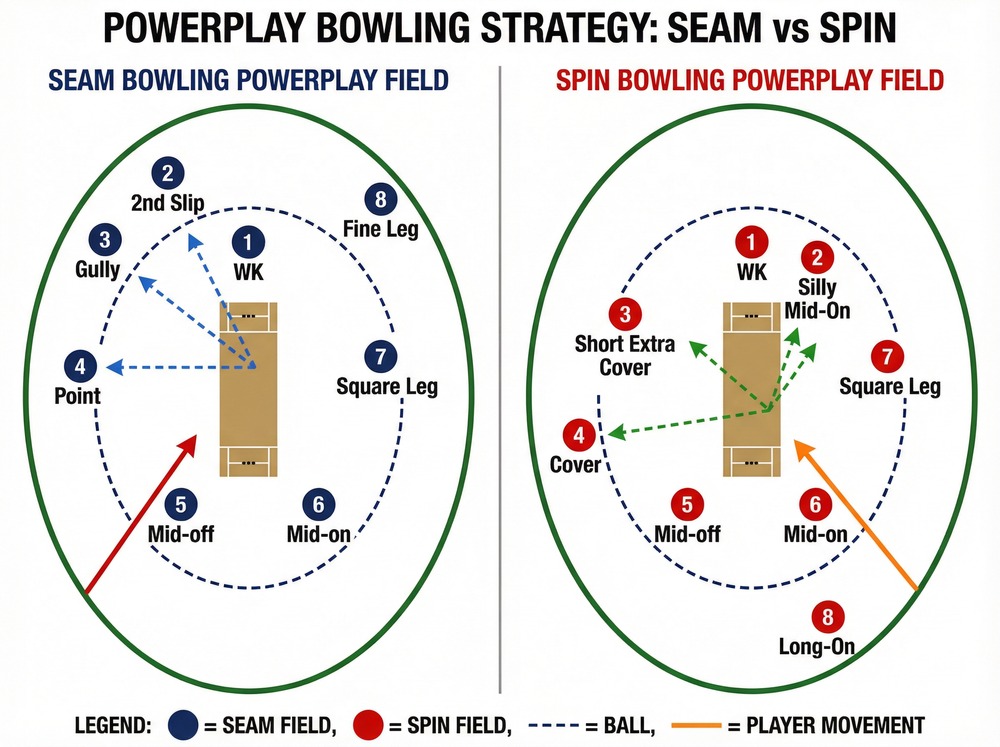
Off side and leg side depend on the batter
For LBW, the off side is set by the striker's batting position when the ball comes into play for that delivery (Law 36.3). With corresponding conventional right-handed and left-handed stances, the off-side and leg-side labels reverse on a fixed diagram.
On a television replay, a ball shown to the viewer's left can therefore be outside off for one striker and outside leg for another.
To locate the decisive pitching point:
- Identify the striker's stance. Work out which side is off and which is leg for that batter.
- Locate the stumps. Use the actual wicket lines as the reference.
- Mark the first bounce. Decide whether it was in line, outside off or outside leg.
- Apply the result. An outside-leg first pitch ends the LBW assessment; the other positions let it continue.
A full toss reaches the batter without first bouncing, so there is no pitching position to classify.
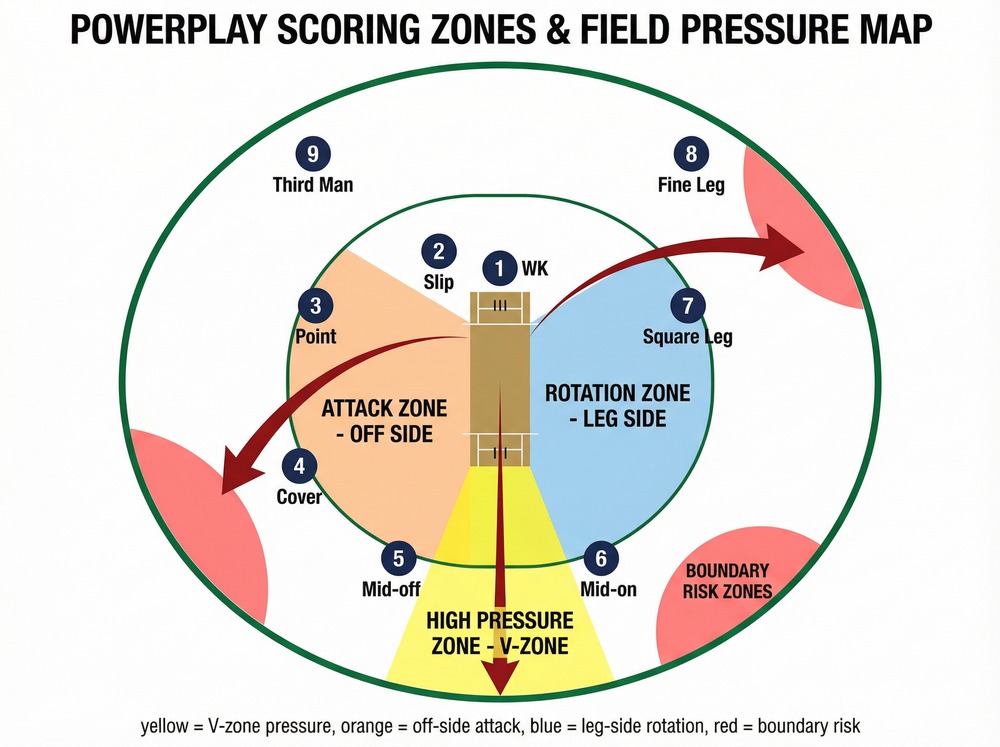
The impact and projected-wicket requirements still apply to a full toss.
Where Did It Hit the Batter? The No-Shot Exception
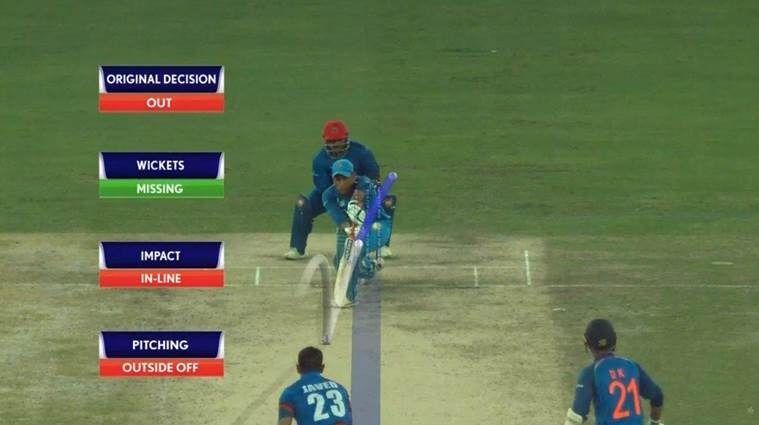
Where the ball first hits the batter is a separate question from where it bounced. Under Law 36.1.4, first impact in line with the wickets can qualify. First impact outside off stump can also qualify when the batter made no genuine attempt to play the ball with the bat.
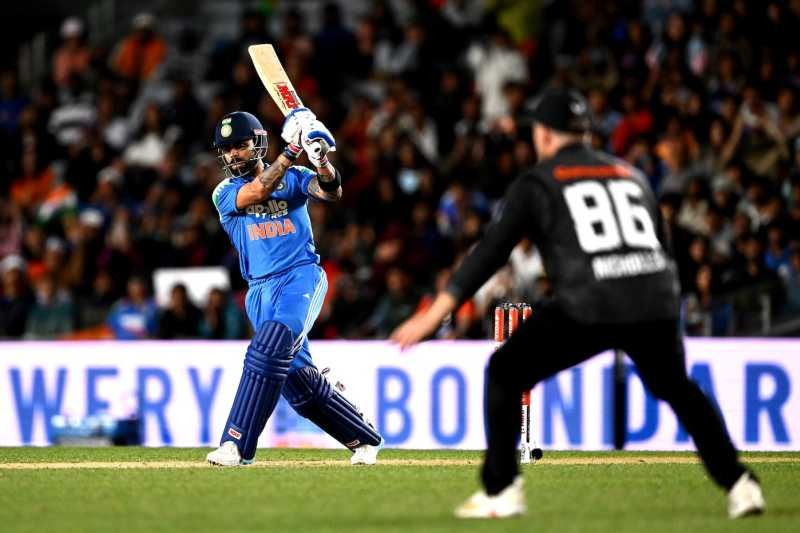
| First impact | Genuine attempt to play with bat | Does the impact requirement qualify? |
|---|---|---|
| In line with the wickets | Yes or no | Yes |
| Outside off stump | Yes | No |
| Outside off stump | No | Yes, under the no-shot exception |
| Outside leg stump | Yes or no | No |
A batter can genuinely attempt a shot and miss completely, and the umpire judges that attempt whenever first impact is outside off stump.
Would the Ball Have Hit the Stumps?
The wicket test asks where the ball would have traveled if it had missed the batter. Take two otherwise eligible deliveries with the same first impact position: one projected path clips a stump, while the other passes over the bails. The first passes the test and the second fails. A high pad impact alone cannot settle the result, because the ball's projected path must be followed to the wicket.
Why Can DRS Leave an LBW Decision as Umpire's Call?
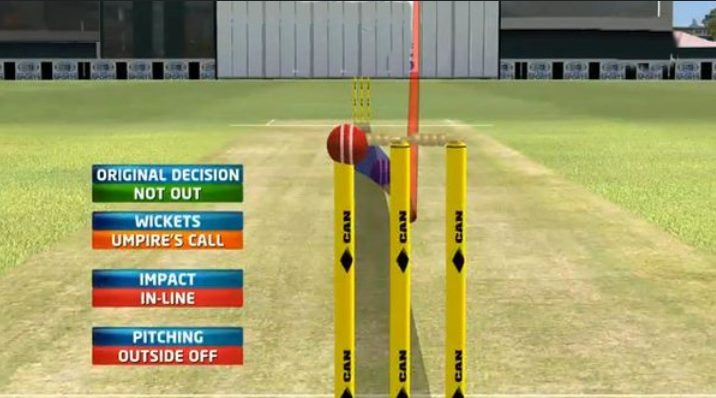
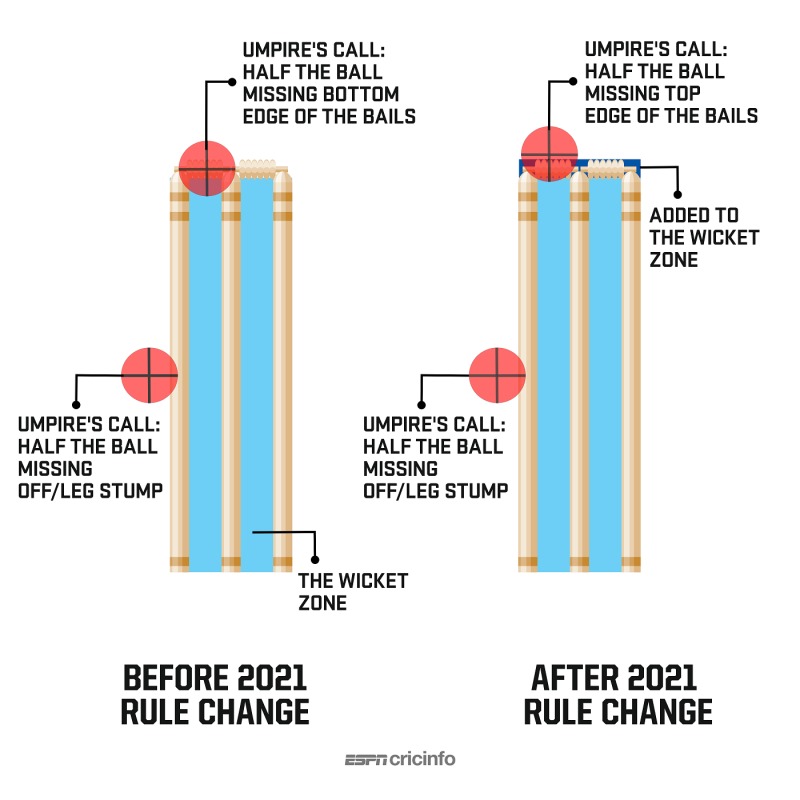
A marginal DRS result can leave the original LBW ruling unchanged. Start with the on-field umpire's decision: an Umpire's Call finding in a relevant impact or wicket category preserves an existing out decision or an existing not-out decision.
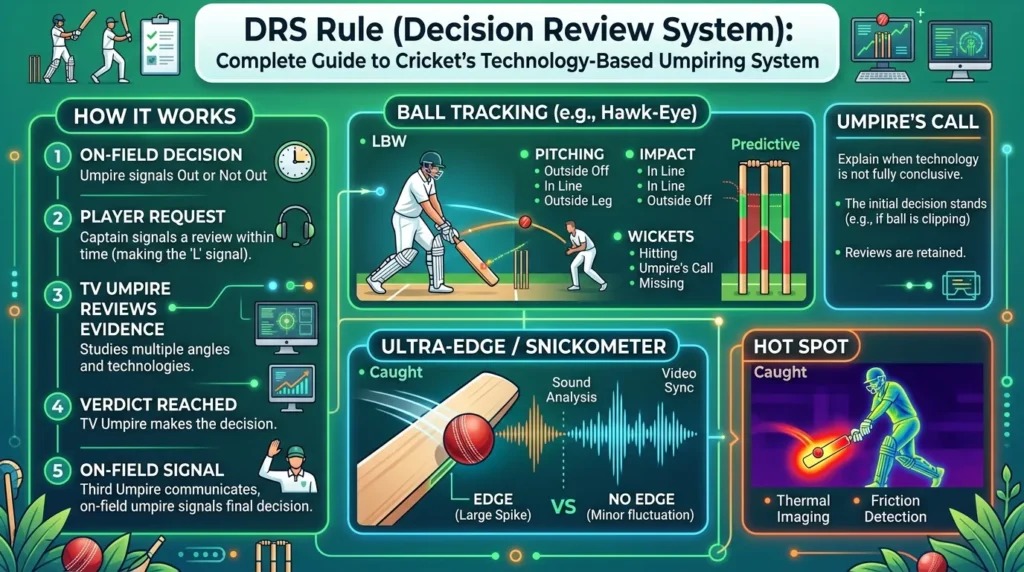
The International Cricket Council (ICC) explains the Decision Review System as a review process involving technology and prescribed procedures. Where available, it examines the decision using evidence about the delivery and contact, along with the ball-tracking categories familiar from television. The delivery's legal status matters before a review reaches impact and ball tracking; the Wide and No-ball comparison covers that distinction.
Ball-tracking graphics divide the decision into three questions:
- Pitching: Where the ball first bounced. The result is classified as In Line, Outside Off or Outside Leg.
- Impact: Where the ball first hit the batter, subject to the applicable conditions. A marginal impact finding may be Umpire's Call.
- Wicket: Whether the predicted path meets the wicket. A marginal wicket finding may also be Umpire's Call.
Under ICC Appendix D, Umpire's Call applies to marginal Impact or Wicket findings; Pitching has its own positional categories. The match's playing conditions set how these findings affect the review. Some matches have no DRS, so umpires, ball tracking and official reviews work differently there.
Why the original decision matters
In the first two rows below, the marginal tracking result is the same and all other conditions qualify.
| On-field decision | Review finding | Outcome |
|---|---|---|
| Out | Umpire's Call at a relevant impact or wicket stage | Original out decision remains |
| Not out | Same marginal Umpire's Call finding | Original not-out decision remains |
| Out | Conclusive projected path missing the wicket | Overturned to not out |
| Out | Conclusive first pitch outside leg stump | LBW cannot stand under the pitching condition |
Umpire's Call assigns no universal percentage of confidence to the predicted path.
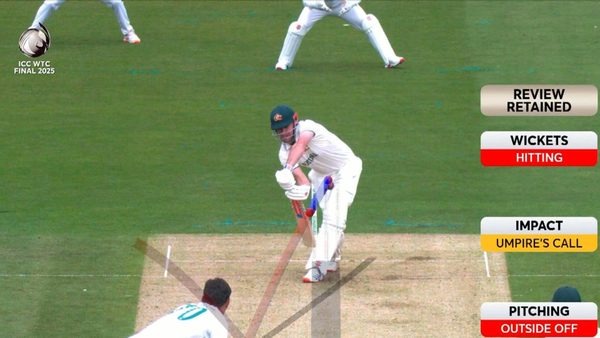
One r/Cricket commenter described the role of review this way:
A lot of people seem to overlook this fact. The umpire is still the one who makes the decisions. DRS is there to account for the fact they can get it wrong and overturn their decisions if they are blatantly wrong.

For a televised review, start with the original out or not-out decision. Then read Pitching as a location, and examine Impact and Wicket for a conclusive result or Umpire's Call.
Six LBW Decisions: Can You Explain Each One?
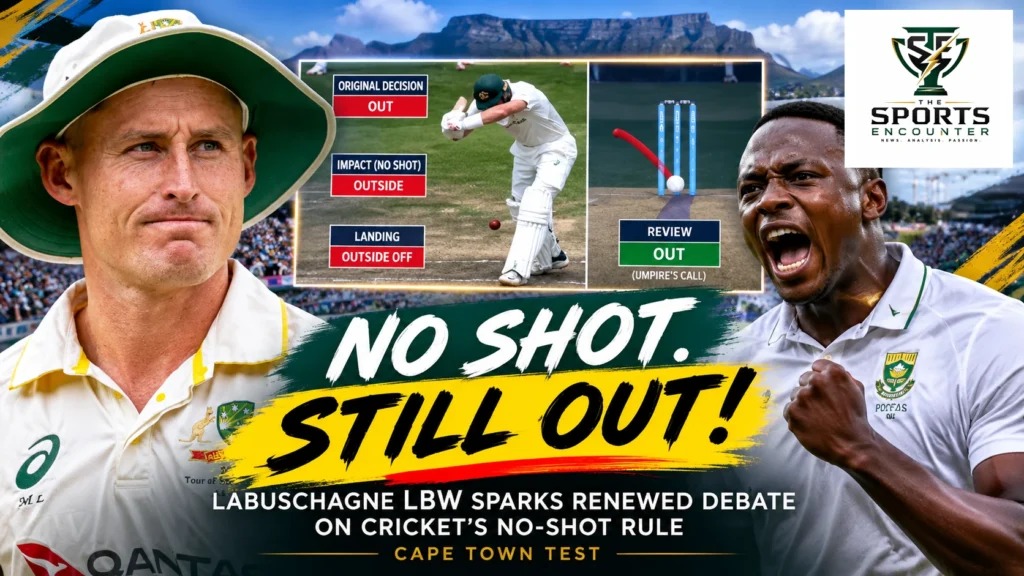
In these six deliveries, every condition not named as an exception satisfies Law 36. The table gives the first decisive condition, so a ruled-out delivery needs no reconstruction of its later trajectory.
| Case | Facts of the delivery | LBW verdict and reason |
|---|---|---|
| A. Outside-leg bounce | Legal ball, no bat contact, first pitch outside leg stump; impact in line; projected hitting | Not LBW. The pitching condition fails. |
| B. Outside-off bounce | Legal ball, no bat contact, first pitch outside off; impact in line; projected hitting | LBW possible on appeal. The pitching position is permitted and the other tests pass. |
| C. Edge before pad | Legal ball, first pitch in line; bat contact before the person's interception; projected hitting | Not LBW. Bat contact came first. |
| D. Outside-off impact, no shot | Legal ball, permitted first pitch, no bat contact; first impact outside off; no genuine bat attempt; projected hitting | LBW possible on appeal. The impact exception applies. |
| E. Outside-off impact, genuine shot | Same conditions as D, except the batter genuinely attempted to play with the bat | Not LBW. The outside-off impact fails the requirement. |
| F. Ball projected over | Legal ball, no prior bat contact, permitted first pitch; impact in line; projected path over the wicket | Not LBW. The projected wicket condition fails. |
Work through the delivery, impact and projected path in order to find the first condition that fails, then compare the outcome with the umpire's original decision and any permitted review.