NRR is your scoring rate minus your conceding rate across all eligible matches. Add up runs and credited balls first, then divide. A good calculator shows those totals so you can check them against the points table.
Calculate a team's net run rate
Interactive NRR worksheet for ordinary completed matches
Use one row per eligible match. Enter overs as completed overs and legal balls, for example 18.4, not as a decimal fraction. Check the tournament's official playing conditions before comparing with its standings. This worksheet cannot infer DLS revisions, penalties, no-results or stage resets.
Change the figures or add matches, then select Calculate NRR.
For each match, record your team's runs and its opponent's runs, the overs each side faced, the overs quota, and whether either side was all out. Then check the credited balls, which can differ from the balls actually played.
The example below is a fictional two-match T20 with a 20-over quota per innings. In Match A, the opponent was all out after 16.4 overs, so the full 120-ball quota is credited. Match B ended with a successful chase after 18.4 overs.
| Match | Team innings | Opponent innings | Team balls: actual / credited | Opponent balls: actual / credited |
|---|---|---|---|---|
| A | 180/4 in 20.0 | 150 all out in 16.4 | 120 / 120 | 100 / 120 |
| B | 151/5 in 18.4 | 150/6 in 20.0 | 112 / 112 | 120 / 120 |
| Combined | 331 runs | 300 runs | 232 / 232 | 220 / 240 |
Scoring rate: 331 × 6 ÷ 232 = 8.560345 runs per over.
Conceding rate: 300 × 6 ÷ 240 = 7.500000 runs per over.
Net run rate: +1.060345, or +1.060 to three decimal places.
How NRR is calculated across several matches
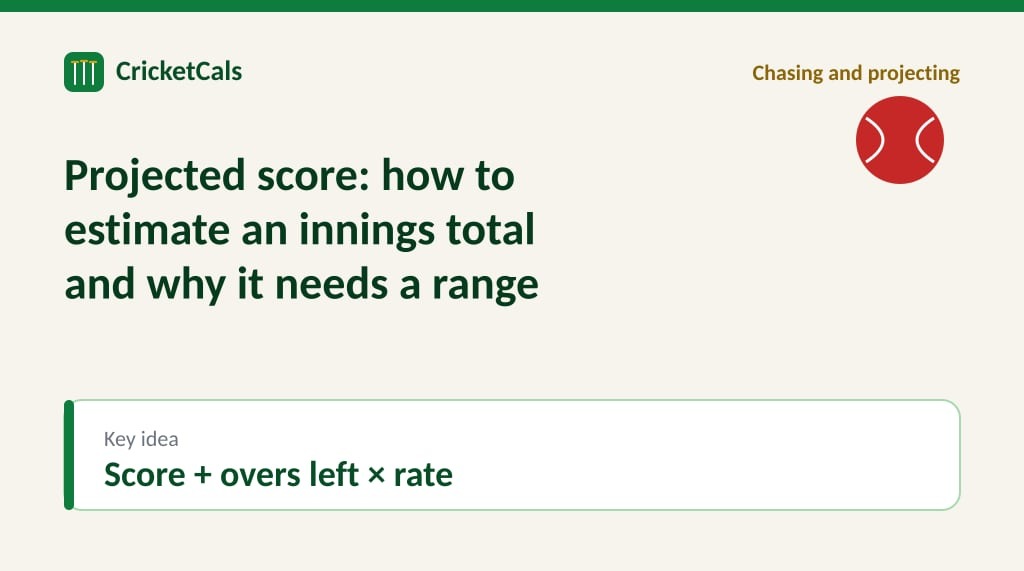
NRR is the aggregate scoring rate minus the aggregate conceding rate across the eligible games. Work in legal balls, not decimal overs:
NRR = (total runs scored × 6 ÷ credited balls faced) − (total runs conceded × 6 ÷ credited balls bowled).
For the sample matches, the unrounded result is +1.060344827586.
| Calculation | NRR (runs per over) | What it describes |
|---|---|---|
| Match A | +1.500000 | That game's scoring-rate difference |
| Match B | +0.589286 | The second game's scoring-rate difference |
| Simple mean of match figures | +1.044643 | Average of the two displayed match results |
| Aggregated innings totals | +1.060345 | Tournament NRR for these two eligible results |
Averaging match figures gives a different answer, because runs scored and runs conceded have their own denominators. Keep full precision through the calculation and round only the displayed result. For the wider picture, read how net run rate works across a tournament.
Enter overs as balls, not decimals
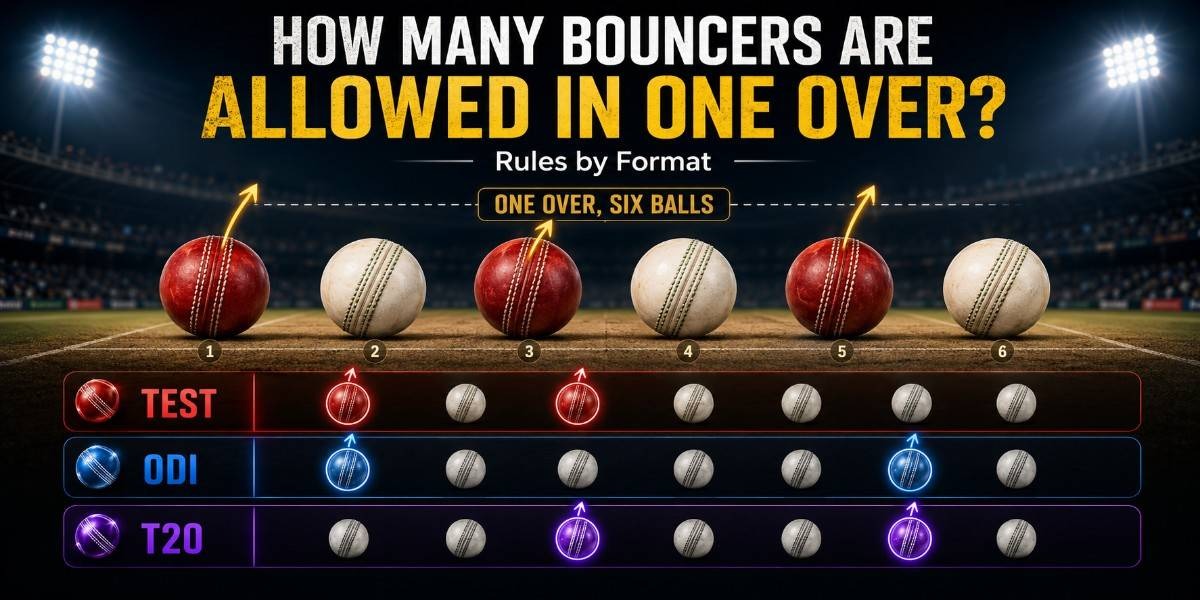
A scorecard entry of 18.4 means 18 complete overs and four more legal balls. With six legal balls to an over, that innings used 18 × 6 + 4 = 112 balls, or 18 and two-thirds overs. Convert every overs.balls entry to whole legal balls before you calculate. Never read 18.4 as 18.4 in base ten.
The digit after the point runs from 0 to 5. An entry of 18.6 is invalid: six more legal balls complete the over, and the entry becomes 19.0. Wides and no-balls don't count as legal balls.
Five full 20-over innings account for 600 balls. Three more innings of 16.4, 19.4 and 18.4 add 100, 118 and 112. That makes 930 balls. The same rule applies whether a team bats or bowls.
For the scorebook notation behind this, see how cricket overs convert to legal balls.
How all-out innings change NRR

Under ICC and IPL rules, a team bowled out early is charged its full quota of overs. Take a team that makes 120 all out in 15.2. The scorecard shows 92 legal balls, but in a full 20-over match NRR counts 120. If its opponent reaches 121/2 in 13.4 (82 balls), the dismissed team's NRR is 6 × (120/120 − 121/82) = −2.853659. A side that wins at 121/9 has nine wickets down but is not all out.
Which matches count: DLS, no-results, Super Overs and round resets

A correct NRR starts with the results the competition counts. The ICC Men's T20 World Cup 2026 Playing Conditions, especially clause 16.10.7, cover all-out innings and several exceptional results for that tournament. The IPL 2026 Playing Conditions set their own rules.
| Match or competition event | NRR treatment | What to do |
|---|---|---|
| Ordinary completed match | Eligible runs and credited balls count | Include its innings totals |
| No result | Excluded under the ICC T20 World Cup rules | Leave it out |
| Super Over after a tie | Super Over runs and balls are excluded | Keep the main match figures separate |
| DLS-adjusted result | Competition rules can substitute credited runs or overs | Use the adjusted figures from the playing conditions |
| First Round to Super Eights | ICC T20 World Cup 2026 starts a separate Super Eights NRR | Start a fresh calculation for the new stage |
| Forfeit | Special tournament provisions apply | Use the documented exception or withhold a result |
For a DLS-adjusted or forfeited match, take the credited innings values from the competition's playing conditions.
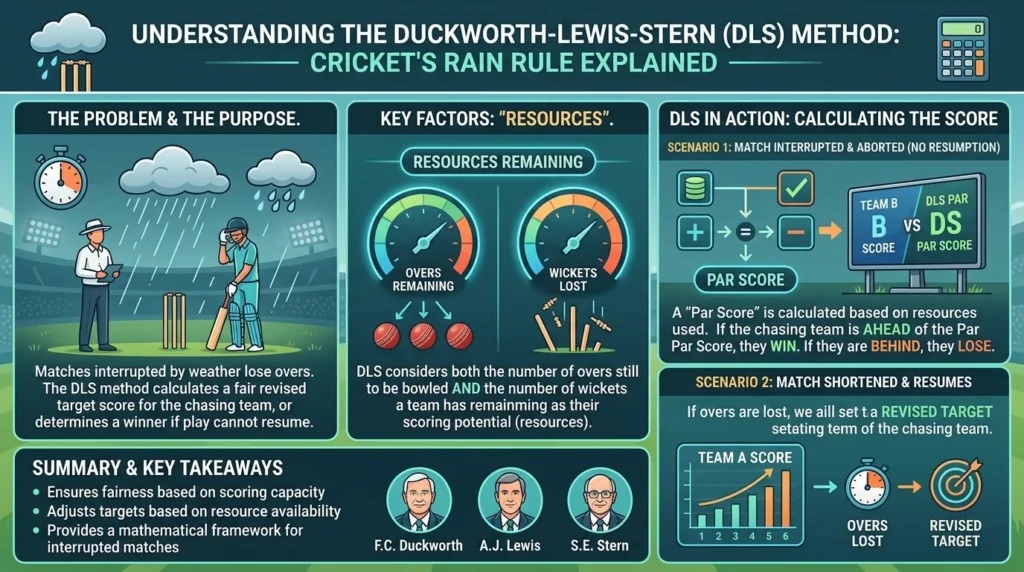
Rain-adjusted cricket calculations cover DLS targets, revised overs and wickets remaining.
Why your NRR doesn't match the official table
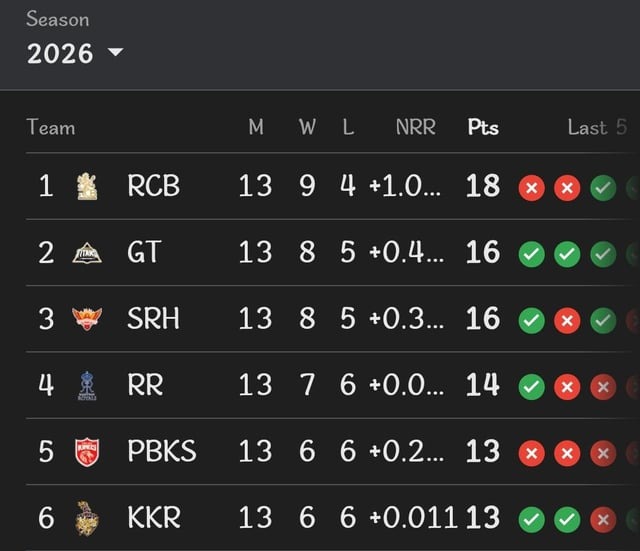
A handful of credited balls can move the final NRR by several thousandths.
One Reddit poster building an IPL calculation app hit such a mismatch with Gujarat Titans' first eight matches:
I’m trying to build a small app to calculate Net Run Rate (NRR) for IPL teams using official ICC rules, but I’m getting slightly different results compared to the actual points table. For example, for Gujarat Titans (first 8 matches performance in IPL 2026): ... Official IPL table shows -0.475, which is noticeably different (~0.02 gap).
The poster reported an application NRR of −0.494 and a table figure of −0.475. Recalculated from the figures in the thread:
| Source of the figures | Runs scored / conceded | Balls faced / bowled | Computed NRR |
|---|---|---|---|
| Original poster's totals | 1,389 / 1,491 | 926 / 942 | −0.496815 |
| Revised denominators from a reply | 1,389 / 1,491 | 930 / 948 | −0.475419 |
| Table figure reported by the poster | n/a | n/a | −0.475 |
The revised denominators give −0.475419, which rounds to the table's −0.475. The gap sits in the ball counts.

For any similar mismatch, check these in order:
- Match coverage: Look for a missing, extra or differently classified result.
- Legal balls: Match the scorebook overs against the legal balls recorded.
- All-out adjustments: Compare actual balls with the full quota for both sides.
- Credited runs: Check rain adjustments and actual finished scores, including boundaries struck on the last ball.
- Stage and exclusions: Account for the competition's reset, forfeits and no-results.
- Precision: Compare unrounded scoring and conceding rates before looking at the three-decimal NRR.
Why an extra boundary can change the NRR outcome

On May 25, 2014, Rajasthan Royals scored 189/4 in 20 overs. Mumbai Indians reached 189 after 14.3 overs, then Aditya Tare hit a six off the next legal ball. Mumbai finished on 195/5 after 14.4 overs and qualified for the IPL playoffs.
What happened in this situation is that MI had to chase the target in 14.3 overs to get ahead in terms of NRR and qualify for playoffs, but if you look at the score board the score got leveled meaning the NRR of both the teams was equal so the only way mi could get ahead in NRR was if they scored Boundry in the next ball.
The official IPL match report confirms the result. For runs scored, the NRR input is Mumbai's completed 195 from 88 legal balls. Capping the entry at the 190 target would drop five runs.
Can NRR tell you what your team needs to qualify?
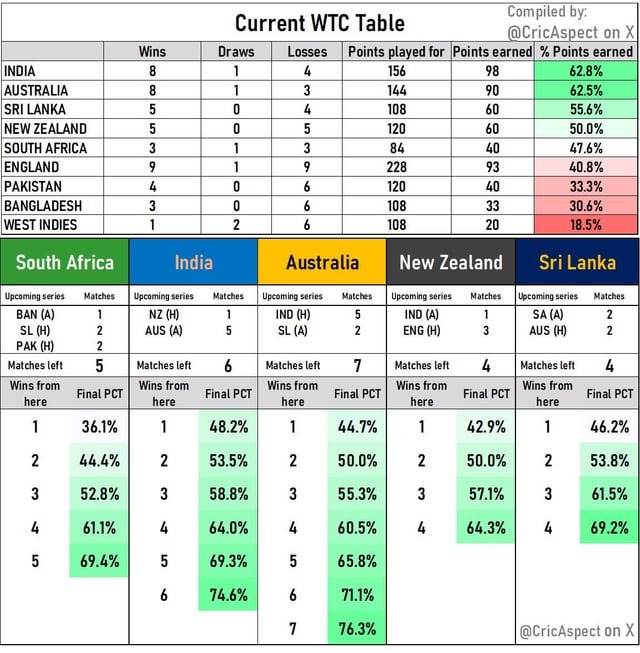
NRR lets you compare hypothetical match outcomes, but it doesn't decide who advances. The standings rules, other teams' results and the remaining fixtures do that. In the IPL 2026 regular-season league table, teams are ordered by points, then wins, then NRR. If they are still level, the playing conditions turn to wickets taken per fair balls bowled, and finally to drawing lots.
A fan-made Pakistan versus Sri Lanka qualification spreadsheet shows how match scenarios can be explored.
I created a Google Sheets page that calculates the permutations for what Pakistan needs to do batting first and chasing. Edit the cells in green, and then the cells in Yellow will update automatically to show what Pakistan must do to beat Sri Lanka and qualify. PS: To avoid the formulas from being broken, the whole sheet is protected except the cells in Green.
For an unfinished chase, which uses a winning target, a current score and legal balls remaining, see calculating the required chase rate. It is a separate calculation from tournament NRR.