If rain stops a chase and play restarts, the chasing team gets a revised DLS target. If play can't restart, the DLS par score decides the winner, as long as the team batting second faced the minimum number of overs its competition requires.
What is the DLS method in cricket?
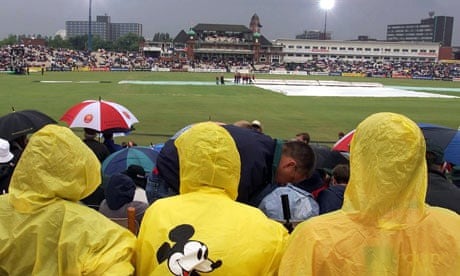
Duckworth-Lewis-Stern, usually shortened to DLS, is a method for adjusting limited-overs cricket when rain or another interruption cuts playing time. It compares the batting resources each team had.
When rain arrives before the chasing team has faced its full allocation of overs, the target set for a complete chase no longer fits the cricket left to play. A T20 chase of Bangladesh's total by Australia is a good example.
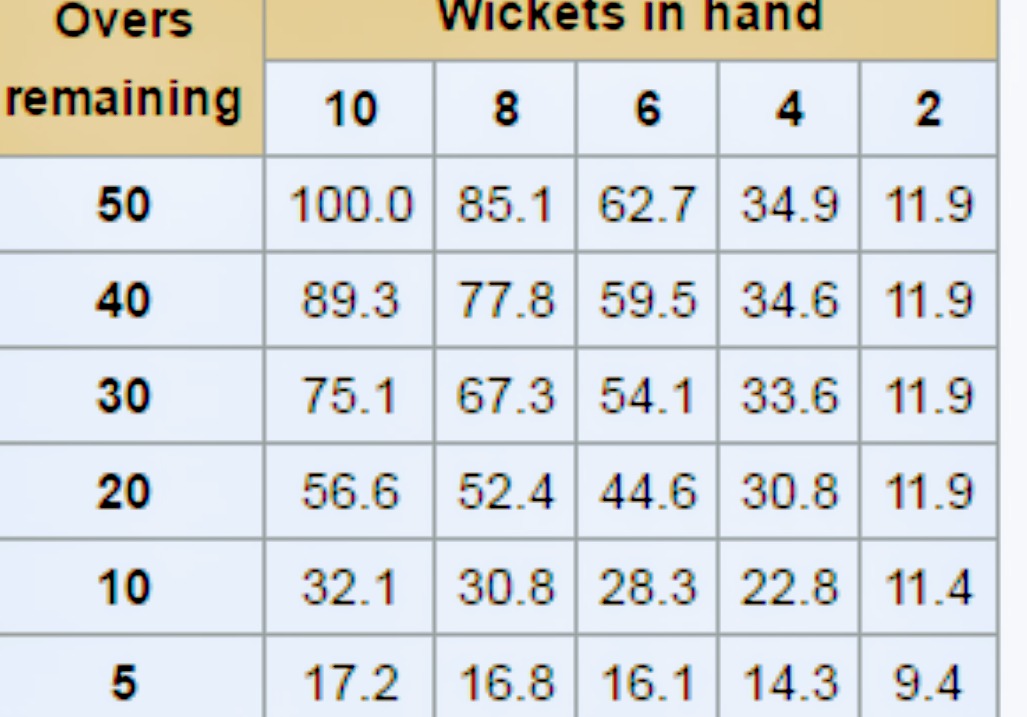
DLS counts two resources: legal balls remaining and wickets in hand.
If the chasing team comes back out, it gets a revised winning target. If it doesn't, its score is compared with par.
That is why a team can win a rain-affected match after scoring fewer runs than the original chase required.
DLS applies to ODIs, T20 matches and other limited-overs competitions that adopt it. Test cricket follows different rain-affected match procedures.
The famous rain-rule controversy in the 1992 World Cup semifinal between England and South Africa occurred before Duckworth-Lewis was introduced. The scoreboard displayed 22 runs needed from one ball, although the actual requirement under the former rule was 21 from one ball.
Why DLS uses wickets and overs
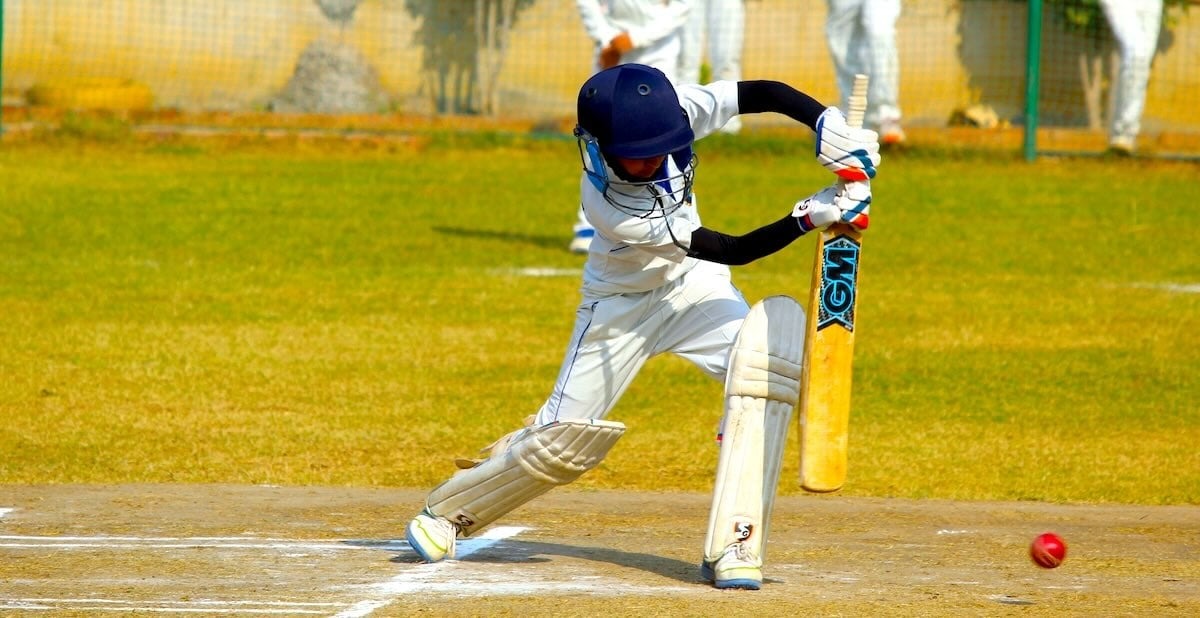
Time to bat and wickets in hand both affect how many runs a team can score. DLS models the two together.
Every legal delivery is another chance to score. A side with most of its batters available bats differently from one close to being bowled out.
Take two teams with eight overs remaining:
- Team A: Two wickets lost, with eight wickets still in hand.
- Team B: Eight wickets lost, with only two wickets remaining.
Both have 48 scheduled legal deliveries left, but their wicket positions are very different. The resource model accounts for that when it works out the effect of lost playing time.
Why 11.2 overs means 68 balls
Cricket writes overs and balls together. A score of 100/2 after 11.2 overs means 100 runs, two wickets lost, and 11 complete overs plus two legal balls of the next over. For the chase maths, see the chase calculator guide. After an official revision, enter the new target and balls remaining instead of the original inputs.
Eleven overs contain 66 legal balls. Add two and the innings has used 68. In an originally scheduled 20-over innings, that leaves 52 of the 120 scheduled legal balls unplayed before any reduction is applied.
Wides and no-balls add runs without adding to the legal-ball count, so the score and the balls completed track different things.
The ICC DLS methodology explains how the resource model connects overs and wickets. Its published material includes historical Standard Edition calculations, while professional Stern Edition calculations require their own implementation. A revised target doesn't supply everything standings need. For that, see the net run rate guide, which works from its own credited overs and match totals.
What happens when rain interrupts a cricket match?
The key questions are when rain arrived and whether the chase resumed. Four situations cover the main scoring paths.
| When rain arrives | What happens next | Scoring output |
|---|---|---|
| Before the first ball | Both sides start with an agreed reduced allocation | Ordinary winning target. Equal reductions before play need no DLS adjustment. |
| During Team 1's innings | The first innings is shortened or revised | Team 2's target comes from the resource comparison, since Team 1 may have begun with more resources than it used. |
| During Team 2's innings | The chase resumes with fewer overs | Revised winning target. Team 2 has a new total to reach in its reduced allocation. |
| During Team 2's innings | The chase cannot resume | Par score, plus a check that the result qualifies |
When both innings start equally shortened
In a T20 match reduced to 15 overs per side before either team bats, both start with the same resources. If nothing else changes, the ordinary target remains the first team's score plus one. For how a standard 50-over innings is structured, see the ODI match guide.
When rain changes the first innings
Team 1 might start its innings expecting 20 overs and lose some later, so it bats without knowing the final allocation. DLS compares the available resources when it sets the chase, and the outcome can differ from a match where both sides knew from the start that they would get fewer overs.
When a chase resumes or ends
If Team 2 returns to bat after a reduction, the new target governs the rest of the chase. If play is terminated, the scorer evaluates the match position at the point of stoppage under the rules for declaring a result.
Revised target vs par score: which number decides the match?
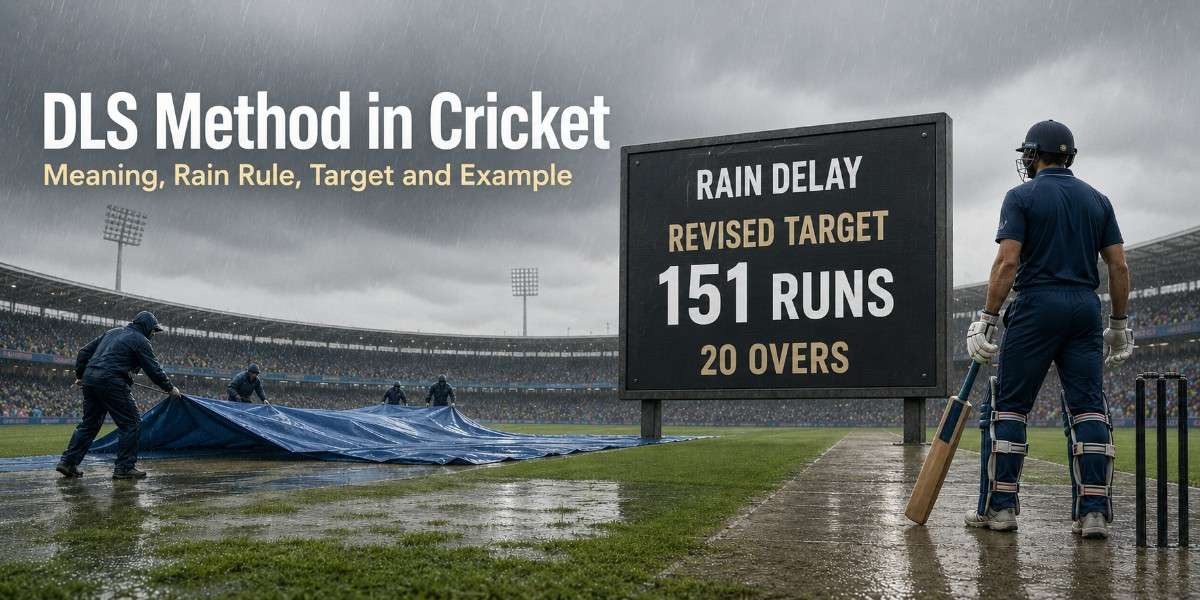
A revised target is the number the chasing team must reach to win a shortened innings. Par is the score that leaves the teams level under DLS at a given point.
| Term | Meaning | When it is useful |
|---|---|---|
| Original winning target | One more than Team 1's completed total | Understanding the chase before adjustment |
| Revised winning target | New total required to win a shortened chase | When Team 2 resumes after an interruption |
| Par score | Score that leaves the teams level at a particular DLS checkpoint | When a chase stops and a result may be declared |
| DLS winning margin | The officially published margin under the adjusted result | Explaining why the scorecard records a particular winner |
At a checkpoint, par is the score to tie, and one more run puts the chasing side ahead. For a chase that resumes with a revised allocation, the announced revised winning target is the number to reach.
Par changes as legal balls are completed and wickets fall.
The ECB's worked scoring examples show how targets and par scores work in different interruption scenarios.
When an innings ends early and qualifies for a result, the comparison with par gives the published margin. What counts is the legal deliveries completed and the wickets lost at the stoppage.
Why Australia beat Bangladesh by 28 runs after scoring 100
The Australia–Bangladesh match at the Men's T20 World Cup in June 2024 shows DLS clearly. Rain ended Australia's chase early, yet it was officially declared the winner by 28 runs.
The ICC match report records the result:
| Record | Published detail | What it represents |
|---|---|---|
| Bangladesh innings | 140/8 in 20 overs | First-innings total |
| Australia innings | 100/2 in 11.2 overs | Chasing side's score when play ended |
| Official result | Australia won by 28 runs (DLS) | Rain-adjusted victory margin |
Bangladesh's total of 140 meant Australia needed 141 to win a normal chase. Rain stopped that chase, and the official DLS result made finishing it unnecessary.
One viewer asked the obvious question:
I am new to watching cricket so I do not understand how Australia won last night against Bangladesh. What is this DLS method & how was it determined that Australia won by 28 runs, even though they only reached 100 runs?
Australia was 28 runs ahead of the DLS par when rain ended the chase. It had scored 100, so par at the deciding stoppage was 72:
100 runs scored − 28 runs ahead of par = 72 runs implied par.
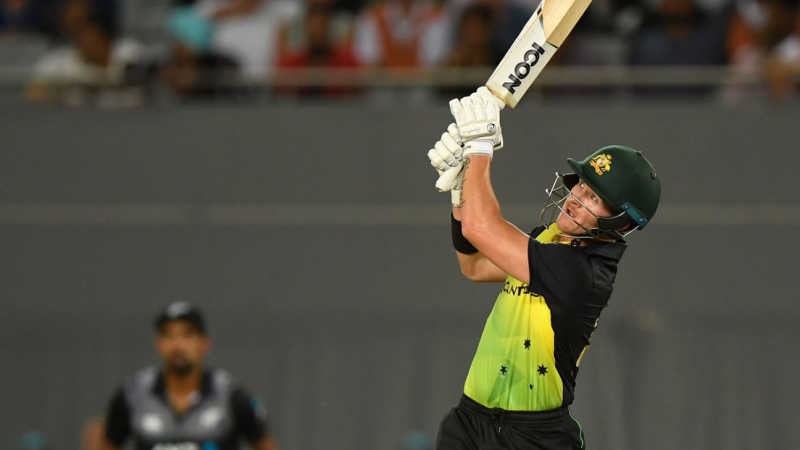
Only two wickets were down, so Australia's runs, wickets in hand and remaining batting opportunities put it ahead under the DLS resource comparison.
How many overs are needed for a DLS result?
A match must meet its competition's result requirements before DLS can decide a stopped chase. The threshold depends on the format, the playing conditions and sometimes the tournament stage.
Under ICC men's international conditions, the ordinary requirement has been five overs for the team batting second in T20Is and 20 overs in ODIs. Other competitions and editions set their own figures.
Playing conditions also cover cases where a result comes earlier, such as a completed chase, an all-out innings or an awarded match.
A team can be ahead of the DLS par after only a few overs. If the innings is abandoned before the required qualifying play, that lead produces no official win.

The outcome is recorded as no result, or as another result the event's regulations specify. The rules sit in the competition's own playing conditions, such as the documents in the ICC playing-conditions collection.
Why DLS calculators sometimes disagree
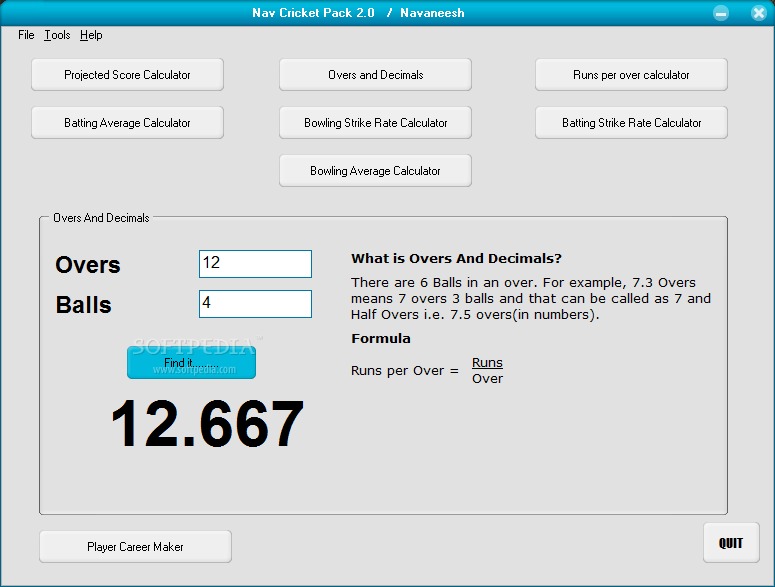
A DLS calculator gives a correct number only if it uses the right method edition and the right match inputs. Two tools can show different numbers for the same final scores.
The key distinction is between the historical Standard Edition and the professional Stern Edition. Older published resource tables explain the mathematics, but their output can differ from an official result produced with professional scoring software.
Cricket Australia provides a DLS calculator, and independent sites offer calculators or resource tables. Check any difference between them against the method version and the match inputs.
What can cause different DLS numbers?
| Input or method | Source of disagreement | Useful check |
|---|---|---|
| Method edition | Historical Standard Edition versus professional Stern calculations | Identify the model or published resource table used |
| Overs entry | Cricket notation read as decimal notation | Use the correct legal-ball count |
| Wickets | Wrong wickets-lost value or table column | Use the exact wickets at the calculation point |
| Overs allocation | Original allocation entered after an interruption reduced it | Distinguish scheduled and revised innings lengths |
| Earlier interruptions | One stoppage omitted from a multi-interruption match | Account for the actual sequence of revisions |
A correct final score entered with the wrong interruption history describes a different match.
A Reddit user who has used such a program wrote:
From my days working for Somerset I have a program that calculates the required total, complete with producing a printable version of every score needed for every over (or every ball if it's really close) to hand to the teams' captains. At no point has anyone ever told me how it works on a formulaic level (outside of the standard "resources remaining" definition) and I've always assumed that was because nobody outside of a very select few people actually know.
When two calculators disagree, compare their inputs at each interruption and test them against the official result.
Is the DLS method fair?
DLS compares overs and wickets in a consistent way. It can't replay the batting and bowling decisions the unplayed overs would have produced, and powerplay restrictions and tactics make a shortened match feel very different to the players. That leaves room for reasonable debate about the strategies rain prevented.
How to verify a DLS result on a scorecard
To read a DLS decision, match the published score and interruption history against the regulations for that competition. The scorecard shows the batting state, and the playing conditions decide whether it produces an official result.
- Identify the match: Note the competition, format, date and tournament stage. These point to the rules that apply.
- Record the innings: Write down Team 1's total and Team 2's runs, wickets and completed legal overs.
- Record the interruptions: Note when play stopped, whether it resumed, and each change to the allocated overs.
- Read the published DLS number: Decide whether it is a revised target, par score or final winning margin.
- Establish result eligibility: Apply the competition's conditions, including any minimum-play requirement and exception.
A compact worksheet needs only these fields:
Competition | Format | Team 1 score | Team 2 score/wickets | Legal overs | Interruptions | Target or par | Official result