Give yourself one over to learn the rhythm of a cricket match. Watch which team bats, how the runs and wickets change and how many legal balls have been delivered. In a chase, add the target. T20 is a shorter first watch than ODI or Test cricket. If the score's numbers look unfamiliar, the scoreboard guide explains them.
Why cricket feels confusing at first

The camera follows a ball across the field, the crowd reacts, and the scoreboard flashes numbers that mean little if you're new to cricket. Start by spotting the batting team: its players stand on the pitch with bats, while the opposing team bowls and fields. Once you know who has the ball and who is trying to score, the action starts to make sense.
What cricket is and what the two teams are trying to do
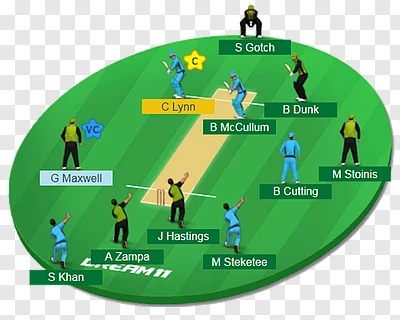
Cricket is a bat-and-ball sport in which two teams take turns batting and fielding. The batting side scores runs, cricket's units of scoring. The fielding side sends a bowler to deliver the ball, tries to stop runs, and looks for chances to dismiss batters. Each dismissal counts as a wicket lost.
Once runs, wickets and overs make sense, the first cricket match viewing checklist helps you follow a live innings without memorizing every Law.
Commentators can jump from wickets to powerplays and strike rate within one over. The cricket glossary for new viewers defines those terms with practical examples.
A team's turn at batting is called an innings. In a limited-overs match, Team A bats first and sets a total. Team B then bats with a target to chase. If Team A finishes with 164 runs, Team B needs 165 to win.
In a standard 11-player limited-overs match, an innings ends when ten wickets have fallen or the overs run out. A chasing side can also finish the match early by reaching the winning target.
The bowler is on the fielding side, though broadcasts mostly show the bowler facing the batter at the opposite end of the pitch. When the innings changes, the teams swap batting and fielding roles.
What happens on a single ball
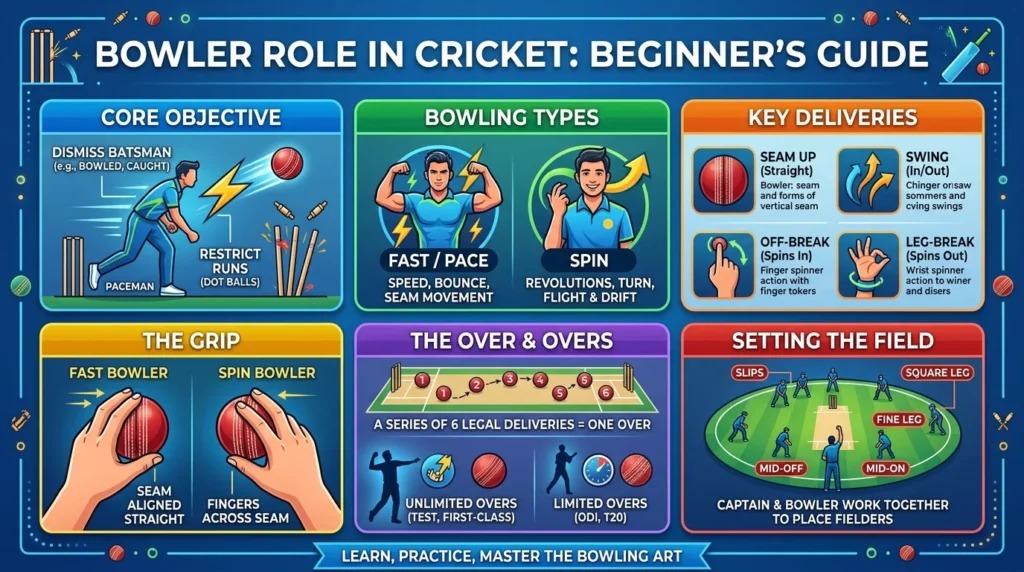
Every delivery gives the batting side a chance to score and the fielding side a chance to stop runs or take a wicket. To see this across a full innings, read the first-match cricket walkthrough.
The pitch is the central strip of the field, with a wicket at each end. Two batters occupy opposite ends of it. The striker faces the delivery, while the non-striker waits at the other end. A wicketkeeper stands behind the striker's wicket, with other fielders positioned around the ground.
- The bowler delivers. A player from the fielding side sends the ball toward the striker.
- The striker responds. The batter hits the ball, defends the wicket or leaves it alone.
- The fielders react. They retrieve the ball, stop runs or try for a dismissal.
- The score updates. The batting side adds runs, loses a wicket or stays where it was.
Suppose the striker hits the ball into a safe area but stays at the crease. No run is taken, and the score stays the same. A legal delivery that produces no runs is called a dot ball.
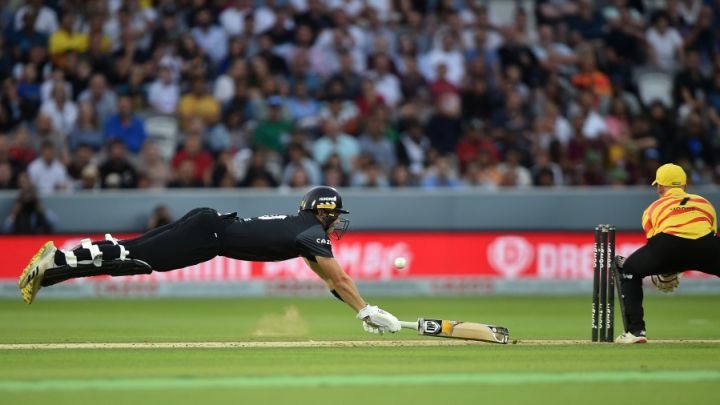
On another delivery, the batters run between the wickets, which can change which batter faces the next delivery. A different shot reaches the boundary. Or the fielding side completes a dismissal, and that batter's innings ends.
Some deliveries produce extras, runs awarded to the batting side that aren't credited to the batter's bat. You'll see them in the score. Their classification can wait until the main action makes sense.
How runs and wickets work
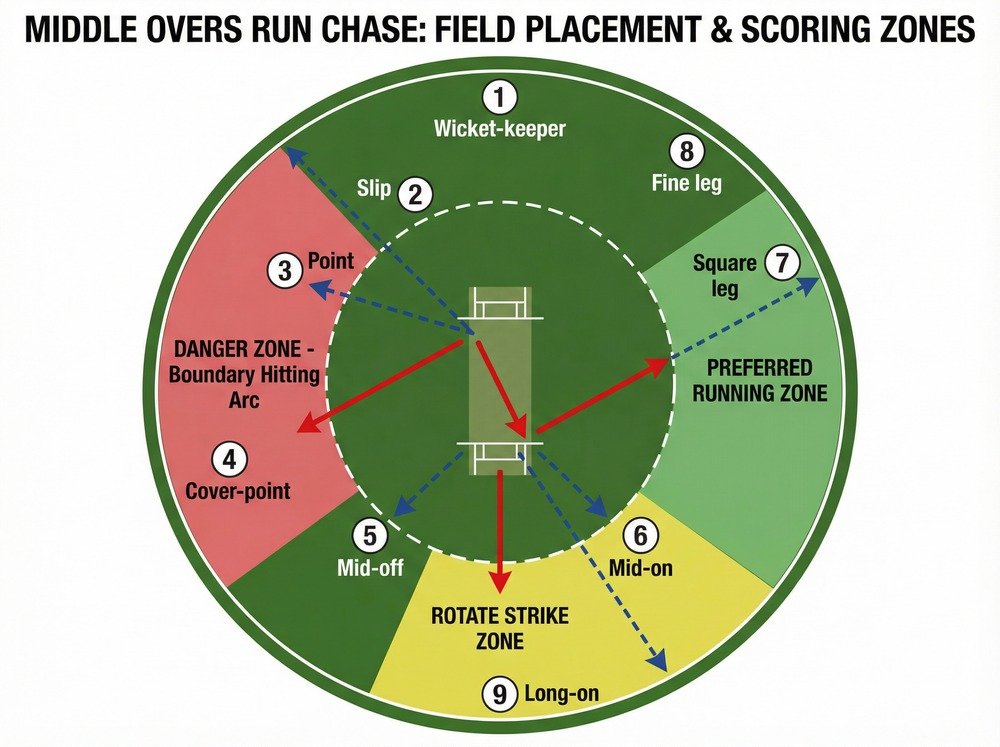
The batting side scores by running between the wickets or by hitting a boundary. On the scoreboard, a wicket means a batter has been dismissed. A batting team therefore balances scoring against the number of dismissals it can afford.
A struck ball that reaches the boundary after touching the ground is worth four runs. If it clears the boundary on the full, it is worth six.
Big hits bring big scores, but batting is a matter of judgment. A batter can take a single run, or stay at the crease, when going for more is risky.
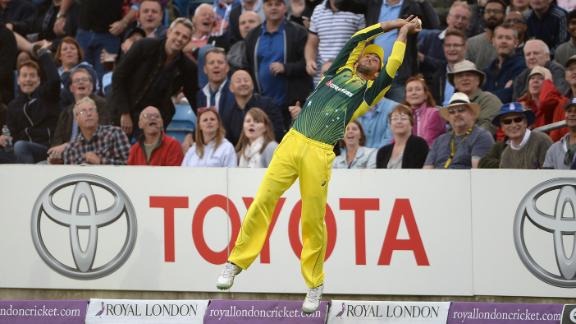
Take two shots. On the first, the striker places the ball into a gap and the batters complete one run. On the second, the striker lofts the ball toward the boundary, where a fielder has a chance to catch it. The second shot could bring a bigger score, but a catch means a wicket.
Baseball fans will recognize the hitting, fielding and scoring. In cricket, though, batters choose whether to attempt a run after contact, and a six is awarded under the boundary rule.
The word wicket can also mean the stumps and bails that the bowler attacks. On a scoreboard, though, 146/4 means the batting team has scored 146 runs and lost four wickets.
Overs: why 18.2 isn't a decimal
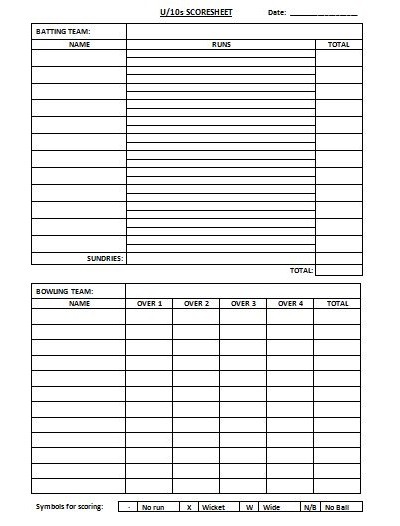
An over consists of six legal deliveries. When the scoreboard shows 18.2, that means 18 completed overs and two legal balls in the next over.
To count the legal balls delivered so far, multiply completed overs by six and add the digits after the dot: 18 × 6 + 2 = 110.
A 20-over innings has 120 legal balls. At 18.2, 110 have been used, leaving 10.
A wide or no-ball can add runs without using up one of the six legal-ball slots in the over, so a bowler may deliver more than six balls before the over ends. The plain-English introduction to cricket covers the innings, runs and wickets behind the live score.
The same calculation gives 17 × 6 + 3 = 105 legal balls when the scoreboard reads 17.3. For the full rules, see the MCC Laws of Cricket, including Law 17 on overs.
Following the score without getting lost
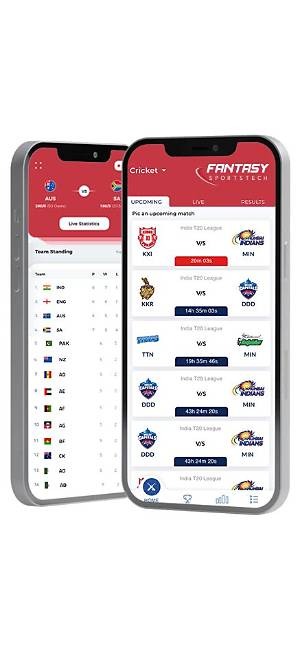
A score only means something once you know the target and how much of the innings is left. Imagine the closing stages of an uninterrupted T20 match, where each side gets a maximum of 20 overs.
Illustrative example: fictional teams and figures.
| Scoreboard item | Value | What it tells you |
|---|---|---|
| Team A's completed innings | 164/7 after 20.0 overs | Team A finished with 164 runs |
| Team B's current innings | 146/4 after 18.2 overs | Team B is batting second |
| Winning target | 165 runs | Team B must exceed Team A's total |
| Legal balls remaining | 10 | Of the 120 balls in the innings, 10 are left |
| Runs needed to win | 19 | The difference between 165 and 146 |
| Required run rate | 11.4 runs per over | The pace Team B needs across the remaining balls |
Team B has six wickets left and needs 19 runs from 10 balls. The required run rate comes from dividing the 19 runs needed by the 10 remaining legal balls expressed as overs: 19 ÷ (10 ÷ 6) = 11.4 runs per over.
Now suppose Team B scores four runs from the next legal delivery. The score becomes 150/4 after 18.3 overs, leaving 15 runs needed from nine legal balls. The required rate drops to 10 runs per over.
One first-time spectator at a Major League Cricket game enjoyed the match but couldn't tell from the scoreboard how close it was:
It should be way more beginner friendly. This league needs to build a fanbase, so hold my hand a bit. For example, "DLS PAR SCORE" turned out to be an incredibly important thing on the scoreboard, but it was really tough to parse for a while. I liked on tv when they showed the overlaid run rate graphs. After a play I couldn't figure out where to see how many runs had been scored, and in general I felt pretty confused. Use the scoreboard to welcome new fans.
DLS par is a separate benchmark under the Duckworth-Lewis-Stern method, used when matches are interrupted. It differs from the winning target, and a scoreboard may display it even in fine weather.
T20, ODI, or Test: which match should you try first?
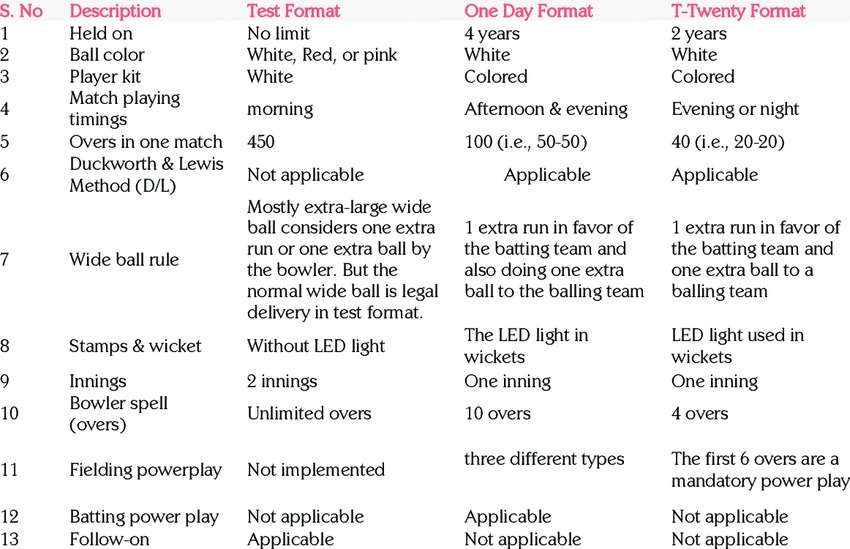
T20, ODI and Test cricket use the same basic scoring, but they ask for different amounts of your time. A shorter match is easier to fit in for a first watch. A longer format gives an innings more time to develop.
| Format | International match structure | What a beginner can expect |
|---|---|---|
| T20 / T20I | 20 overs per side | A short limited-overs contest |
| ODI | 50 overs per side | A longer innings, with more time for a side to change its approach |
| Test | Up to five days; up to two innings per team | A multi-day contest that can end in a draw |
These are the scheduled structures described by the ICC's guide to cricket formats. An innings can finish early or be interrupted, so actual viewing time varies.
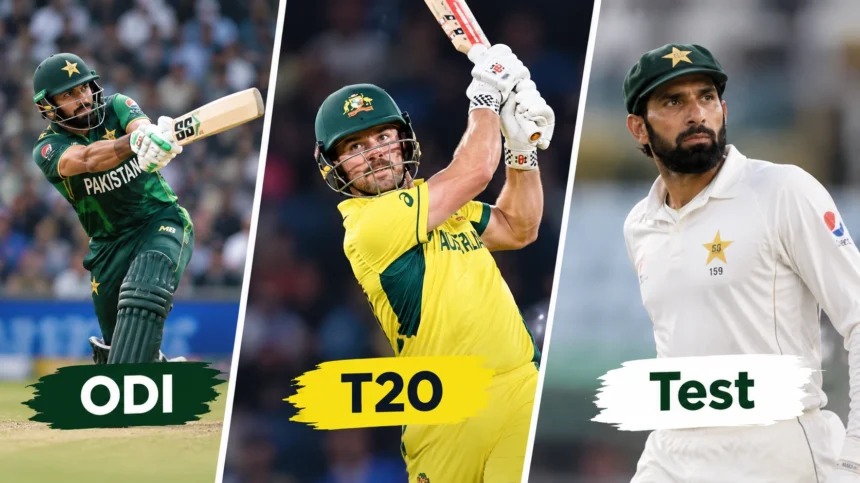
If you've already found an ODI or Test match that interests you, start there. Whatever the format, check the broadcast's label and follow the same runs, wickets and deliveries.
Your first match: a learning route

Follow one complete over. It gives you a small task to focus on while the commentary and field placements keep changing.
- Note the starting score. Write down the batting side's runs and wickets before the over begins.
- Follow the deliveries. Notice whether the batters score, the fielders stop runs or a wicket falls.
- Count the legal balls. The over is complete after six of them.
- Compare the scores. Find how many runs were added during that over and whether the batting side lost a wicket. Then describe what changed in one sentence.
One newcomer found cricket by accident during a World Cup broadcast:
I fall into the third category. I was house/pet sitting at my parents place in November 2023 and just so happened to be up early one morning looking for something to kill some time before my partner woke up and there was a world cup game on, Netherlands and India if I remember correctly. I thought world cup sounded high stakes and so turned it on and spent the next hour or so googling what the heck was happening and how to read the scoreboard but overall found it really interesting and engaging.
If play stops or the innings ends before the over is complete, use the next stretch of play instead.
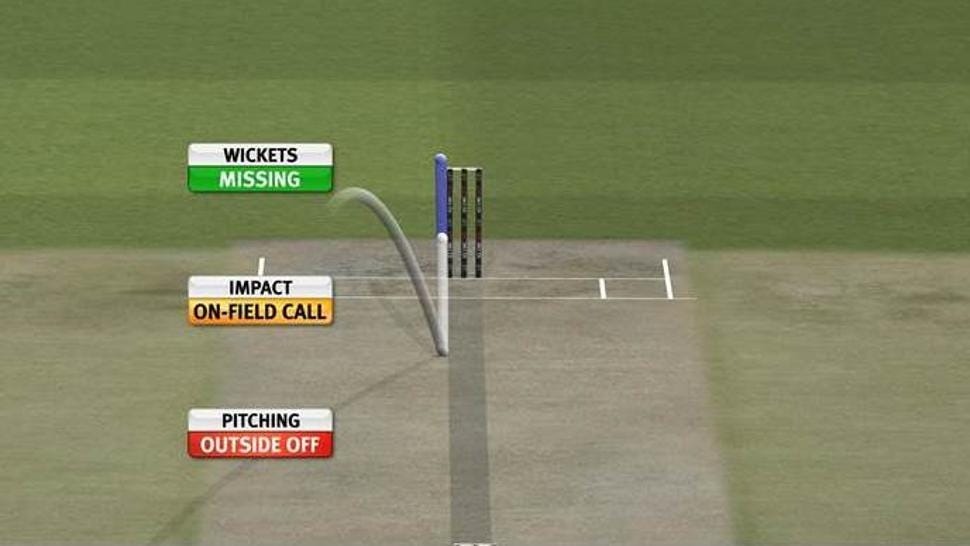
LBW appeals, reviews and rain-related adjustments have their own rules. Learn those once the basic action feels comfortable.
What to watch or learn next
The next resource depends on whether you want to read scores, watch more matches or try the sport yourself.
An American fan first saw cricket being played at university, before developing an interest in the game:
I'd (regrettably) not been exposed to Cricket very much growing up because it doesn't get any mainstream attention in the United States. I've always loved sports, though and had seen Indian students at my University playing in the square. I didn't know hardly anything about the game back then, but always enjoyed seeing people playing.
- Understand more of the game. The format comparison and cricket-versus-baseball guides answer more specific questions as they come up.
- Watch from the United States. Use a dedicated US viewing guide to find legal coverage of the competition you want to follow.
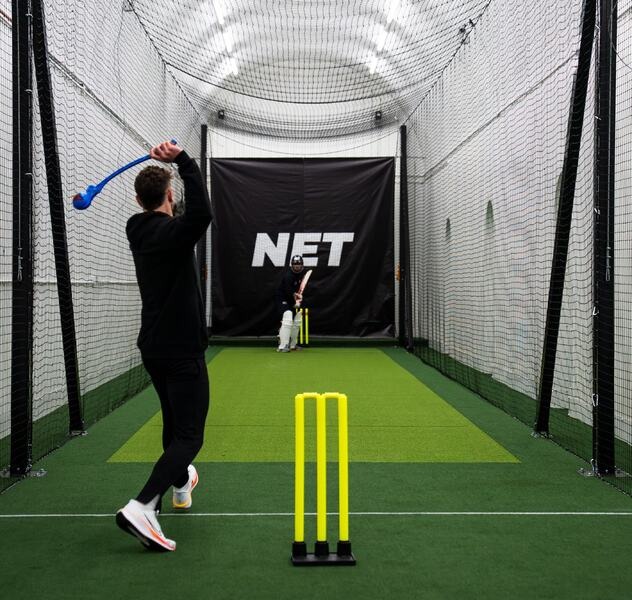
- Try playing. Start with an introductory playing guide and a beginner setting, such as a supervised session with soft-ball equipment. Learn detailed technique and hard-ball protection through specialist instruction.
After one over, you can name the batting side, say what changed on the scoreboard and count the legal balls left.