Cricket words make more sense in a scene than in an alphabetical list. "Wicket," "over" and "out" turn up in score graphics, commentary and umpiring calls, and the words around them tell you which meaning applies.
Cricket commentary moves fast. One moment someone is talking about a wicket, the next it's strike rate, a maiden, or a ball that pitched outside off.
Use Ctrl+F (Windows) or Command+F (Mac) to find a term on this page. Or jump by topic: first-match vocabulary, words with multiple meanings, scoreboard abbreviations, dismissals, bowling and batting expressions, fielding positions, and format terminology.
The cricket words you need for your first match
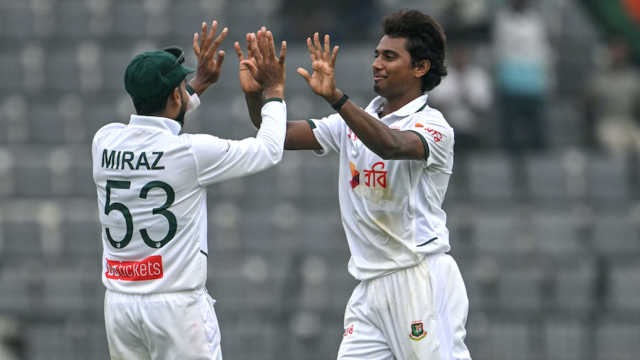
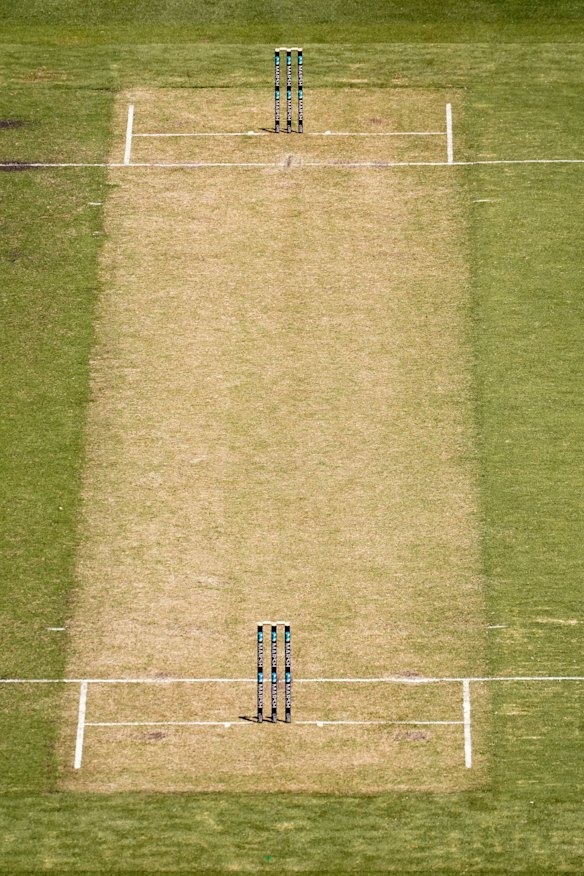
Picture two batters standing at opposite ends of the central strip. A bowler runs in from one end and sends the ball toward the batter facing the delivery. The other batter waits at the far end, ready to run.
- Batter: A player trying to score runs. You'll also hear batsman, particularly in older commentary.
- Bowler: The player delivering the ball toward the batter.
- Striker: The batter facing the next delivery.
- Non-striker: The other batter, standing at the opposite end.
- Wicketkeeper: The specialist fielder behind the striker's wicket.
- Innings: A team's turn to bat. In Test cricket, a team may bat in two innings.
- Delivery or ball: The act of sending the ball toward the striker. Ball also names the physical object.
- Over: A unit of six legal deliveries, bowled by one player. Wides and no-balls add deliveries without increasing the legal-ball count.
- Run: The basic scoring unit, including runs completed between the wickets and other runs awarded under the rules.
- Boundary: The edge of the playing area. A boundary four follows a ball reaching it after touching the ground; a six is scored when a shot clears it without first touching the ground.
- Target and chase: The score the batting side needs to reach to win when batting second, and the attempt to reach it.
The wicket is the set of stumps and bails the batter defends. Commentators also use the word when a player is dismissed.
The MCC Laws of Cricket provide the formal rules behind these terms.

One American viewer describes how the terms finally clicked:
Hello, American here. Many times over the years I have had British or Indian friends try to explain Cricket to me and without some kind of visual aids, my eyes have always just kind of glazed over. Recently I decided to sit down and figure it out once and for all. I watched some YT videos describing the game and then went on to highlights and some matches.
Does every player have to bowl an over?No. Teams choose which bowlers to use. After finishing an over, a bowler goes back to fielding while someone else bowls the next.
When one cricket word means several different things
Some cricket words name different objects, events and statistics. The words around them tell you which one the speaker means.
Take wicket. A commentator might talk about hitting the wicket, losing a wicket, or playing on a difficult wicket.
| Word | Phrase you might hear | Meaning in that context |
|---|---|---|
| Wicket | "The ball hit the wicket" | The physical stumps and bails |
| Wicket | "They lost another wicket" | A batter was dismissed |
| Wicket | "It was a slow wicket" | Informal reference to the playing surface or its condition |
| Pitch | "The pitch is dry" | The prepared central strip |
| Pitch | "The ball pitched outside off" | The place where the ball landed |
| Bowled | "She bowled a yorker" | A bowler delivered a particular type of ball |
| Bowled | "He was bowled" | The batter was dismissed by a delivery putting down the wicket |
| Strike | "The striker is on strike" | The batter is facing the next delivery |
| Strike rate | "His batting strike rate increased" | Runs scored per 100 balls faced |
| Strike rate | "His bowling strike rate improved" | Average balls bowled per wicket taken |
| B | "B" in a batting scorecard | Balls faced |
| B | "B" in an extras breakdown | Byes |
The Laws treat the physical wicket, the playing surface and each type of dismissal as separate things. The MCC Law appendices cover the technical terminology.
In "He was bowled through the gate," the delivery went between bat and pad and put down the wicket.
Scoreboard words and abbreviations in context
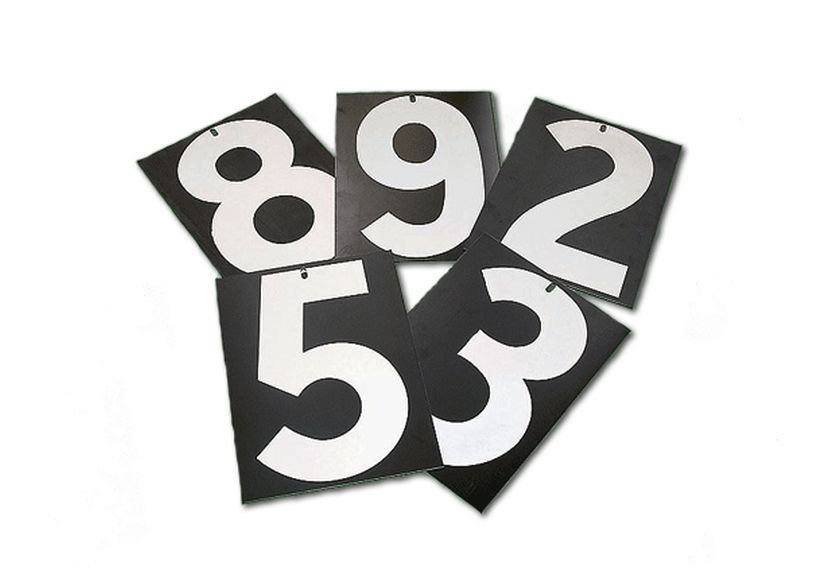
The scoreboard shows the batting team's total, wickets lost and how much of the innings is done. Separate figures cover each batter and bowler.
Take this made-up score:
Team score: 162/4 (17.3 overs)
Batter A: 28 (20)
The team has scored 162 runs and lost four wickets. The overs figure means 17 completed six-ball overs plus three legal deliveries: 17 × 6 + 3 = 105 legal balls. The digit after the period counts balls in the current over, not a decimal fraction.
Batter A has scored 28 runs from 20 balls faced, and those 28 are part of the team's 162. Extras count toward the team total but not toward a batter's personal runs.
Batting, bowling, and extras labels
| Scorecard area | Label | Meaning |
|---|---|---|
| Batting | R | Runs scored by the batter |
| Batting | B | Balls faced |
| Batting | 4s | Fours scored |
| Batting | 6s | Sixes scored |
| Batting | SR | Runs scored per 100 balls faced (batting strike rate) |
| Bowling | O | Overs bowled |
| Bowling | M | Maiden overs |
| Bowling | R | Runs conceded by the bowler |
| Bowling | W | Wickets credited to the bowler |
| Extras | WD | Wide delivery. Penalty runs are awarded and the ball isn't legal |
| Extras | NB | No-ball for a delivery or other infringement. Penalty runs are awarded and the ball isn't legal |
| Extras | B | Runs scored when a delivery that isn't called wide passes the striker without touching the bat or the batter |
| Extras | LB | Runs scored after the ball touches the batter's person |
R means runs in both tables: scored by the batter in a batting analysis, conceded by the bowler in a bowling analysis.
On a ball-by-ball display, a dot marks a delivery with no runs. In a bowler's record, a legal delivery that yields byes or leg byes is also a dot, because those extras aren't charged to the bowler. A television graphic might show:
· 1 4
That reads as a scoreless delivery, a one and a four.
A few other terms often appear next to score graphics:
- Run rate: How many runs the batting side has scored per over.
- Required run rate: The scoring rate needed to reach a target in the remaining overs.
- Economy rate: The runs conceded by a bowler per over.
If the scoreline is all that puzzles you, the guide to reading a live cricket scoreboard continues from this example. The complete cricket scorecard guide covers individual batting and bowling entries in more depth.
Wickets, dismissals, and the calls commentators make
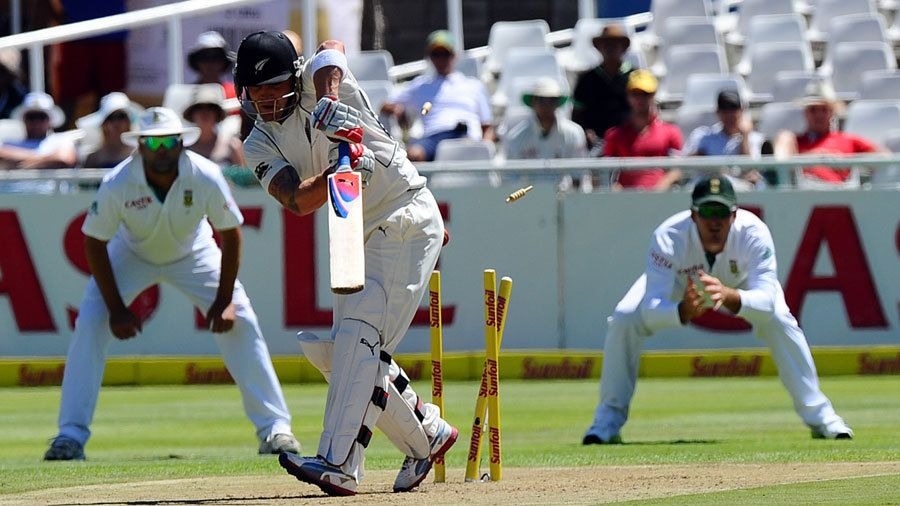
A dismissal happens when a batter is given out under the Laws. Commentators say a wicket has fallen, a batter is out, or name the type of dismissal.
| Term | What it means | Example commentary |
|---|---|---|
| Bowled | A delivery puts down the batter's wicket | "Bowled through the gate" |
| Caught | A ball hit by the bat is caught before touching the ground | "Caught at slip" |
| LBW | Leg before wicket, a dismissal decided by specified ball-path and impact conditions | "An appeal for LBW" |
| Run out | A batter is out of their ground when the wicket is fairly put down | "Run out trying for a second" |
| Stumped | The wicketkeeper puts down the wicket while the striker is out of their ground and not attempting a run | "Stumped advancing down the pitch" |
An LBW decision involves several conditions. The ball hitting the pad is not enough on its own.
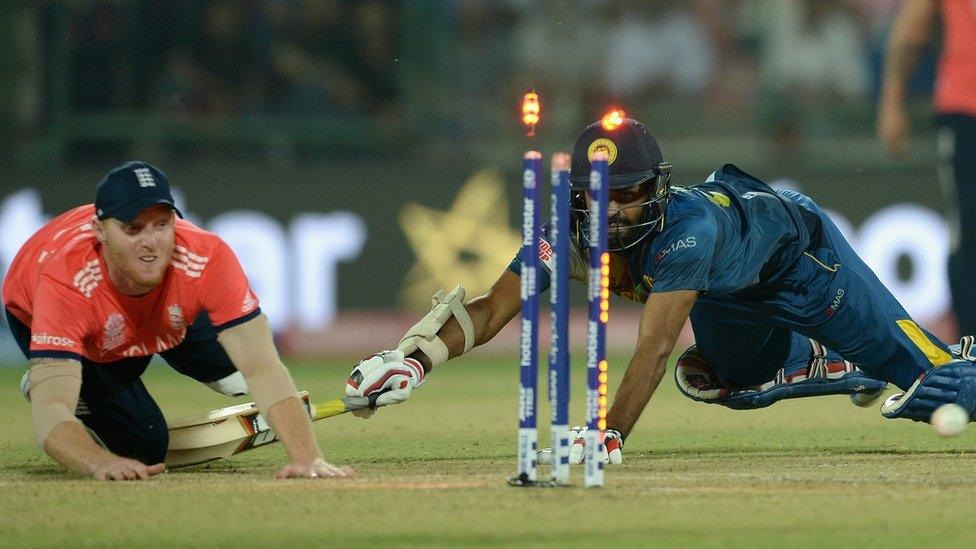
- Stumps: The three upright posts of a wicket.
- Bails: The two small pieces that rest across the stumps.
- Crease: Marked lines that matter to the positions of batters and bowlers.
- Not out: A batter who has not been dismissed.
- Wickets in hand: A way of describing how many further dismissals the batting side can withstand.
When a commentator says "the wicketkeeper whipped off the bails," the physical wicket is involved, but the full circumstances decide whether the batter is out.
Can a team lose a wicket without the bowler receiving one in the W column?Yes. A run out counts among the batting team's wickets lost without being credited to the bowler. Team dismissals and the bowler's wicket figures are tracked separately.
More technical cases are in the guide to cricket wickets and dismissals, which explains decisions by bowlers, fielders, and umpires.
Bowling and batting expressions you hear in commentary
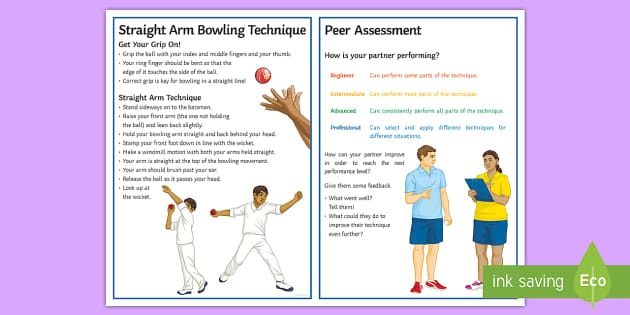
Commentary mixes scoring vocabulary, bowling technique and quick verdicts on a delivery. These words often explain what made a ball hard to play.
Deliveries and bowling styles
- Yorker: A delivery aimed near the batter's feet or the base of the stumps.
- Bouncer: A short-pitched, usually fast delivery that rises sharply toward the batter.
- Googly: A deceptive delivery by a leg-spinner that turns the opposite way from a conventional leg-break.
- Spin: Movement generated by rotation of the ball, particularly as it interacts with the pitch.
- Swing: Movement of the ball through the air.
- Seam: Deviation that occurs when the ball lands on its raised seam.
- Pace: The speed of a delivery or the general style of fast bowling.
You'll hear lines like "The spinner bowled a googly" or "That yorker reached the base of off stump."
A maiden over and a bowling spell
A maiden over is an over in which no runs are recorded against the bowler.
Two made-up examples:
- Over A: Six legal deliveries, one leg bye scored, no runs charged to the bowler. It still counts as a maiden.
- Over B: A wide followed by six legal deliveries, no further runs. Not a maiden, because the wide is charged to the bowler.
The Japan Cricket scoring guide sets out how byes and leg byes are scored.
A wicket maiden is a maiden over in which the bowler also takes a wicket.
A bowling spell is a stretch of overs bowled by the same player during a phase of play. It has no fixed length, and a bowler can have several spells in an innings.
Batting and descriptive expressions
- Edge: Contact made near an edge of the bat; it can produce a catch opportunity.
- Duck: A batter is dismissed having scored zero runs.
- Golden duck: A batter is dismissed on their first ball faced without scoring.
- Half-century: A personal batting score reaching 50 runs.
- Century: A personal batting score reaching 100 runs.
- Partnership: The runs accumulated while two batters are together.
- Jaffa or peach: Informal praise for an especially good delivery.
Fielding positions and sides of the cricket field
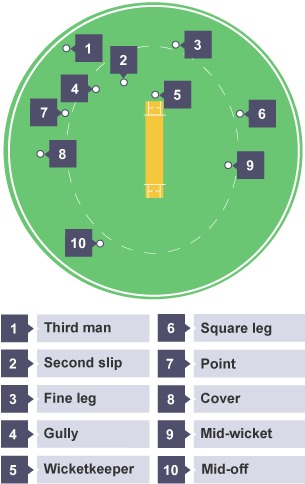
Fielding positions are named relative to the batter and the direction of play. Fielders move with the bowler's plan, the batter's strengths and the match situation.
Two basic directions come up constantly:
- Off side: The area in front of a batter's body in a normal side-on stance.
- Leg side or on side: The area behind that body orientation, toward the batter's legs.
On a diagram drawn for a right-handed striker, these areas fall on opposite sides of the pitch. The layout mirrors for a left-handed striker.
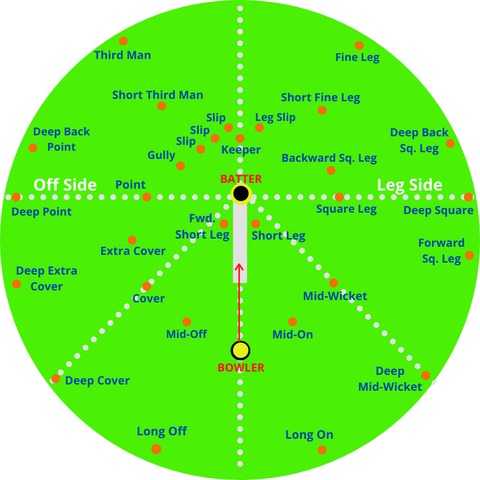
Useful fielding names include:
- Slip: A catching position beside and behind the striker's wicket, on the off side.
- Point: An off-side position roughly square of the wicket.
- Cover: An off-side position in front of square.
- Fine leg: A leg-side position behind square.
- Silly point: A close catching position on the off side, near the batter.
- Boundary rider: A fielder stationed near the boundary.
A ball "edged to slip" is caught at slip, while a drive "through cover" goes to a different area. "Silly point" means a fielder standing very close to the bat. These names describe tactical areas, and exact placements change throughout a match.
Format terms, review systems, and match shorthand
Some cricket terms name the type of match. Others cover fielding restrictions, reviews, interruptions and tie-breakers.
| Term | What it means | Where you might encounter it |
|---|---|---|
| T20 | Twenty20 cricket, 20 overs per side in a full innings | Major limited-overs competitions |
| ODI | One-Day International, 50 overs per side in a full innings | International limited-overs matches |
| Test cricket | Long-form international cricket, with up to two innings per side | Multi-day international matches |
| Powerplay | A phase with fielding restrictions | Limited-overs commentary |
| Death overs | Informal name for the closing overs of a limited-overs innings | Late-innings batting and bowling discussion |
| Super Over | An additional short contest used to resolve a tie when the playing conditions specify it | Tied-match procedures |
| DRS | Decision Review System, which uses technology to review certain decisions | Appeals and umpiring reviews |
| DLS | Duckworth–Lewis–Stern method, used to adjust targets or results in interrupted matches | Rain-affected limited-overs matches |
In a T20, commentators call the final overs "the death overs." A close finish brings up the Super Over, and rain brings up DLS.
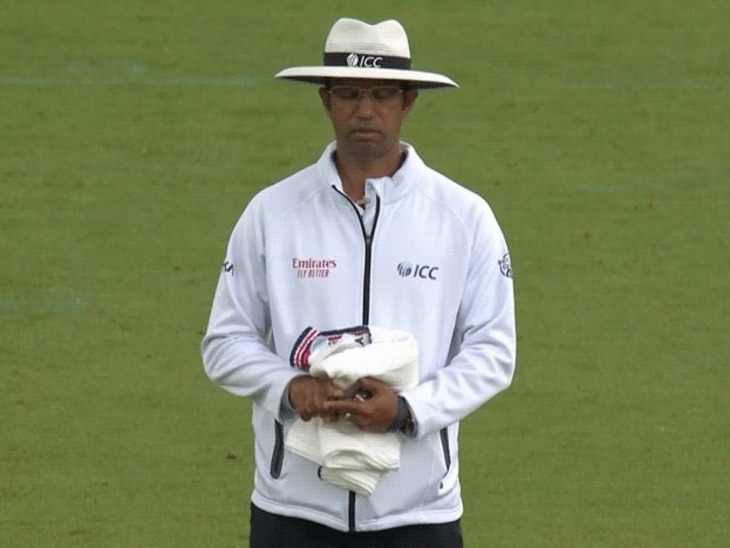
The MCC's updated Laws edition took effect on October 1, 2026. The ICC's updated playing conditions applied to international series beginning on or after that date, while series already underway continued under their previous conditions.
The ICC's playing-conditions update explains the change.
A comparison of T20, ODI and Test cricket covers innings, over limits and possible match results in more detail.
How to use a cricket glossary without getting lost in jargon
When "wicket" shows up in an umpiring call, the focused rules guide ties that decision to the applicable Law.