A match is tied when both sides finish their required innings on the same score. A draw means a timed match ran out of time with no winner and no tie, often with an innings unfinished. In limited-overs cricket, a tie can go to a Super Over, which picks the winner. An interrupted chase can end tied at the DLS par score, or the match can finish as No Result. Exact rules depend on the competition's playing conditions.
Tie, draw, Super Over, and No Result at a glance
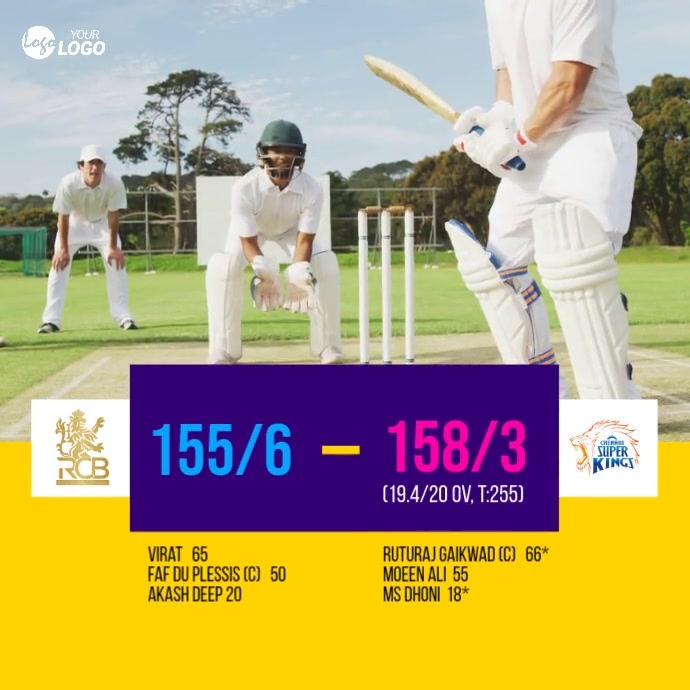
Two teams can finish on the same total and still get different official results. What matters is whether the required innings ended, whether time ran out, and which competition rules apply.
The MCC Laws of Cricket set the basic result definitions. Competition playing conditions cover extra procedures and interrupted matches.
| Scorecard outcome | Deciding condition | What it tells you |
|---|---|---|
| Tie | Both sides finish their required innings level, or DLS par-score equality produces a tie. | The scheduled result is level. |
| Draw | Time runs out in a timed match before a win or tie. | No winner, often with an innings incomplete. |
| Tie settled by Super Over | A limited-overs match ends tied and its rules require a tiebreak. | The scheduled innings were level; a Super Over picks the winner. |
| No Result | An interrupted match cannot meet the conditions for a result. | Recorded as No Result, often after too little play. |
A result line such as Match Tied (USA win the Super Over) reports two stages of one match: level scores after the scheduled innings, then a winner.
In a Test, each side normally bats twice within a fixed time. In a T20, each side gets up to 20 overs.
For a full format comparison, see T20 vs ODI vs Test cricket.
Why equal scores can finish as a draw
Picture the last afternoon of a Test. Team B draws level with Team A on aggregate runs, but three wickets remain when time expires. That is a draw, because the final innings is unfinished.
Change one thing: Team B loses its last wicket on the same total. All required innings are complete, so the match is tied.
| Match detail | Completed-innings example | Time-expired example |
|---|---|---|
| Team A's completed match total | 450 runs | 450 runs |
| Team B's earlier innings | 250 runs | 250 runs |
| Team B's last innings | 200 all out | 200/7 when time expires |
| Result | Tie | Draw |
These are example scorelines, with Team A's innings already complete. Both times Team B reaches 250 + 200 = 450, exactly matching Team A. Only the last innings differs.
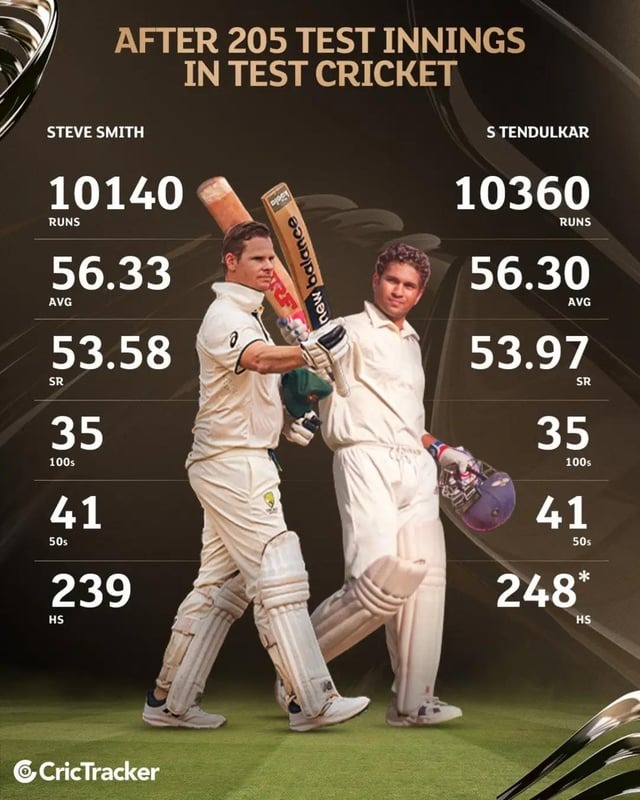
The notation 200/7 means 200 runs with seven wickets lost, leaving three standing. An innings can also end without ten wickets, for example by a declaration, so the innings status on the scorecard matters.
Why Test cricket can end drawn or tied

Batting to save a draw is a real achievement in a Test. A side facing an unreachable target can still avoid defeat by protecting its wickets until time runs out.
Imagine a side eight wickets down and a long way from victory. The last batters choose which deliveries to defend and which to attack. The bowling side needs two more wickets before the close, so even a quiet spell is tense.
More on Test results in how Test cricket works.
Two tied Tests: Australia and West Indies finished level at Brisbane in December 1960, the first tied Test. India and Australia played another at Chennai, then known as Madras, in 1986.
When a tied ODI or T20 goes to a Super Over
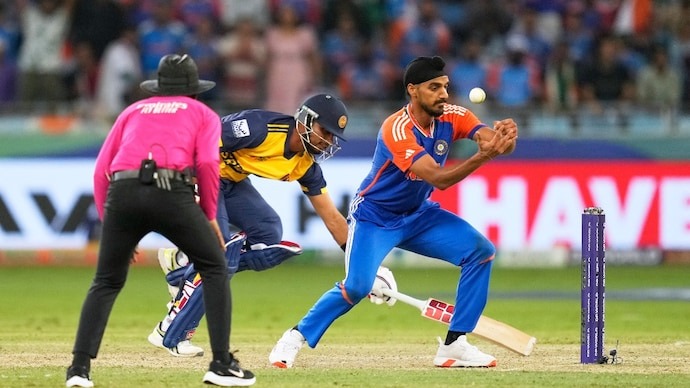
Two completed limited-overs innings can finish on exactly the same total. A Super Over follows when the event's rules call for an outright winner.
For example, picture a fictional T20 in which Team A makes 160/6 and Team B finishes 160/8, each after 20 overs. The scores are tied even though the wickets lost differ.
Under the ICC Men's T20 World Cup 2026 playing conditions, a tied match goes to a Super Over, with further Super Overs if needed and feasible.
How a Super Over works, including a second one
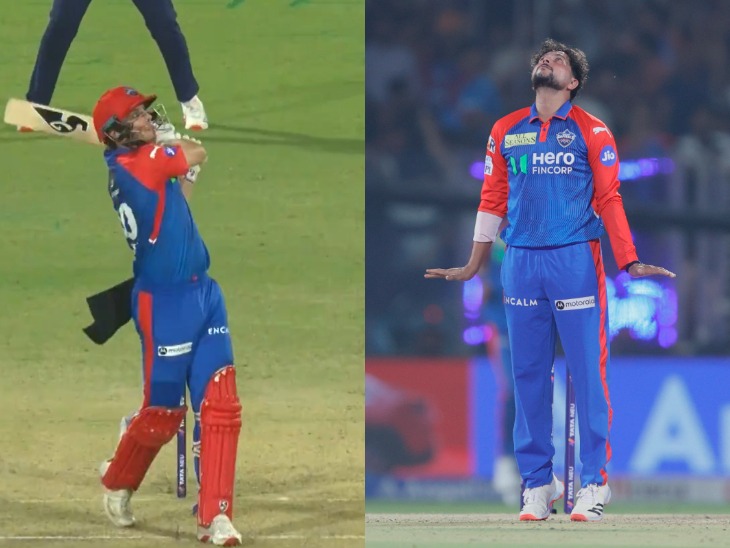
Each team gets a short extra batting turn. In the ICC procedure, a Super Over lasts up to six legal balls per side, and a team's turn ends early if it loses two wickets.
A wide or no-ball must be re-bowled because it does not count as one of the six legal balls. Totals are recorded separately from the scheduled innings, and the higher Super Over total wins that round.
For legal balls versus total deliveries, see how a cricket over works.
What if the first Super Over is tied?
The 2026 Men's T20 World Cup rules allowed further Super Overs after a tied one. South Africa and Afghanistan went to two Super Overs on February 11, 2026.
| Stage | South Africa | Afghanistan | Outcome |
|---|---|---|---|
| Scheduled innings | 187/6 (20.0 overs) | 187 all out (19.4 overs) | Match tied |
| First Super Over | 17 | 17 | Tied again |
| Second Super Over | 23/0 | 19/2 | South Africa won by four runs |
The ICC match account shows this was the first Men's T20 World Cup game decided through two Super Overs. Afghanistan's 19.4 means 19 full overs and four legal deliveries of the next before they were all out.
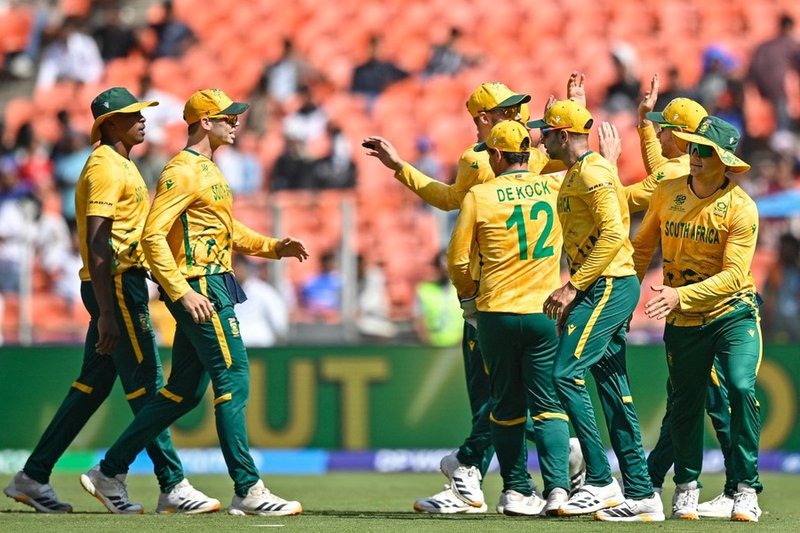
Under the 2026 tournament's Appendix F, a batter dismissed in an earlier Super Over cannot bat in a later one. A bowler who delivered the immediately preceding Super Over cannot bowl the next. The appendix also covers exceptional circumstances that can prevent further play.
USA vs Pakistan in 2024: a tied score and a winner
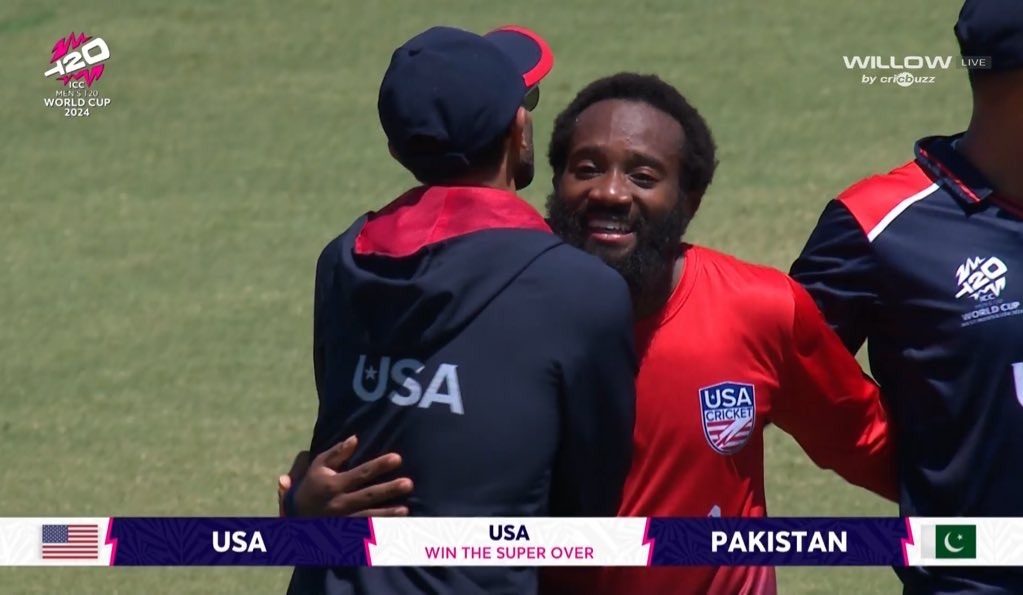
The United States and Pakistan both finished their innings on 159 in a 2024 Men's T20 World Cup group match, as this ICC account reports. The USA won in the Super Over.
| Stage | USA | Pakistan | Reading the result |
|---|---|---|---|
| Pakistan's 20 overs | Yet to bat | 159/7 (20.0) | USA needed 160 to win |
| USA's 20 overs | 159/3 (20.0) | 159/7 (20.0) | Match tied |
| Super Over | 18/1 | 13/1 | USA won by five runs |
Fewer wickets lost in the USA's original innings did not decide this result.
The game was played on June 6, 2024, in Grand Prairie, Texas, in the Dallas area.
Why the 2019 final used boundary countback
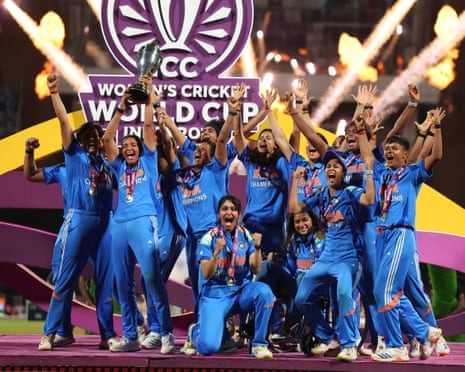
England and New Zealand each scored 241 in the men's Cricket World Cup final on July 14, 2019. The Super Over was tied too, at 15 runs each. England won on boundary countback, 26 to 17, the tiebreak in force at the time. The 2026 Men's T20 World Cup uses repeated Super Overs instead.
How rain changes the result
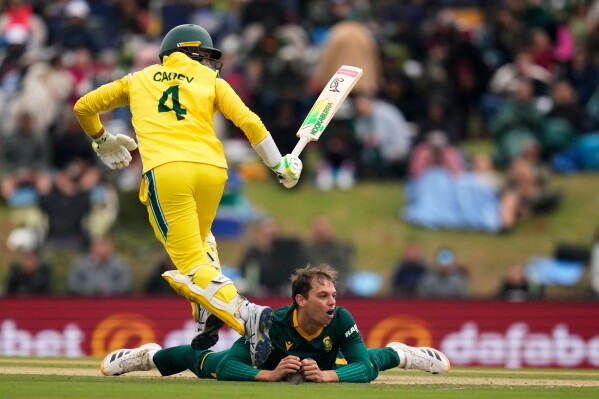
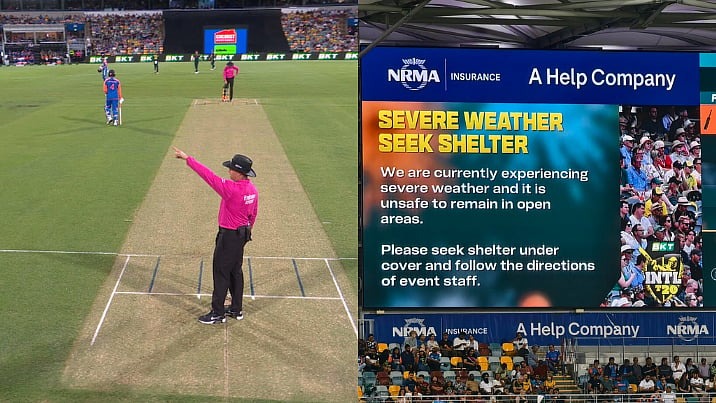
Weather can shorten a limited-overs match, change the chase target or stop a result altogether. A game that does not reach its competition's minimum overs is recorded as No Result.
The 2026 Men's T20 World Cup rules required both sides to get the chance to bat for at least five overs. The semifinals and final used a ten-over minimum, with exceptions where a side was all out or the chasing team had already won.
If enough play is possible after an interruption, the Duckworth–Lewis–Stern method (DLS) can set a revised target or decide the result using the par score. Under the 2026 rules, if a second innings is permanently interrupted after the required minimum play, a score equal to the DLS par score is a tie. The raw totals no longer decide the result.
For the calculation, see the DLS method explained.
If play stops during a Super Over, the tournament's exceptional-circumstances rules decide how the match is treated.
Why fans disagree about resolving ties
Some supporters see a tie as a proper result. Others prefer a short tiebreak to separate teams in a group. Fans on r/Cricket split along those lines.
One contributor questioned the need for Super Overs in non-knockout matches:
I wanted to start a discussion on the use of Super Overs to determine winners and losers of tied LOIs that aren't knockout matches. I feel like ties are a valid result in their own right and in tournaments, teams who tie in non-K/O matches deserve to walk away with 1 point each and having a Super Over seems unnecessary. In sports like football and rugby, drawn matches remain as such unless it's a knockout match, where there needs to be an outright winner and loser. I wanted to get people's thoughts on this, and also hear any arguments that are pro-Super Overs in non-knockout matches.
Another commenter took the opposite view, stressing the value of a winner in a small group:
Tied points puts two teams at a disadvantage over a winner in a third game while a winner gives an advantage to atleast 1 team. Especially in small groups. They're so very rare so it's better to have a result. It's better this way in my opinion. There's still one team performing better over another. Anything is better than a boundary countback. Football is a bit different because teams can still go without a winner after overtime until it goes to penalty but in cricket with just two extra overs, you'll likely have a result.