Three skills give you something to work on: a gentle catch, straight-bat contact and an aimed delivery. Use a soft ball and clear space before you add speed or pressure. If a drill feels unsafe or too hard, simplify it or move to a supervised session.
You can start learning cricket without a team or expensive gear. A soft practice ball, an optional bat, a clear area and maybe one willing partner are enough to try the basic movements. No bat or no partner? Start with ball handling, or with movements that need no ball at all.
Your first practice is about three small things: receiving a ball, guiding one with a bat, and sending a delivery where you want it. Get those working before you take on anything harder.
Choose a practice area and equipment that fit the activity
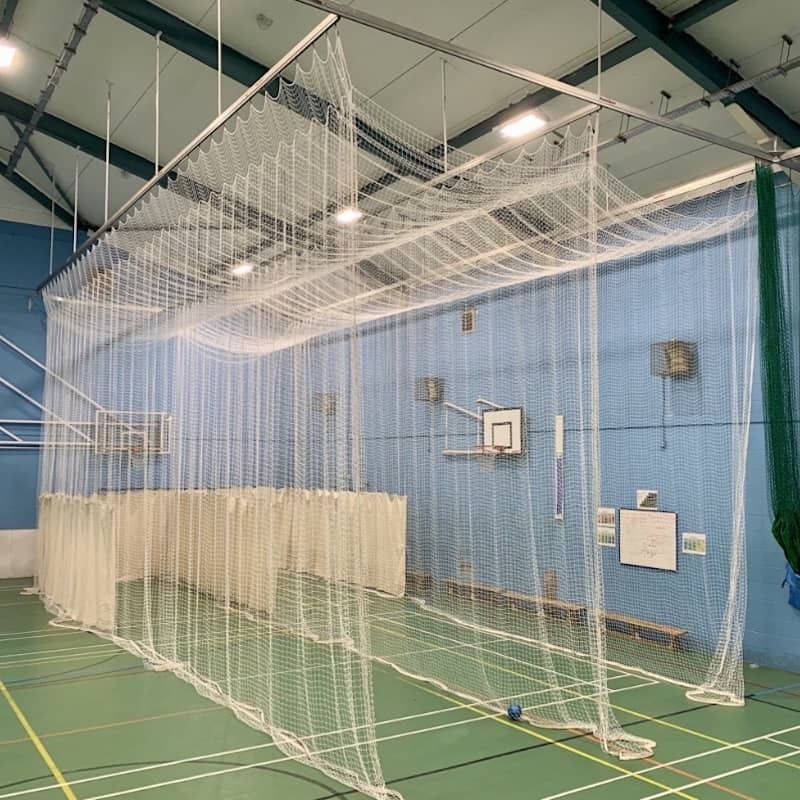
A drill works only if the ball and any bat swing stay inside a clear area. Check for bystanders, passing traffic, windows, cars, hard surfaces, slippery footing and places where a stray ball could escape. An empty-looking park can still have a walking path just beyond your target.
Use a genuinely soft or foam ball for gentle receiving, rolling and controlled contact. A tennis ball can bounce sharply off a hard surface or arrive too fast to catch comfortably. Match the activity to the ball and the space, as Cricket Victoria advises in its coaching guidance. Its recommendations account for equipment, ability, age, playing level, and the available area.
| What you have | Suitable first activity | Choose another setup when |
|---|---|---|
| Little indoor space, no clear ball path | Slow shadow batting or another no-ball rehearsal | A swing might reach someone or something |
| Clear open area and a soft ball, no bat | Gentle ground rolls and controlled ball handling | The ball could reach an occupied area |
| Soft ball, bat, suitable space, and a partner | Stationary contact or predictable gentle feeds | The partner cannot stay outside the swing path |
| Supervised cricket facility | Coach-selected exercises for its equipment | The activity goes beyond the available supervision or protection |
A driveway that opens onto passing cars fails the test, even if there is room to stand and swing.
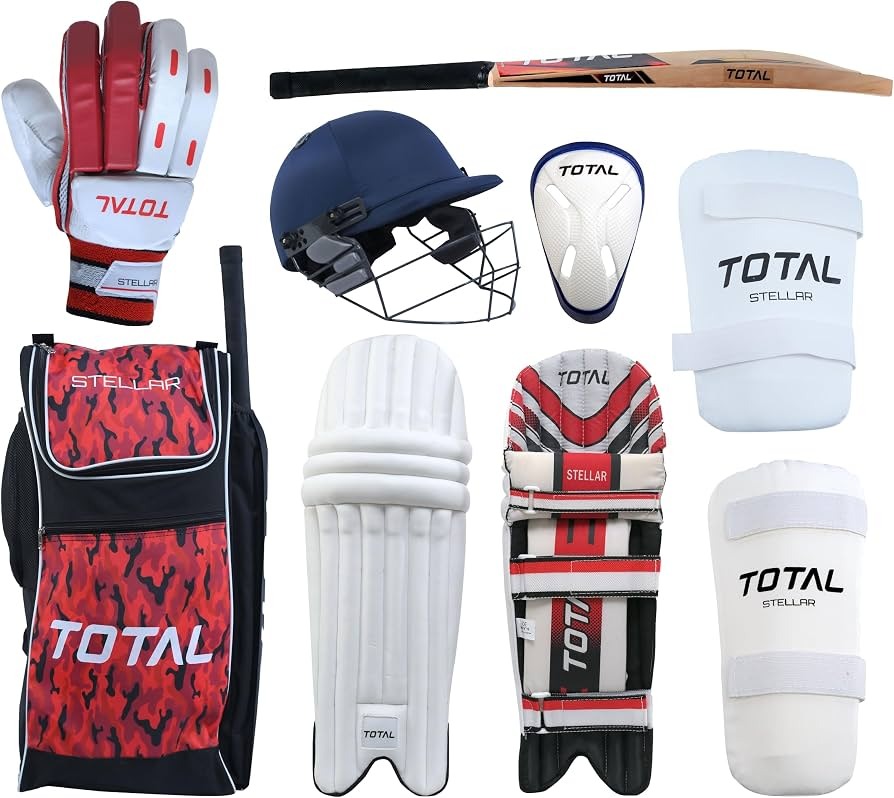
Check the handle of any bat you plan to use, the stability of a tee or target, your footing and the condition of protective equipment. The ECB beginner guide separates informal soft-ball play from hard-ball cricket, where protective equipment becomes a separate matter.
Stop or simplify: Stop the drill if someone enters the ball path, the footing turns unreliable, equipment is damaged, or a participant is afraid of the incoming ball.
A returning club player in England described getting ready for a match after four net sessions, then discovering a problem with an old helmet:
Called up to my local team this Saturday after 4 nets sessions. Otherwise, I haven't played since 2002 or thereabouts. What's changed that I need to know about? All the gear is comfier now - I'm sorted for that except my enormous vintage maroon helmet with broken elastic chin strap. I don't think I'll find a big enough helmet on time for my oversized noggin. Still rocking my Gray Nicolls Scimitar.
A helmet with a broken retaining strap stays out of hard-ball use until it is properly assessed or replaced. The player is in the UK, but the same rule applies before supervised training.
A first cricket session you can finish
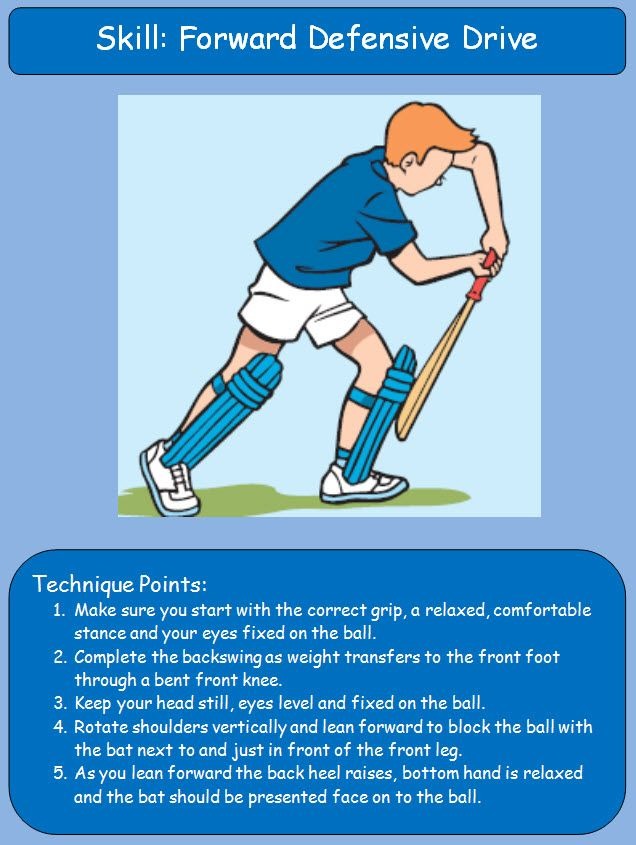
Give each activity one clear purpose: receive a soft ball, guide it with a bat, and send a gentle delivery at a target. Do only the exercises your setup allows.
| Activity | Example time | What to notice |
|---|---|---|
| Warm up | 4 minutes | Moving comfortably in the available space |
| Soft catching and ground gathering | 7 minutes | Whether you catch or stop the ball under control |
| Stationary or slow-feed batting | 8 minutes | Whether the bat meets the ball and sends it where you intended |
| Throwing at a target | 7 minutes | Whether the ball travels toward the chosen area |
| Pack up and review | 4 minutes | One drill to repeat and one problem to fix |
A shorter practice can focus on just one of these skills.
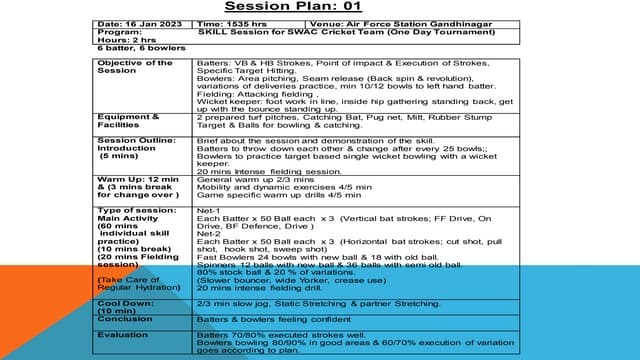
In a July 2021 overview, the ICC described its criiio programme as an introduction to batting, bowling, fielding, and basic rules. The ICC presents it as an adaptable eight-week lesson plan.
Catch and gather a soft ball with control
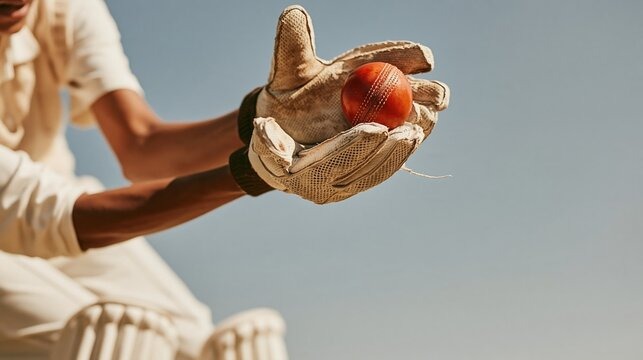
Catching a ball in the air and collecting one along the ground are separate fielding skills. With a soft ball and a partner who controls the feed, you can practice both.
For catching, start with a gentle, predictable underarm toss. Watch the ball come in, take it comfortably and see whether it stays in your hands. Keep the toss within a range you can handle, because a sudden high or fast ball turns it into a different exercise.
For ground fielding, have your partner roll the soft ball toward an agreed spot on a suitable surface. Get in position, stop the ball and gather it under control before a gentle return. The fielding fundamentals guide on ball handling, fielding positions, and catching practice covers catches, throwing, positioning and safe ball handling.
- Catch: Receive a ball travelling through the air and keep hold of it.
- Gather: Stop and collect a ball travelling along the ground.
- Return: Send the controlled ball back in the agreed safe direction.
Baseball experience helps with tracking the ball. Catching in cricket means doing it without a glove, so it feels different, and a comfortable soft-ball feed is a good way to get used to it. Facing a fast hard ball belongs to a different training environment.
Make controlled contact with the cricket bat
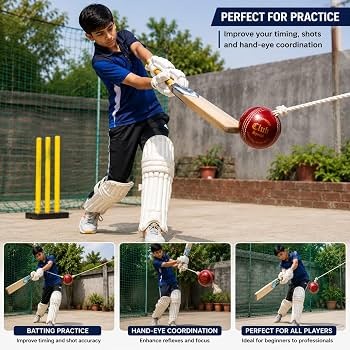
Your first batting task is to meet a soft ball with the face of the bat and guide it toward a safe, intended area. A stationary ball on a stable tee shows you where contact should happen.
Swing slowly and keep the bat inside the clear practice space. Pay attention to where the ball goes after contact. Once stationary contact feels manageable and you have a capable partner, a gentle underarm feed adds the timing of a moving ball.
- Stationary ball: Use a stable tee and a soft ball to practice directed contact without incoming-ball timing.
- Moving ball: Meet a slow soft-ball feed from a partner who stays clear of the bat and follow-through.
A tennis player who had joined a local cricket league described the uncertainty of applying familiar sporting skills to an unfamiliar game:
I recently signed up for a local cricket league despite having never really played before. I currently play tennis semi-competitively and imagine that would help me out in regards to hand-eye coordination and movement, but was wondering what to expect or if there is anything I should be prepared for.
Tennis and baseball players already know how to track a ball and judge its movement. The bat face, bouncing deliveries, stance and shot choice still need cricket-specific practice. The cricket batting basics cover stance, grip, timing and watching the ball.
Aim a soft ball at a visible target
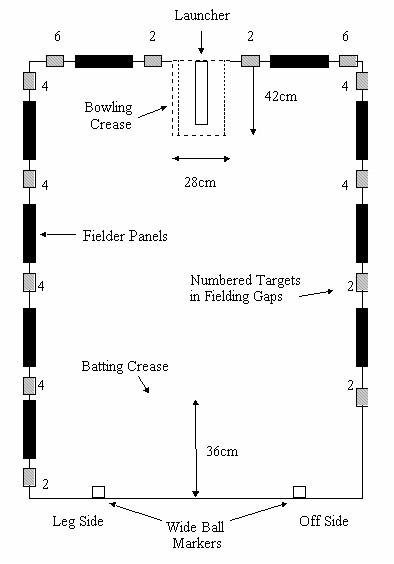
Mark a generous landing zone on clear ground with flat markers and pick a soft ball. From a comfortable standing position or a short controlled step, send the ball gently toward the zone.
Watch two things. Its sideways direction is called line, and the spot where it first bounces is called length. Your first goal is a ball that travels predictably toward the zone at easy effort. Skip the speed and the long run-up.
A target throw builds your sense of direction. A proper cricket bowling action has its own technique, and a coach is the best way to learn it.
Adjust a drill when the ball keeps going astray
When results are unpredictable, find the part of the drill causing the trouble and change one thing on the next attempt. That makes the difference between attempts easy to see.
| What happened | Change one variable | Look for this result |
|---|---|---|
| The ball escapes during a gentle catch | Reduce the height or speed of the soft feed | A comfortable catch held under control |
| A rolling ball passes the receiver | Slow the roll | Ball stopped and gathered within reach |
| The bat keeps missing a moving feed | Return to a stationary soft ball | Contact directed toward the target area |
| A target delivery travels far from its mark | Reduce effort or shorten the approach | A more predictable direction |
| The learner flinches or looks away | Use a gentler activity, such as a slow ground roll | A comfortable, controlled response |
Build on your first practice in sessions two and three
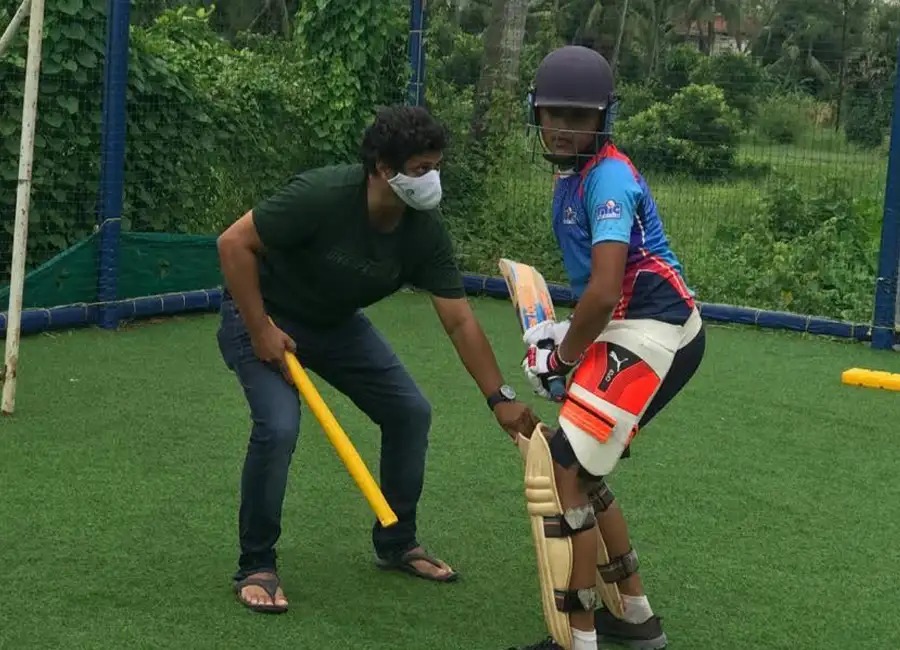
Start the next session with a skill you already handle with reasonable control: a gentle ground gather, contact with a stationary ball, or a low-effort delivery toward a broad target.
- Session one: Try the introductory activities and note which skill was easiest to control.
- Session two: Revisit that skill with a small variation, such as a slightly different feed or target.
- Session three: If control and space allow, link two familiar actions into a simple game-like drill. Otherwise, keep working on an earlier exercise.
With a partner and enough clear room, you can follow a gentle batting feed with an agreed “yes” or “no” call before anyone moves. That introduces communication without adding risk.
Keep a short practice note in plain language. You might write, “Stationary bat contact was predictable; moving feeds were harder,” or “Gentle ground rolls felt comfortable.” That gives the next session a specific starting point.
Choose when to try coaching, nets, or a first match
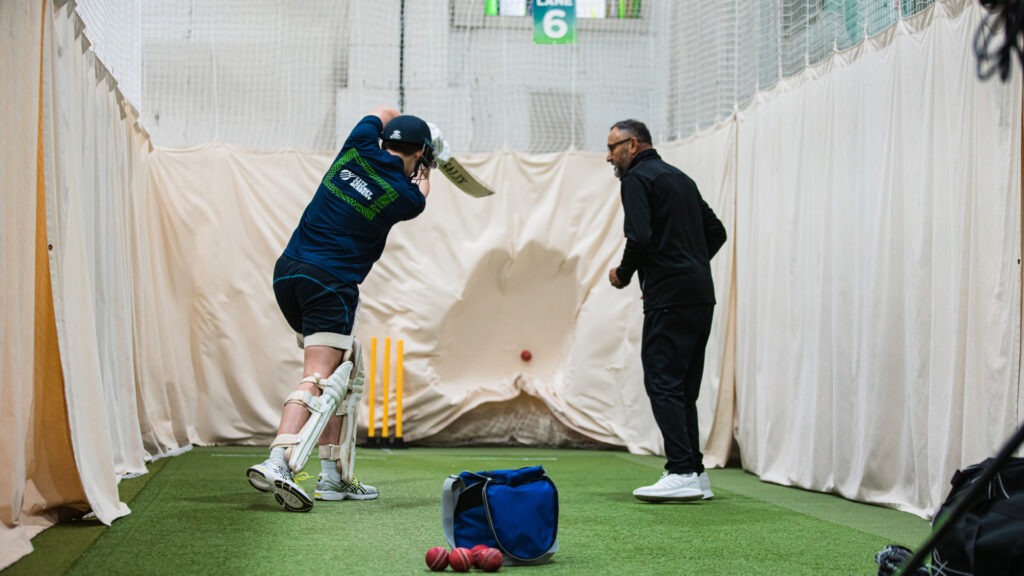
If you are new to cricket and unsure how to build correct technique, coaching is the natural next step. A beginner lesson, a supervised net and a club match each offer a different kind of participation.
- Introductory coaching: A qualified instructor assesses your basic skills and picks activities that suit you.
- Supervised nets: A controlled cricket training environment with rules for the ball, equipment, participants, and protective gear.
- Club match: Team participation, with opportunities and expectations set by the club and your readiness.
An American who had followed Major League Cricket and played baseball described finding an indoor one-to-one coaching option before ever playing cricket:
I am now looking to play for the first time as a 32-year-old. I have played baseball most of my life, so I feel some skills like hand-eye coordination and fielding might help me get started. I know it won’t be easy but I’m ready for a challenge. Luckily, I found a local indoor training facility that offers 1:1 coaching so I’m going to start that within the next few weeks. How long do you all think I would need to train until I’ll be able to play in matches?
No set number of beginner sessions makes you ready for a match. Your control and confidence, the demands of the playing environment, and the opportunities within the club decide it.
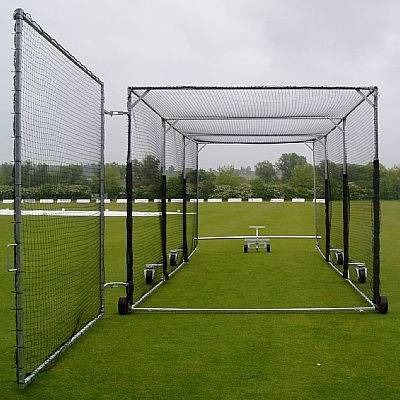
Before you attend a new session, tell the organizer you are a beginner and describe any bat-and-ball experience. Ask whether they accept complete beginners, use soft or hard balls, provide supervision, require protective equipment, and have gear to borrow. Build control of a straight ball before adding movement; the bowling types guide introduces the different bowling styles.
A useful message could be:
I'm new to cricket. I've played baseball, but I haven't faced a hard cricket ball. I've tried gentle catching and batting activities. Do you offer introductory sessions for adults?
Hard-ball nets require a check of the venue's equipment and protective rules. The ECB's January 2026 professional protective-equipment policy applies to defined organizations, not to casual play in the US, so follow the requirements of your facility and its supervisor.